

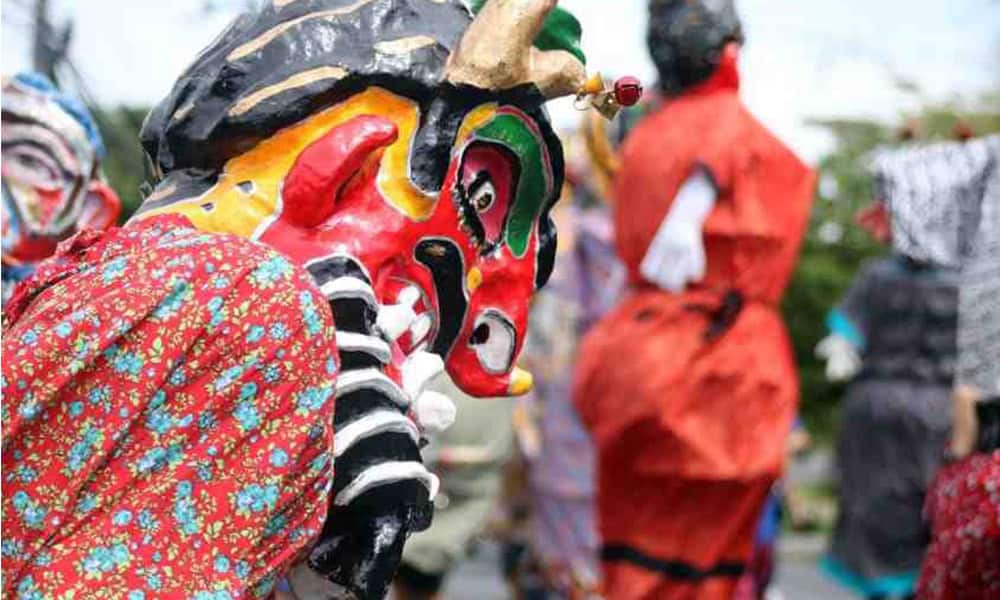
Costa Rica is celebrating one of its most colorful traditions this weekend as giant masks, lively marching bands and characters from local folklore take over streets and public spaces across Costa Rica. National Traditional Masquerade Day, observed every October 31, brings communities together for a celebration that has been part of Costa Rican culture for generations.
The Ministry of Culture and Youth has organized a series of free activities for today and tomorrow including street parades, musical performances, workshops and cultural exhibitions. The main celebration is scheduled for Friday in downtown San José, where three groups of traditional masked performers and musicians began marching at 11 a.m. from Plaza de la Democracia, Parque Morazán and the Simón Bolívar Urban Nature Park.
The groups then make their way through the capital before gathering around noon at the National Center for Culture (CENAC), across from Parque España. The event is open to the public and will feature the oversized masks and traditional music that have made these celebrations a familiar part of life in Costa Rica.
Unlike Halloween, which shares the same date, Costa Rica’s masquerade tradition has its own history and characters. The masks represent figures from local legends, including La Segua, La Llorona, the Devil, Death and La Giganta, along with a collection of other characters that have entertained and occasionally frightened generations of children.
Some of the figures tower over spectators, with enormous heads and exaggerated facial features made from papier-mâché, fiberglass or other materials. Beneath the masks are performers who dance, chase spectators and interact with the crowds as traditional marching bands, known locally as cimarronas, provide the music.
The bands typically include trumpets, trombones, drums and other instruments, producing the loud, energetic rhythms associated with Costa Rican town festivals. For many Costa Ricans, the sound of a cimarrona approaching is enough to bring back childhood memories of neighborhood celebrations, school festivals and the excitement of watching the masked characters move through the streets.
The tradition has roots in colonial-era celebrations, particularly in Cartago, where Spanish festivities gradually mixed with Indigenous customs and local folklore. Over time, communities such as Barva, Aserrí, Escazú and Cartago became important centers for the creation and performance of traditional masquerades.
The modern national celebration began in Aserrí on October 31, 1996, when local cultural organizers and artisans held a parade to promote Costa Rican traditions at a time when Halloween was becoming increasingly popular. The following year, the government officially declared October 31 National Traditional Masquerade Day through an Executive Decree.
The celebration received further recognition in 2022 when Costa Rica’s Legislative Assembly declared traditional masquerades a national symbol under Law 10239, acknowledging their importance to o cultural identity. Today, the tradition remains an important source of work for artisans who design, sculpt and paint the masks, often teaching their techniques to younger generations.
Acting Culture Minister Sally Molina Villalobos has emphasized that the celebrations are not simply about entertainment. They also recognize the craftsmanship and dedication required to keep the tradition alive. This weekend’s activities extend well beyond San José. In Cartago, a free masquerade and cimarrona festival is scheduled for Friday from 9 a.m. to 1 p.m. at Plaza Mayor, with traditional performances and workshops.
In Limón, the Civic Center for Peace will offer mask painting, traditional Costa Rican games, storytelling and a parade accompanied by a cimarrona on Friday afternoon, from 4 p.m. to approximately 6:20 p.m. The Public Library in Liberia, Guanacaste, will host a free afternoon of Costa Rican legends on Friday from 4 p.m. to 6 p.m., inviting community members to share traditional stories.
On Saturday, the celebration continues in Escazú, where Escazú Village will host free activities from 3 p.m. to 7 p.m. The program includes traditional masked characters, a cimarrona performance, children’s mask-making workshops and costume competitions. Families attending the Escazú event will also find activities designed to introduce younger children to the history and artistic traditions behind the masks.
In the San Carlos area, the community of Marsella will hold traditional games, mask-making activities and a neighborhood parade on Saturday morning. Other cultural institutions are participating with exhibitions and special events, including an artisan mask display at the José Figueres Ferrer Cultural and Historical Center in San Ramón, which continues through November 6.
Not every event is free. The National Band of Guanacaste will perform a special concert at the National Theater in San José on Saturday at 7 p.m., with general admission tickets priced at ₡4,000 and discounted tickets at ₡2,500 for students and older adults. The weekend’s celebrations come at a time when Costa Rica continues working to preserve its traditional arts and customs while welcoming cultural influences from abroad.
For residents and visitors unfamiliar with masquerades, the events offer a chance to experience a side of Costa Rica that goes beyond beaches, rainforests and national parks. The colorful masks, lively music and interaction between performers and spectators are a reminder that our cultural heritage remains an important part of everyday life, particularly in smaller towns where these t