

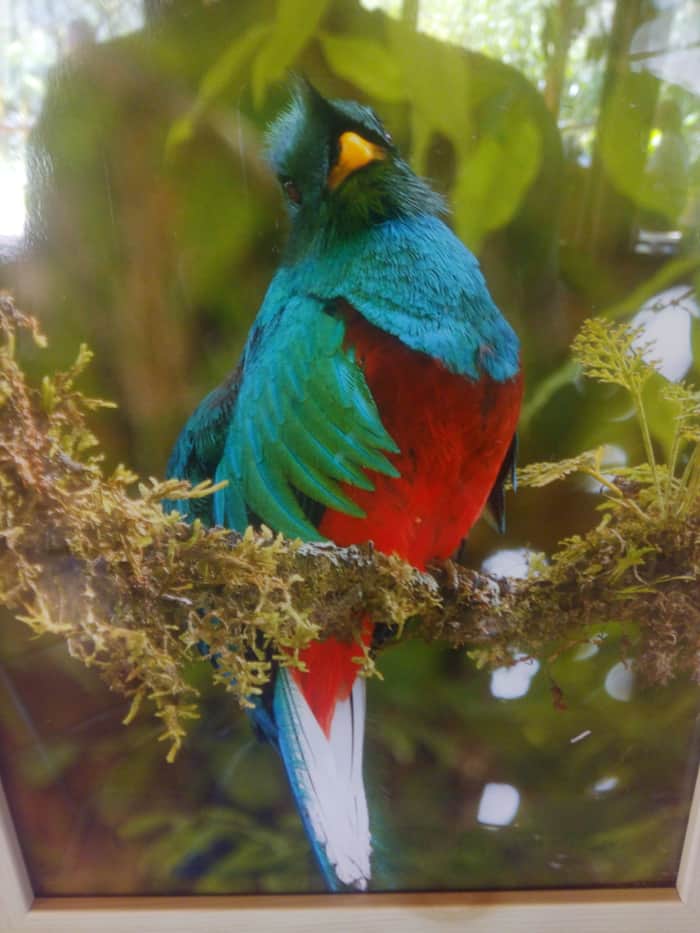
A resplendent quetzal has turned up somewhere few birders would think to look for one. The bird was recorded at La Marta Wildlife Refuge in Pejivalle, in the Cartago area, during the global October Big Day bird count on Oct. 10. It was the first time the species had appeared in the refuge’s records, according to preliminary results released by La Marta.
A team of specialist observers logged 132 bird species at the site that day, including two that had never been documented there before. The refuge has not identified the second new species. With its iridescent green plumage, crimson belly and the long tail streamers of breeding males, the quetzal is one of the most sought-after birds in the Americas. In Costa Rica it is closely tied to Monteverde and San Gerardo de Dota, where lodges and guides have built a steady trade around sightings.
Mariechen Lang Alvarado, vice rector of La Marta, said the record shows the natural wealth of Pejivalle. Many people associate the quetzal only with Monteverde or Dota, she said, but the refuge’s forests also provide the conditions the species needs. Quetzals live in mountain forest and feed heavily on the fruit of wild avocado trees. They are known to move between elevations through the year as different trees come into fruit, which is one reason the birds can show up outside their best-known strongholds.
La Marta covers 1,518 hectares (3,751 acres) on the Caribbean slope of the Talamanca mountains and is a conservation project supported by Castro Carazo University. The refuge says more than 430 bird species have been documented there over the years, roughly 46% of all bird species reported in Costa Rica.That list may keep growing. According to the refuge, parts of the property have yet to be thoroughly surveyed with specialized counts, the kind of work that has been producing new species records elsewhere in the country, even in urban Heredia.
October Big Day is organized by the Cornell Lab of Ornithology through eBird, the platform where birdwatchers around the world log their sightings. It is held every October and complements the Global Big Day in May, and the combined data help researchers track where bird populations are and what they need to survive. The October date also falls during the southbound migration, when many North American species pass through or settle into Central America’s forests for the winter.
For La Marta, the count doubles as a way to promote Pejivalle for birdwatching, wildlife photography and low-impact nature travel, at a time when birdwatching tourism is growing across Costa Rica. The refuge plans to hold its second Christmas Bird Count in December. Unlike the Big Day, it will be La Marta’s own monitoring exercise, focused on documenting the species living in its forests.
The count will be open to the public but aimed at birders with intermediate or advanced identification skills, since the day is devoted to recording species rather than teaching beginners. La Marta is preparing packages that include lodging, meals and guided walks. Lang said the refuge wants more people to discover the birdlife at La Marta and wants experienced observers to take an active part in recording it. Exact dates, participation requirements and package details will be announced through La Marta’s official channels.
With large parts of the refuge still unsurveyed, the quetzal may not be the last surprise its forests turn up.





