

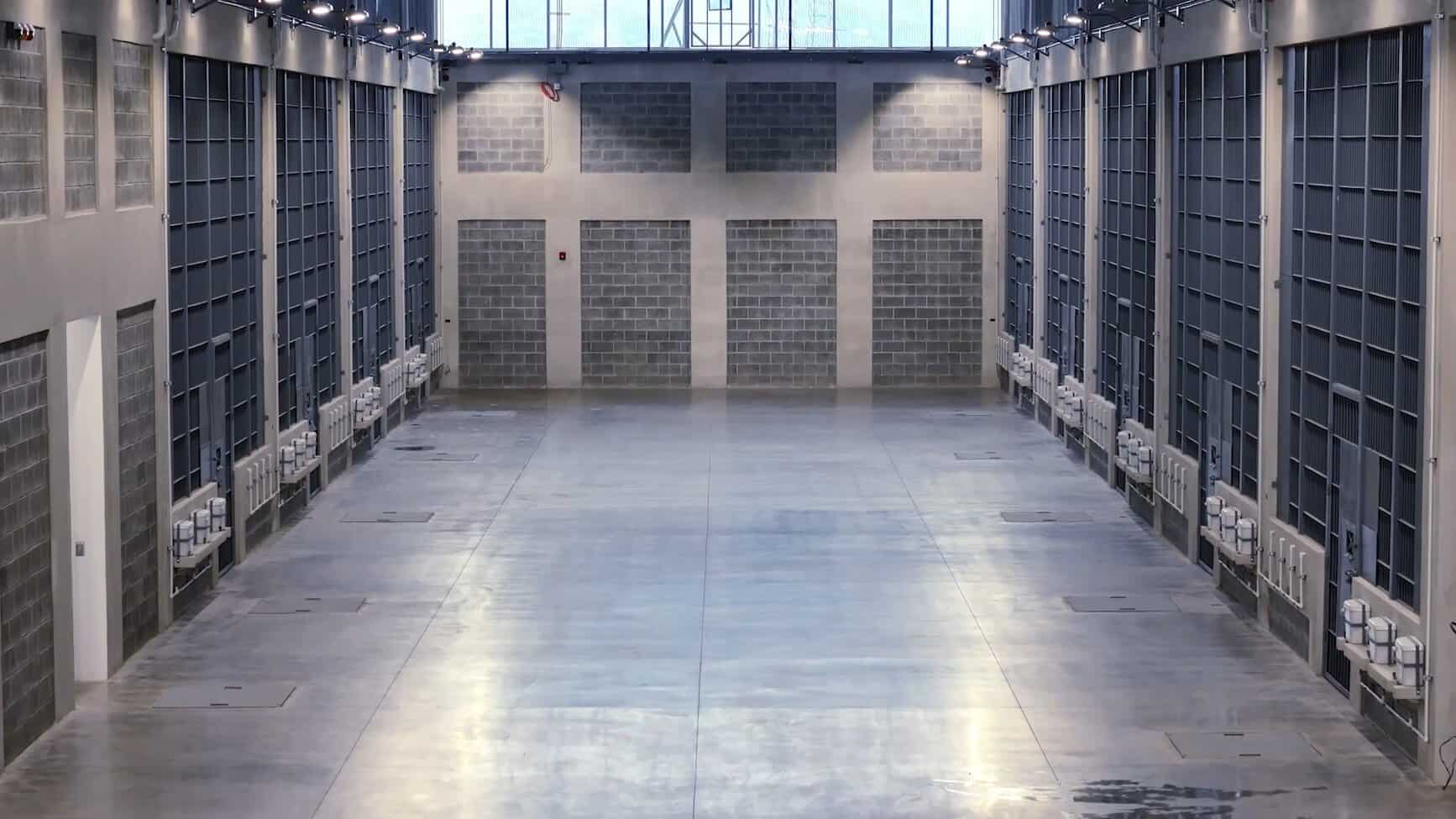
Costa Rica will begin moving inmates into its new maximum-security prison on Monday, the Ministry of Justice and Peace confirmed. Suspects in the killing of police officer Gerson Rosales will be the first sent to the High Containment Center for Organized Crime (CACCO).
The prison, inaugurated October 14 in San Rafael de Alajuela, has capacity for 5,100 inmates across five modules of 1,020 each. Transfers will begin by filling the first module, and every inmate held there will wear an orange uniform, according to the ministry. Justice Minister Gabriel Aguilar Vargas also announced strict limits on conjugal visits for CACCO inmates. Visits will be allowed once every six months, will last no more than 30 minutes and will take place in a room with a cement bed and no mattress.
Only a stable partner whose relationship has been verified in advance will qualify. After each visit, the inmate must shower and return directly to his cell. Aguilar said the measures are meant to tighten prison controls and stop weapons, drugs, electronic devices and other contraband from entering the facility.
The current regulation for high-containment prisons, allows intimate visits every two months for up to two hours, and no formal change to that rule has yet been confirmed. President Laura Fernández ordered the first transfers and asked Aguilar to present the protocols that will govern the prison publicly. The minister agreed to do so at a future appearance.
Fernández, who toured El Salvador’s CECOT mega-prison last week, said Costa Rica still has time to avoid the levels of violence El Salvador once faced. At her weekly press conference yesterday, she called opposition criticism of the CACCO irresponsible and said governments from 15 and 20 years ago should answer for the young people recruited by organized crime.
The Ministry of Justice says the prison will cut overcrowding in the national penitentiary system from 59% to 15% once it is full. Fernández said it should also relieve pressure on the nearby La Reforma prison. The facility has drawn scrutiny since before it opened, including a court challenge seeking to halt transfers, while the US Embassy has praised the new prison. Debate over whether it will reduce crime continues, as explored in a recent opinion piece on the megaprison.
The Ministry of Justice has not said how quickly the remaining four modules will be filled or which inmates will follow the first group.





