

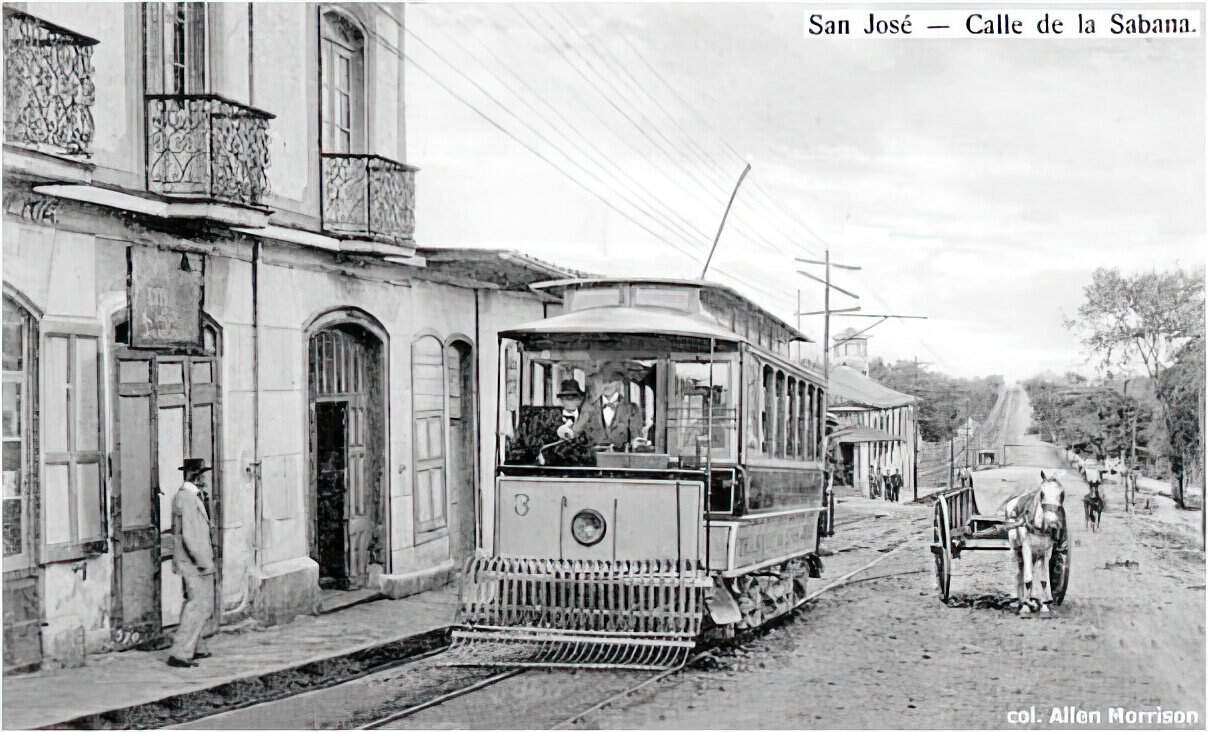
A piece of San José’s transportation history is coming back into view, but not in the way one might expect. The Municipality of San José plans to display sections of the capital’s old tram tracks at five locations around downtown, allowing pedestrians and visitors to see rails that have been buried beneath city streets for decades.
The project does not involve bringing tram service back to San José. Instead, the old rails will be preserved as part of the city’s streetscape, with sections visible through strong transparent panels installed at street level. The displays will also have lighting so the tracks can be seen at night.
The five locations are Plaza de la Cultura, in front of the former Soda Chelles, near the Jade Museum, in front of Castillo Azul near the Legislative Assembly, and between Calle 19 and Calle 21 on the eastern side of downtown. The municipality is spending about ₡55 million on the project. Work was originally expected to be completed in September, but municipal council member Mariana Zúñiga said the current goal is to open the displays in late October or early November.
Getting the project under contract took longer than expected. According to Zúñiga, the city had to open the bidding process three times because the work is unusual and initially failed to attract contractors. The idea grew out of construction work on the extension of the Avenida Central pedestrian boulevard toward La California. Excavations there uncovered old tram rails along with glass, ceramic fragments and other material connected to an earlier San José. The discovery prompted the municipality to preserve some of the rails rather than simply cover them again.
For people who know San José mainly as a city of buses, cars and crowded streets, the rails are a reminder that the capital once had one of Costa Rica’s most important public transportation systems. San José’s electric tram began operating in 1899. Its routes connected places including La Sabana, Avenida Central, the Atlantic train station and San Pedro, with other lines reaching areas such as Guadalupe. At its height, the system used more than 20 tram cars and helped connect downtown San José with neighborhoods that were then considered outside the city center.
The tram disappeared in 1950 as buses and private cars became more common and the aging rail system became increasingly difficult to maintain. Most of the tracks eventually disappeared beneath pavement and later construction. The new displays are part of a broader effort to make downtown San José more attractive to people who walk through the capital rather than simply pass through it by car or bus. The city has been extending pedestrian areas, renovating public spaces and looking for ways to draw more activity into its historic center.
For visitors, the tram displays could add another small stop along the downtown museum and historic-building corridor that includes the National Museum, Jade Museum, Plaza de la Cultura and National Theater. Nearly eight decades after the last tram rolled through San José, residents will not be able to climb aboard one again. But they will soon be able to look beneath their feet and see part of the transportation system that helped shape the capital.





