

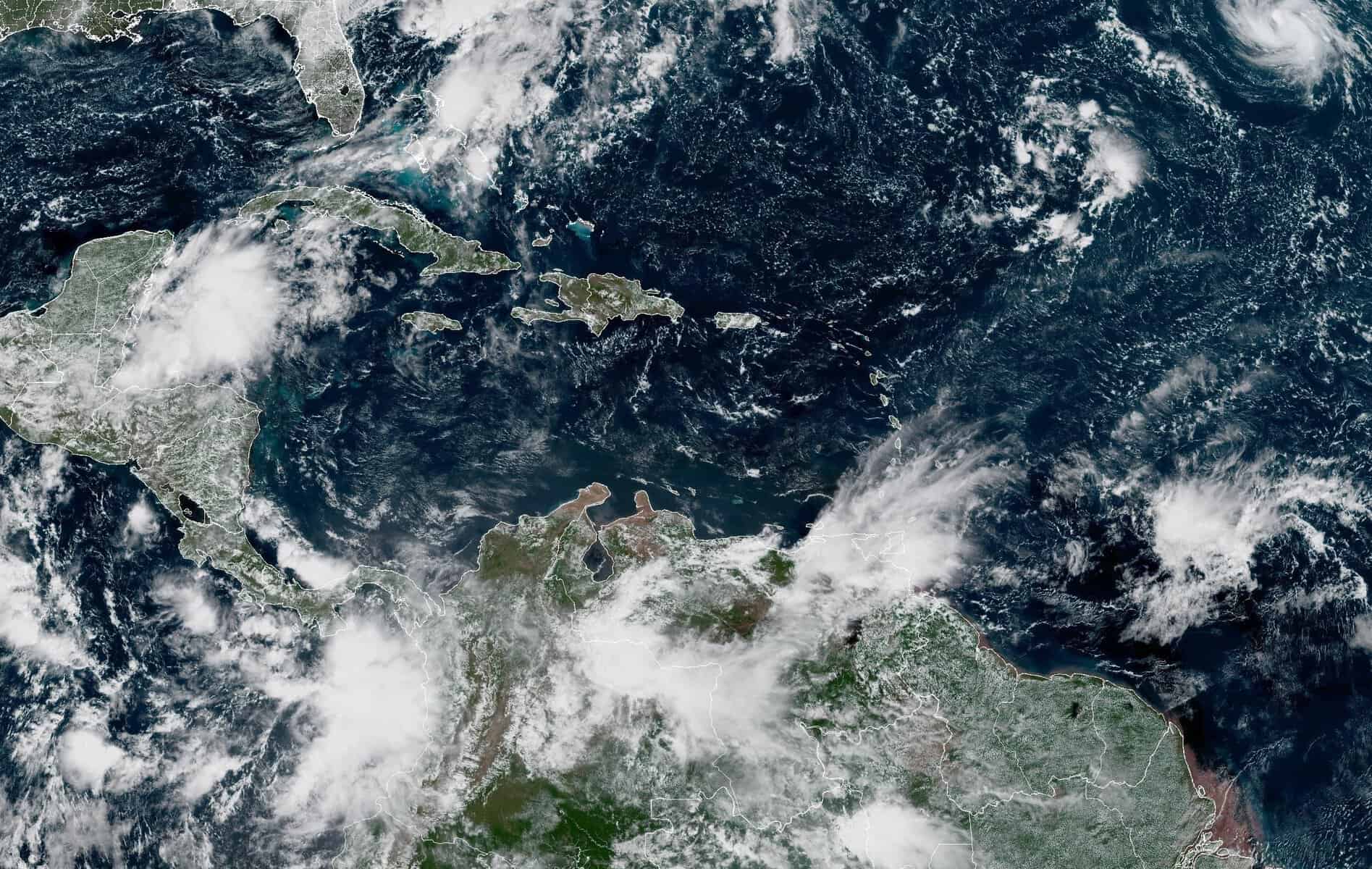
The Atlantic Ocean has reached late September without producing a single hurricane, something that has not happened in 112 years. As of this morning, the U.S. National Hurricane Center was tracking Tropical Storm Fay southwest of the Azores and a disturbance south of the Cabo Verde Islands. Neither had reached hurricane strength, and no hurricane has formed in the Atlantic this season.
The last season to go this deep into September without a hurricane was 1914, and that season never produced one at all. In records dating to 1851, only 1907 and 1914 finished without a hurricane. Both predate satellite tracking, so some storms from that era may have gone undetected.
The 2026 season has produced six named storms, Arthur, Bertha, Cristobal, Dolly, Edouard and Fay. None reached hurricane strength, which requires sustained winds of 119 km/h (74 mph). That is far below a typical year as the first Atlantic hurricane usually forms by Aug. 11, and by this point the basin would normally have produced about 10 named storms, four hurricanes and two major hurricanes, based on 1991–2020 averages.
The storms that did form were weak and short-lived. Accumulated cyclone energy, a measure that combines the strength and duration of every storm in a season, stood at 6.2 on Sept. 22, about 93% below normal for the date, according to the hurricane center. The main reason is El Niño. The warming of the equatorial Pacific strengthens upper-level winds over the Atlantic and Caribbean, and that wind shear tears developing storms apart before they can organize and intensify.
Forecasters expected a quiet year. In its August update, the U.S. National Oceanic and Atmospheric Administration gave a 75% chance of a below-normal season, with seven to 13 named storms and two to six hurricanes. The season is not over. It officially runs until Nov. 30, and late September and October have historically produced dangerous storms, especially in the Gulf and along the U.S. East Coast.
Here in Costa Rica, the same El Niño is having a very different effect. The National Meteorological Institute has declared a meteorological drought across the Pacific slope and Central Valley, where rainfall is running up to 37% below normal and community water systems in 74 communities are rationing water.
Costa Rica rarely takes a direct hit from Atlantic hurricanes. Storms passing through the Caribbean have more often affected the country indirectly by pulling heavy rain across it, as Tropical Storm Nate did in 2017. The eastern Pacific has been far more active. Hurricane Polo regained Category 5 strength off Mexico’s Pacific coast with sustained winds of 260 km/h (162 mph), and the hurricane center was also issuing advisories today on Hurricane Odaly but neither storm is expected to affect Costa Rica.
If the Atlantic stays quiet through the end of November, 2026 would become only the third season on record without a hurricane.





