

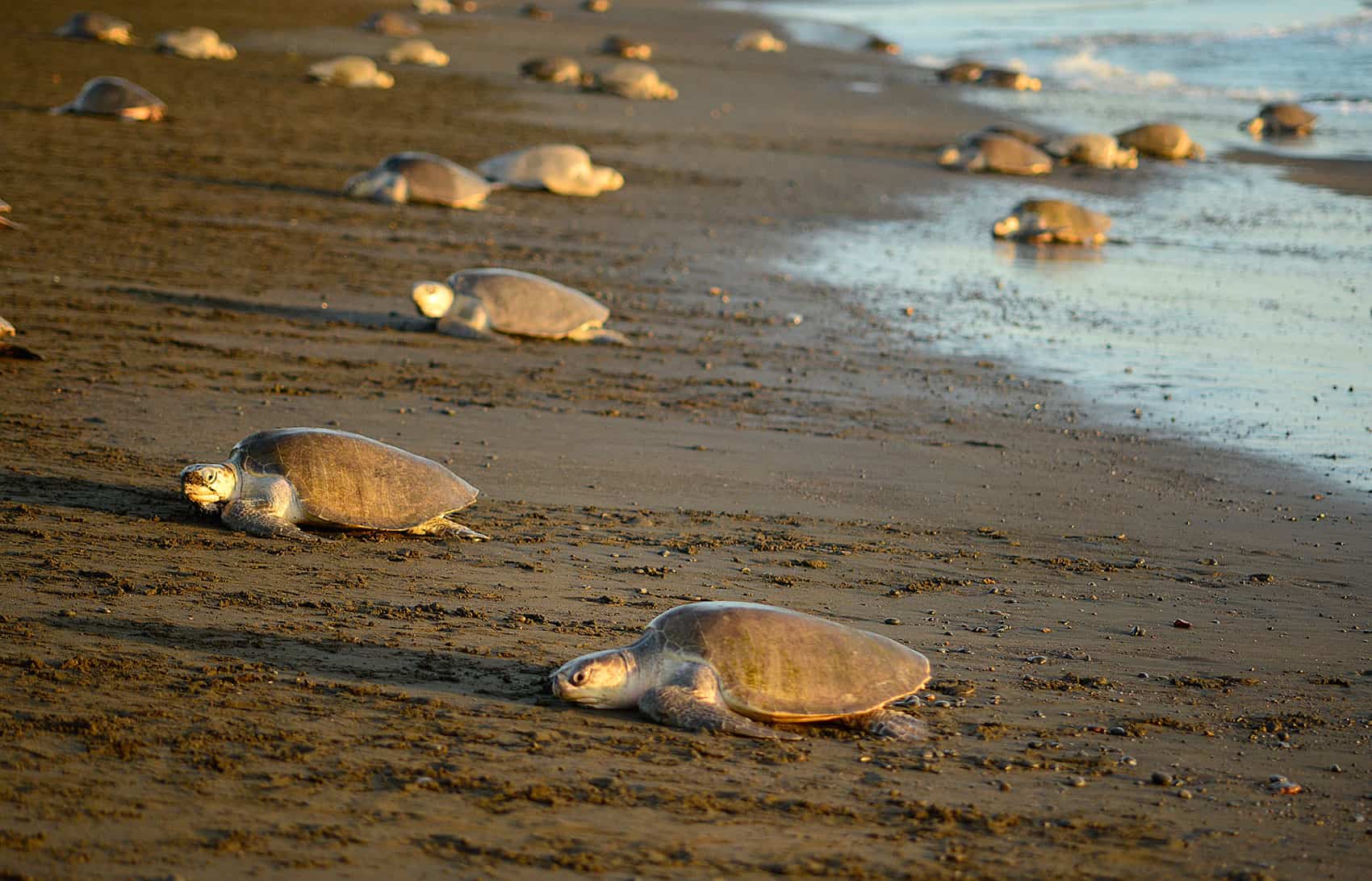
Five more people have been detained during sea turtle protection operations at Ostional National Wildlife Refuge in Guanacaste, bringing the number of people arrested in connection with suspected illegal egg collection and nest damage at the refuge to at least 10 this month.
The latest arrests happened on Monday during the second major olive ridley sea turtle arribada of September. Costa Rica’s National System of Conservation Areas (SINAC) said the five suspects were taken before the Santa Cruz Flagrancy Prosecutor’s Office over alleged environmental crimes involving the removal of turtle eggs and destruction of nests.
The arrests come just two weeks after two people were detained at Ostional with 125 olive ridley eggs. That case we reported on involved eggs believed to have been taken from approximately two nests. Neither suspect belonged to the community organization authorized to manage eggs at the refuge. Independent Costa Rican reporting based on SINAC information confirmed the arrests and seizure.
Authorities carried out another operation in mid-September in which three people were caught transporting 101 olive ridley eggs, also estimated to have come from two nests. SINAC and members of the Ostional Integral Development Association participated in that operation.
Taken together, the three operations have resulted in at least 10 arrests connected to suspected illegal activity involving olive ridley turtles at Ostional during September. The increased enforcement comes during one of the most important periods of the year for the refuge. During an arribada, thousands of female olive ridley turtles can arrive within a matter of days to dig nests and lay their eggs along the beach.
Ostional has an unusual system that allows a limited, regulated collection of turtle eggs. The program is managed by the local community under government supervision and is designed around the extraordinary density of nests during arribadas. That does not mean visitors or other residents can collect eggs themselves. SINAC says controlled egg collection is limited to the authorized community organization, and taking eggs outside that system is considered an environmental offense.
Ostional National Wildlife Refuge covers about 468 hectares, or 1,157 acres, on land and another 8,000 hectares, or roughly 19,768 acres, at sea. The protected area includes Ostional, Nosara, Pelada and Guiones beaches and is considered one of the world’s most important nesting areas for olive ridley turtles.
The latest surveillance operations also uncovered a separate threat to the turtles. On Monday, officials from the Tempisque Conservation Area responded to a report of an adult olive ridley trapped in prohibited fishing gear near Playa Principal. Rangers freed the turtle and released it back into the ocean.
SINAC subsequently urged people fishing near the refuge’s marine boundaries to avoid unauthorized fishing gear that can trap turtles or cause accidental catches and injuries. The agency also asked boats traveling near the refuge to reduce their speed and watch carefully for turtles in the water, particularly during nesting periods when large numbers of animals are moving between the open ocean and the beach. Officials said slower speeds can reduce the risk of turtles being struck by vessels or boat propellers.
Monitoring at Ostional is carried out by conservation officials and local organizations, with enforcement stepped up during arribadas because the concentration of turtles, nests and eggs makes the area particularly vulnerable to illegal collection and other disturbances. For visitors, the rules also become stricter during the mass nesting events. SINAC requires people entering the nesting beach during arribadas to be accompanied by an accredited local guide.
The five latest arrests suggest authorities are maintaining that increased presence through September’s second arribada, with officials saying surveillance, rescue operations and environmental protection efforts will continue around both the beach and the refuge’s marine waters.





