

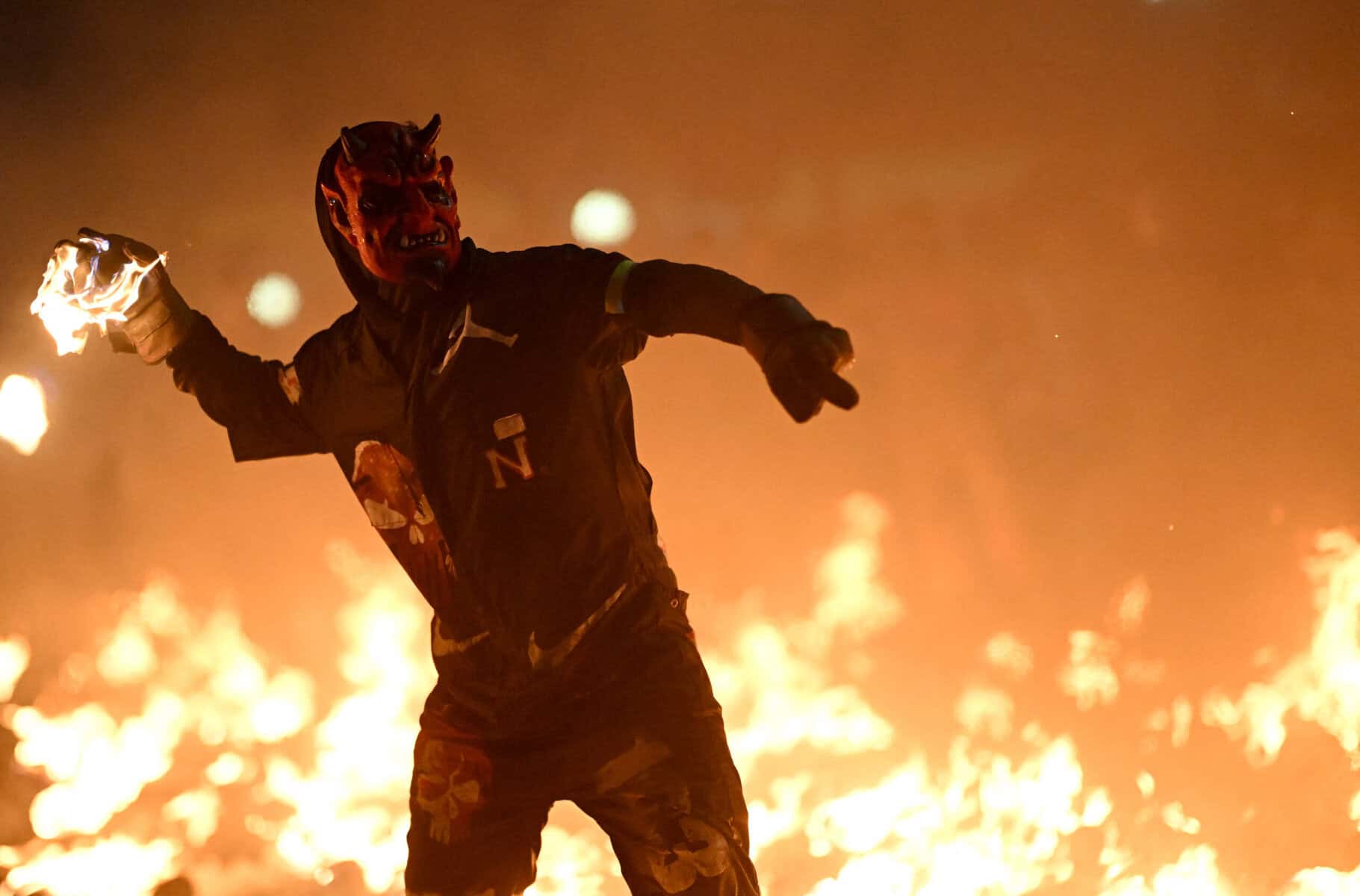
If you are in El Salvador this weekend and want to see something you will not find anywhere else, head north from San Salvador on Monday night. The district of Nejapa, in San Salvador Oeste, holds the 104th edition of its fireball battle on 31 August. Two teams of residents take up positions at opposite ends of the main street and hurl burning balls of cloth at each other for about two hours while thousands of people watch from the sides.
The municipal government has built a two-day program around it, running 30 and 31 August, with music, food, parades and cultural events leading into the battle itself. The 30th is also marked locally as Día de la Juventud. Everything about it is free.
The balls are made months ahead and Cotton rags are bound with wire into rough spheres and then submerged in barrels of gasoline for weeks so the fuel soaks all the way through. Organizers have prepared upwards of 3,000 in recent years. Once lit, the flames run higher than a meter (3.3 feet).
The players, known as boleros, paint their faces, soak their clothing, and wear gloves and long sleeves. Burns still happen. That is part of why people come. Two accounts of the tradition’s origin circulate in Nejapa, and residents will tell you both. One holds that it commemorates the 1658 eruption of the El Playón volcano, which destroyed the original settlement and forced the population to move.
The other traces it to 1917, when the San Salvador volcano erupted and the town was spared, which locals attributed to the intervention of their patron saint, San Jerónimo Doctor. In either version, the saint threw fire to turn the lava away. The festival in its current form dates to 1922. The Ministry of Culture declared it a Bien Cultural in 2019.
If you go, a few things are worth knowing.
Do not wear synthetic fabric. It melts onto skin. Long trousers and closed shoes are the right call, and shorts and skirts are specifically discouraged by organizers because a stray ball against bare leg causes a serious burn. Stay out of the playing zone, and do not pick up a ball and throw it. Balls do go astray into the crowd, and spectators who join in are the ones most likely to hurt someone.
Leave infants and small children at home and this is not a judgment call the crowd will help you with once you are inside it. Arrive well before dark. Parking fills, the main street closes, and the walk in from where you leave a vehicle gets longer as the evening goes on. Local families set up food stalls through the afternoon, so coming early is no hardship.
Nejapa sits roughly 25 kilometers (16 miles) north of San Salvador. Note that this route is not affected by the weekend closure of the Panamericana at Los Chorros, which is west of the capital.
For a country that spent decades being described to outsiders in a single register, Nejapa on the last night of August is a useful corrective. It is loud, it is genuinely dangerous, and it has been happening every year for more than a century because a town decided its survival was worth remembering out loud.





