

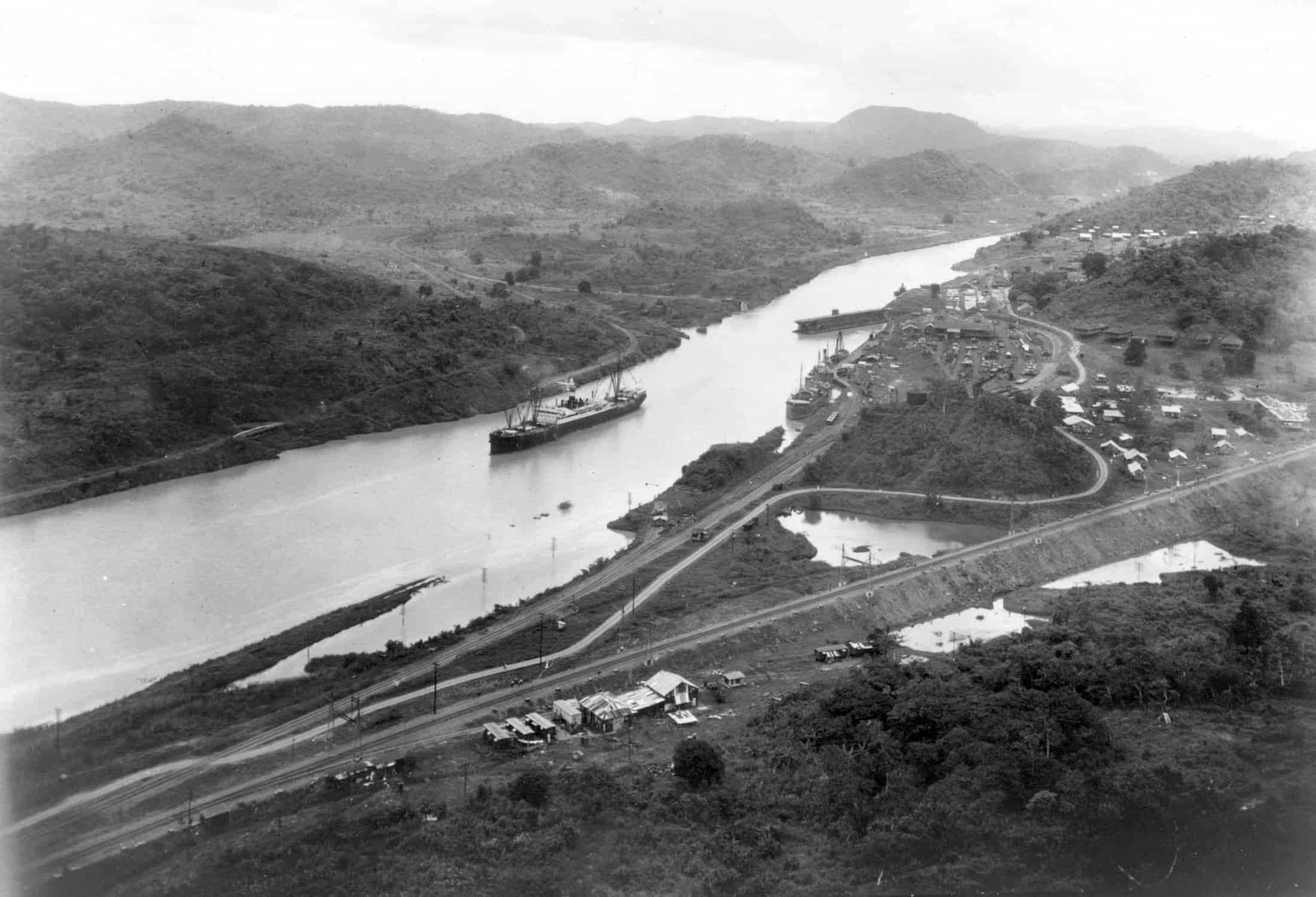
Twelve years of digging, an estimated 27,500 deaths and roughly $375 million ended quietly on the morning of August 15, 1914, when a single steamship slipped into a lock chamber on Panama’s Caribbean coast and began climbing a staircase of water.
The SS Ancon, a cargo and passenger vessel of the Panama Railroad Company, left Cristóbal at Colón and reached the Pacific port of Balboa about nine hours later. It was the first official transit of the Panama Canal, and it joined the Atlantic and Pacific for the first time in human history.
The ship covered roughly 80 kilometers (50 miles). Electric towing locomotives, still known as mules, guided it through the three chambers of the Gatún Locks, lifting it about 26 meters (85 feet) above sea level and into Gatún Lake.
From there the Ancon crossed the lake and entered the Culebra Cut, the narrow slot carved through the continental divide and the deadliest, most unstable stretch of the entire project. Landslides had swallowed months of work there. On that morning the ship passed through without incident, dropped down through the Pedro Miguel and Miraflores locks, and reached the Pacific.
Chief engineer George W. Goethals, the U.S. Army officer who had driven the project to completion, watched much of it from a railcar running alongside the ship. Senior canal pilot John A. Constantine had the helm.
What was missing was the celebration. Panama had planned an international fleet review, with warships gathering off Virginia and steaming through the new canal to San Francisco for the Panama-Pacific International Exposition. The First World War had begun in Europe two weeks earlier, and the fleet never sailed. The opening of one of the largest engineering projects ever attempted went almost unnoticed outside the isthmus.
The Ancon was not, strictly speaking, the first vessel through. A French-built crane boat, the Alexandre La Valley, had worked its way across in stages during construction and reached the Pacific on January 7, 1914. The Ancon’s sister ship, the Cristóbal, carried a load of cement through on August 3. But the Ancon’s run was the ceremonial one, the transit that opened the waterway to commercial traffic.
The change it produced was immediate and permanent. Ships moving between the east and west coasts of the Americas had until then rounded Cape Horn or threaded the Strait of Magellan, adding thousands of kilometers and weeks of sailing to every voyage, along with some of the worst weather on the planet. The canal erased that detour overnight and cut freight costs across two oceans.
It also handed the United States a strategic instrument. A navy able to shift between the Atlantic and Pacific in days rather than months was a different navy, and Washington held the Canal Zone until the Torrijos-Carter treaties transferred full control to Panama on the last day of 1999.
The waterway is busier now than its builders imagined. Through the first nine months of the 2026 fiscal year, the canal averaged 35 transits a day and logged 10,726 crossings, a 5.2% increase over the same period a year earlier. Ships far larger than the Ancon pass through the expanded neopanamax locks opened in 2016.
The threat to all of it is not congestion but rainfall. The canal runs on fresh water, and every transit drains tens of millions of liters from the lakes that feed the lock chambers. A severe drought in 2023 and 2024 forced the Panama Canal Authority to cut daily transits and restrict how deeply loaded ships could sit, sending ripples through global supply chains and freight rates.
Two wet years followed and restrictions were lifted. That reprieve now looks temporary. Canal Administrator Ricaurte Vásquez Morales has said the probability of a severe El Niño event climbed from 25% in April to 81% by July, and that limits on draft and on the number of daily booking slots are likely to return.
The long-term answer is a reservoir on the Río Indio, approved by the canal’s board in February 2025 at an estimated cost of $1.6 billion. A dam would create a new lake of about 4,600 hectares (11,370 acres), feeding Gatún Lake by gravity through a tunnel of roughly 8.7 kilometers (5.4 miles) and supplying drinking water to more than half of Panama’s population.
Construction is not scheduled to begin until 2027 and would take about six years, putting the reservoir in service around 2032 at the earliest. The canal authority puts the number of residents who would be displaced at roughly 2,000 across 38 farming communities; opposition groups and some published estimates put the figure higher, and the farmers of the Río Indio basin have organized against the project, arguing for the expansion of an existing reservoir on the Bayano River instead.
An environmental impact assessment at Panama’s most stringent review level, including formal public hearings, is due to be presented in the second half of this year. A hundred and twelve years after the Ancon made its unheralded crossing, the canal’s central problem has inverted.
The men who built it fought rock, mud and disease to force a path between two oceans. The people who run it now are fighting to keep enough water in the mountains above it to float the ships through.





