

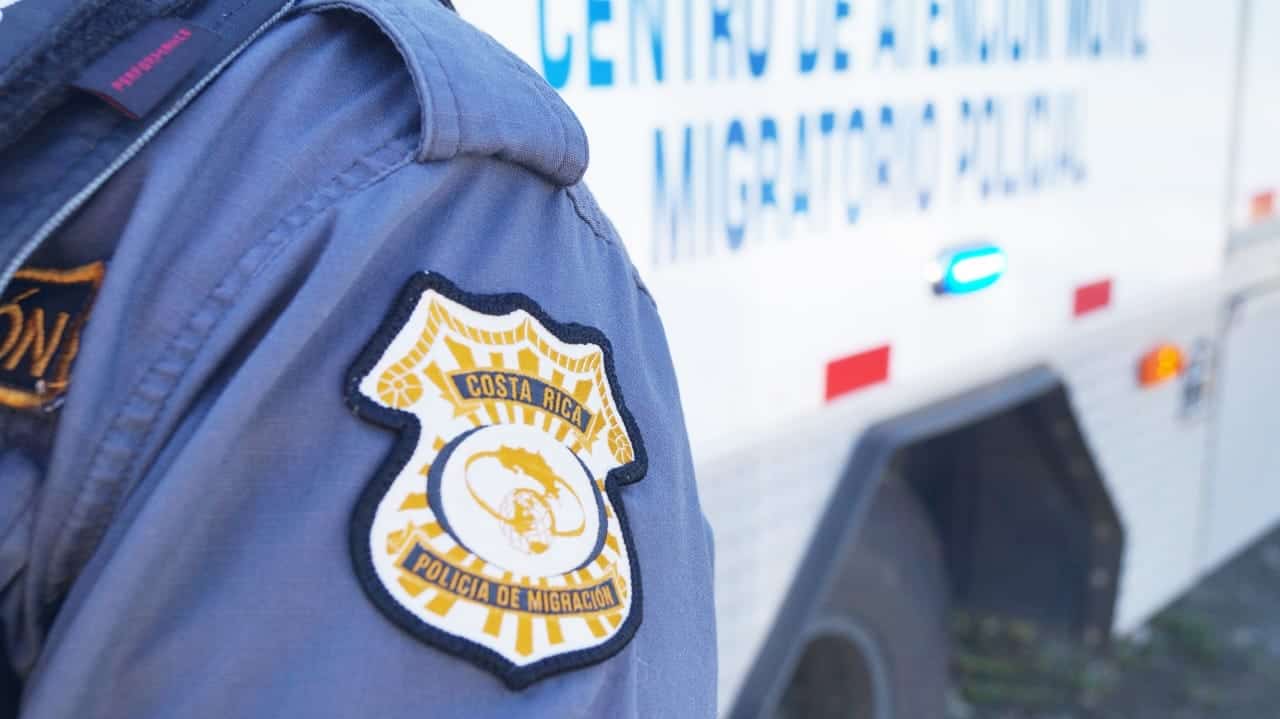
If you live in or are passing through Costa Rica’s Central Valley, keep your immigration papers on you. Migración has announced a fresh round of document checks across the Greater Metropolitan Area, and the simplest way to avoid a problem is to be able to prove your status on the spot.
Here is what that means in practice. The Professional Migration Police, working alongside the traffic police and the judicial police, stop and verify people’s migratory status during these operations. If you can show valid documentation, the check is a formality. If you cannot, the consequences range from a warning to detention and, for people found to be in the country illegally, removal. The law behind this is not new: foreign nationals in Costa Rica are required to carry valid documentation, and enforcement of that rule is what these operations are about.
So carry the right thing for your situation. If you are a tourist, that means your passport with a valid entry stamp and proof you are within your permitted stay. If you are a resident, carry your DIMEX, the residency ID card, and do not let it lapse. If your DIMEX is expired and you are in the middle of renewing it, carry proof that your paperwork is in process. A photo of your documents on your phone is useful as a backup, but the physical card and passport are what officers expect to see.
Migración has not published a list of locations or a schedule, and it describes these operations as part of its routine enforcement work rather than a special campaign. That is worth keeping in perspective: this is not a manhunt aimed at long-term residents or retirees who are properly documented. For anyone whose paperwork is current, the practical effect is small — carry your card, cooperate with a check, move on.
The checks fit a broader pattern that has run through 2026. Since taking office in May, President Laura Fernández has made a “mano dura,” or firm-hand, security policy central to her administration, tying tighter immigration control to her push against organized crime. Migration authorities have carried out repeated verification operations around the country this year, coordinated with other police forces, and have deported or expelled people found in irregular status. In early July, Migration coordinated the obligatory removal of 28 people, most of them Nicaraguan and many of them released from Costa Rican prisons after serving sentences. Earlier in the year the agency reported dozens more removals over short periods.
That enforcement drive is where the harder questions sit, and migrant-rights organizations have raised them. They have voiced concern for Nicaraguans who left their country citing political persecution, warning that a deportation could put those individuals at risk if they are removed before they can properly establish their status with Costa Rican authorities. The organizations have urged foreign nationals to keep their documentation current and to regularize their situation where they can, precisely so that a routine check does not turn into something worse.
For most of us, none of this needs to be alarming. If you are a documented resident, a legally staying visitor, or a retiree with a valid cédula, the takeaway is small and manageable: keep your card current, carry it, and know that a check is a check. If your status has slipped — an expired DIMEX, a tourist stay that ran over, paperwork you have been meaning to finish — this is the moment to deal with it rather than hope you are not stopped. You can review your status, renewal requirements, and appointment options through Migración at migracion.go.cr. Sorting it out on your own terms is far easier than sorting it out at a checkpoint.





