

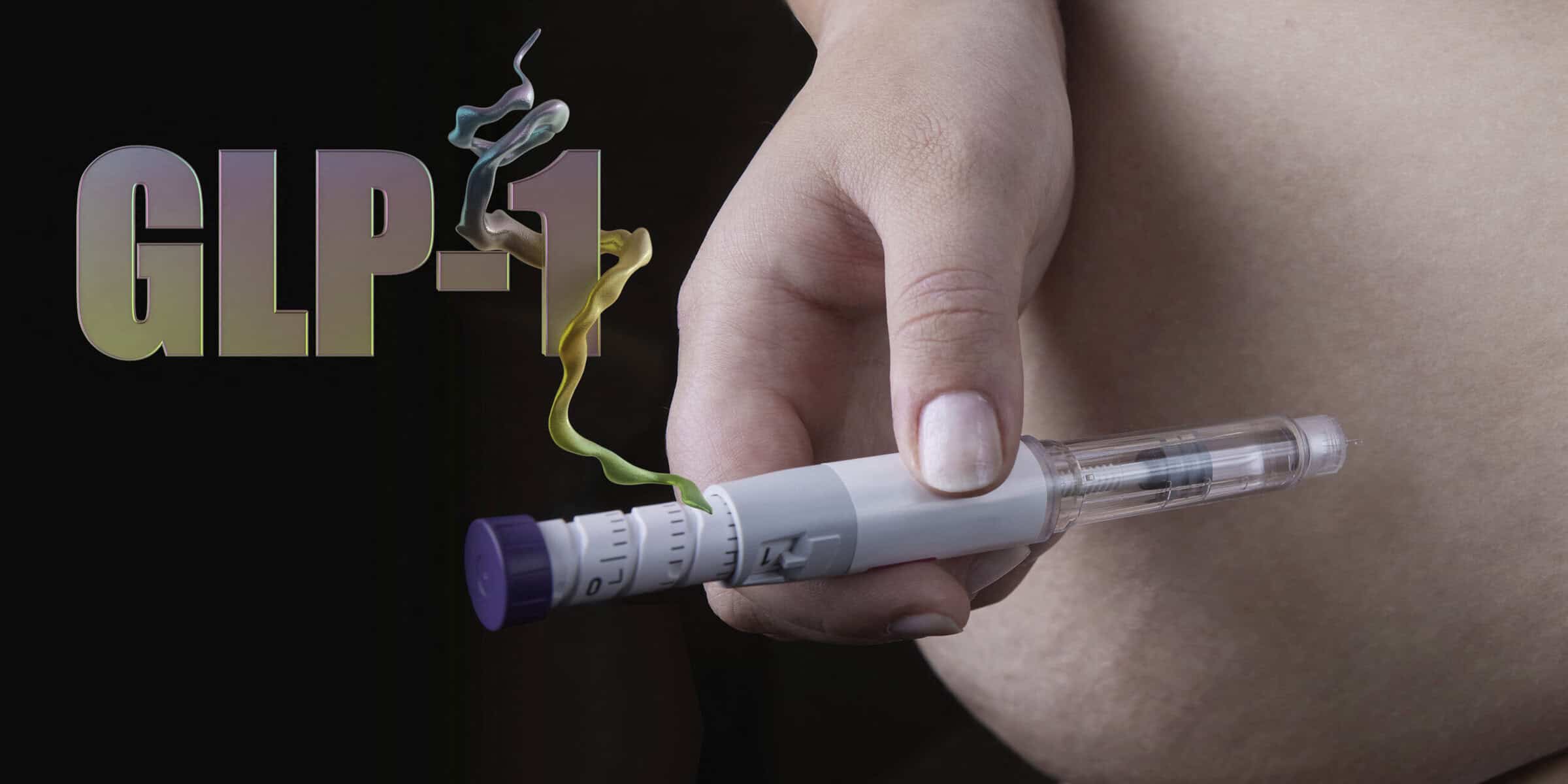
If you are shopping for a weekly weight-loss shot in Costa Rica, start with one fact that changes everything else: the drug most people are asking for by name is not legally sold here. Tirzepatide — the ingredient in Mounjaro and Zepbound — has no sanitary registration with the Ministry of Salud.
Its maker, Eli Lilly, operates in our country, but the drug itself has not been approved for the local market. That means any vial or pen labeled Mounjaro or Zepbound that you are offered in Costa Rica did not come through the legal channel. It arrived some other way, and no Costa Rican regulator has checked what is inside it.
Here is the fuller picture of what you can and cannot get. From the whole family of GLP-1 drugs, only two are registered in Costa Rica: semaglutide, sold as Ozempic and approved for type 2 diabetes, and liraglutide, sold as Saxenda for obesity. Wegovy — the higher-dose semaglutide aimed at weight loss — is not registered yet, though it is expected to enter the market during 2026.
If a doctor prescribes Ozempic for weight loss, that is an off-label use, meaning it is being used outside its approved indication. That is a decision for a physician to make with you, not something to buy off a screen.
The gap between what people want and what is legally on the shelf is exactly what feeds the gray market. Aesthetic clinics, some pharmacies, social media sellers, and “research-use-only” peptide websites have stepped into that space, offering injectable weight-loss products with little or no medical oversight. The Ministry of Salud saw this coming.
In 2025 its Dirección de Regulación de Productos de Interés Sanitario warned the public about clinics promoting and administering injectables like semaglutide, tirzepatide, cagrilintide, and liraglutide without a medical evaluation first. The warning was blunt about why it matters: these drugs need a prescription and a proper assessment, and injectables need specific storage and handling to stay safe and effective.
The counterfeit risk is not hypothetical, and it is not just a Costa Rica problem. As demand for these drugs exploded worldwide, fakes followed. The World Health Organization issued a medical-product alert in 2024 after falsified incretin injectables turned up across the Americas and Europe. In late 2025, UK authorities shut down a facility making counterfeit tirzepatide and seized more than 2,000 fake injection pens, described at the time as the largest such haul on record.
Early in 2026, Mexico’s health regulator, COFEPRIS, flagged illegally sold tirzepatide products moving through the region. When a drug has no legal route into a country but plenty of demand, that is precisely the kind of product that ends up in unofficial hands.
Costa Rica has also just been reminded that fakes can reach its own supply chain. On July 13, the Ministry of Salud alerted the public to two falsified lots of the cancer drug DARZALEX circulating internationally, after the manufacturer confirmed the lot numbers were not genuine. That was a registered, hospital-grade medicine — proof that counterfeiters do not limit themselves to back-alley products.
So how do you protect yourself? Price is the first tell. A registered presentation of Ozempic runs in the range of roughly ₡109,000 to ₡166,000 at a pharmacy. If someone is offering a “tirzepatide” vial for a fraction of that, the low price is not a bargain — it is a warning. Buy only registered products, from a licensed pharmacy, with a prescription, and check that the product carries a sanitary registration. Treat these as red flags: sales through social media or direct messages, loose vials instead of sealed manufacturer pens, labels that say “for research use only,” anyone willing to sell without a prescription, and any clinic that will inject you without evaluating you first.
If you have a genuine medical need for a drug that is not registered here, there is a legal path, and it does not run through a clinic’s back room. Costa Rica’s General Health Law allows the personal-use import of an unregistered medicine with prior authorization from the Ministry of Salud. Travelers can generally bring personal-use quantities in original packaging with a prescription. That route is slower than a same-day injection at a med-spa, but it is the one that keeps you inside the law and away from a mystery vial.
None of this is medical advice, and these are not casual drugs. Dosing errors are the single most common problem reported with tirzepatide worldwide, and the side effects are real. If you are considering a GLP-1 for weight or blood sugar, the safest first step is the least glamorous one: talk to a licensed physician who can evaluate you and prescribe something the country has actually approved.





