

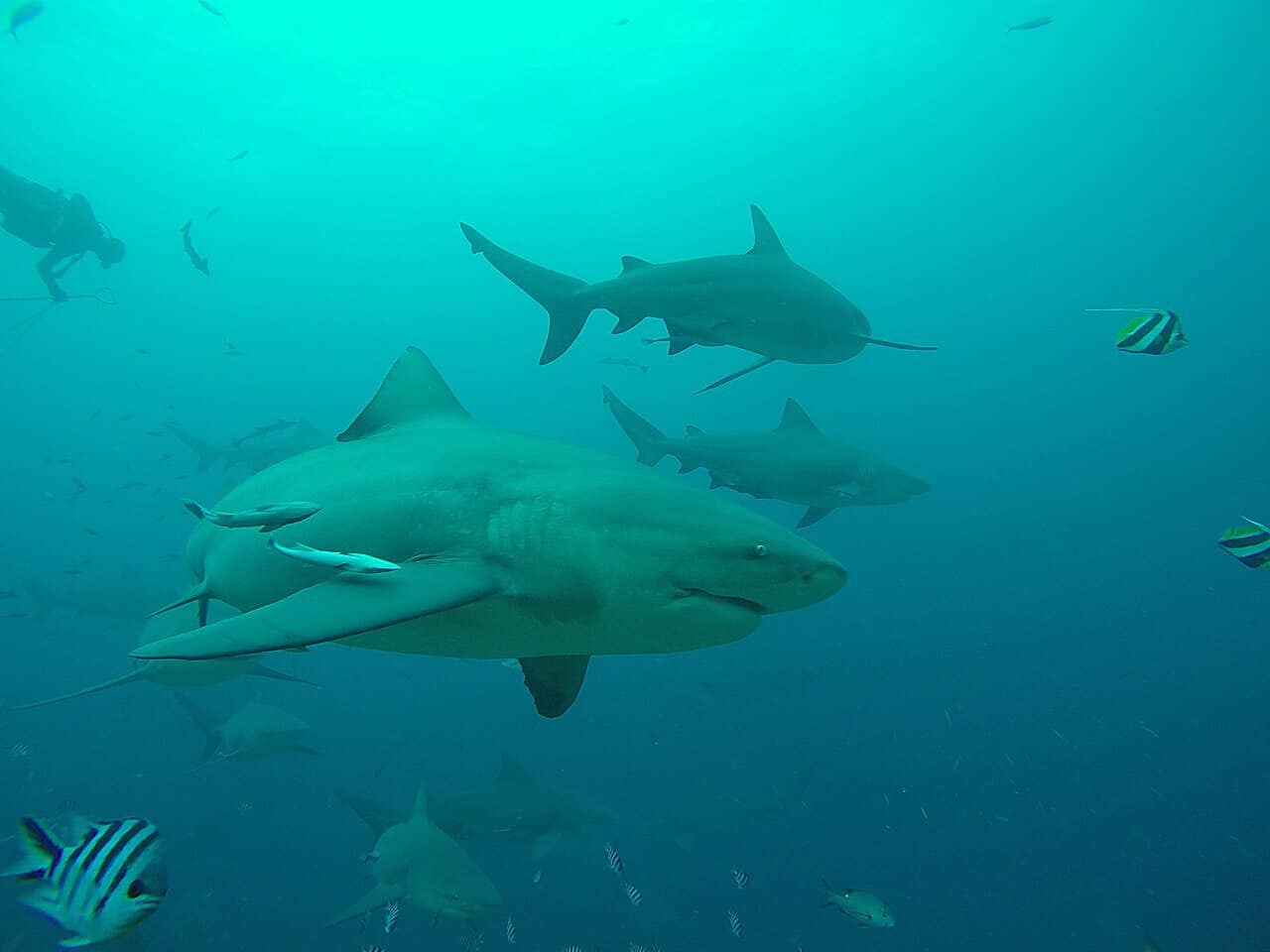
Playas del Coco will host the Festival del Tiburón Toro from tomorrow July 3 until Sunday the 5th, bringing researchers, divers, students, tourism businesses and community groups together for a weekend focused on one of Costa Rica’s most recognizable marine species. The three-day event will center on conservation, tourism and community education. Official festival activities will be free and open to the public, while some marine experiences offered through partner operators may be handled separately.
The festival begins Friday morning at Parque Amor de Temporada with an opening ceremony, educational activities, a school parade, information booths and local food. Later that day, Hotel El Colono will host a scientific symposium focused on sharks, marine megafauna and responsible wildlife observation.
Saturday’s program will shift toward the water and the local dive community. Scheduled activities include bull shark diving, whale and dolphin watching, birdwatching and coral-cleaning activities organized with partner groups. In the afternoon, community talks will focus on the history of diving in Playas del Coco, underwater photography, women leaders in Costa Rican diving and ways to reduce human impact on marine wildlife.
The day will close with “Noche Azul” at Casa Selvita, a cultural event featuring live music, art and ocean-conservation activities. Events continue Sunday with additional marine observation and exploration activities organized by dive centers and specialized groups.
The bull shark, known in Spanish as tiburón toro, has long been part of the marine identity of Costa Rica’s northern Pacific. The nearby Islas Murciélago are known for marine biodiversity and natural bull shark congregations, drawing divers from Playas del Coco, Playa Hermosa and Cuajiniquil.
The species also carries a serious conservation message. Bull sharks are considered vulnerable, and shark populations around the world face pressure from overfishing, habitat degradation and pollution.
For Playas del Coco, the festival is also a tourism statement. The town is already a major departure point for diving and marine excursions in Guanacaste, and the event aims to connect that visitor economy with scientific research and local education rather than treating marine life only as an attraction.
The festival’s participating institutions and organizations include Misión Tiburón, the Carrillo environmental commission, UNED, the Ministry of Environment and Energy, the Ministry of Public Education, the Tempisque Conservation Area, AyA, the Fire Department and Fuerza Pública, among others.
The result is a weekend event that sits somewhere between a local fair, a scientific meeting and a public reminder that Costa Rica’s marine reputation depends on more than beaches. It depends on whether coastal communities, tour operators and institutions can protect the wildlife that draws people to the ocean in the first place.





