

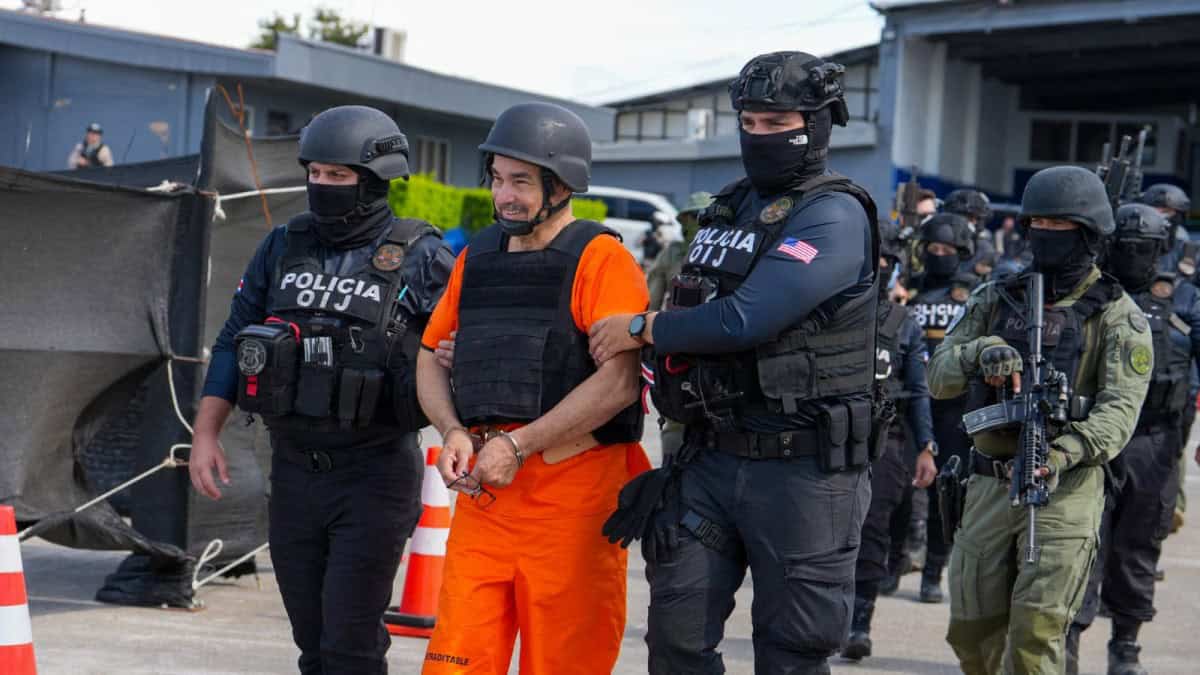
Twenty-four Costa Rican citizens are being held while courts decide whether they should be sent to the United States, Panama or France to face international drug charges. The United States has requested 20 of the suspects. Panama and France have requested two each. An extradition request does not mean that a person has been found guilty or that the person will automatically be sent abroad.
A Costa Rican court must review the evidence, legal documents and conditions attached to each request before approving an extradition. All 24 suspects are currently being held as their cases move through different stages. Some must first complete court proceedings in Costa Rica. Other cases are waiting for judges to review the paperwork or for the requesting country to provide missing documents.
The cases mark a major change for Costa Rica as for decades, the Constitution prevented sending its own citizens abroad to face criminal charges. That changed in May 2025, when a constitutional reform allowed Costa Rican citizens to be extradited for international drug trafficking or terrorism. A court must approve the extradition, and the person’s basic legal rights must be protected throughout the process.
Authorities have already extradited five Costa Rican citizens since the change took effect. Former Supreme Court judge and former Security Minister Celso Gamboa Sánchez and Edwin López Vega, known as “Pecho de Rata,” were sent to the United States on March 20. Both face international drug trafficking charges.
José Johnny Angulo Fernández, known as “John Cadenas,” was extradited to Italy on April 27. More recently, Gilberth Bell Fernández, known as “Macho Coca,” and Gabriel Lozano Badilla, known as “Compadre,” were sent to the United States on August 13. They are expected to face drug charges in New York.
The 24 cases still pending include Costa Ricans by birth and people born in other countries who later became Costa Rican citizens. France has requested two naturalized Costa Ricans with the surnames Restrepo and Pablot. Both are accused of involvement in sending drugs to Europe.
Panama has requested two other Costa Ricans. One is a man with the surname Villalobos, known as “Boligoma,” who previously faced drug charges in Panama. The second, with the surname Martínez, was reportedly among Panama’s most wanted suspects before his arrest in Costa Rica in June.
Most of the people requested by the United States are accused of helping move cocaine through Costa Rica toward North American or European markets. The list could continue to grow. United States authorities have shown interest in seeking the extradition of Alejandro Arias Monge, known as “El Diablo,” who was captured in July after spending about 10 years on the run. However, a formal extradition request had not been received, meaning he is not included among the 24 current cases.
The government is also pushing another constitutional change that would allow Costa Ricans to be extradited for additional crimes. The proposal includes money laundering, arms trafficking, human trafficking, cybercrime, contract killings and murders connected to organized crime.
For now, extradition of Costa Rican citizens remains limited to international drug trafficking and terrorism. Every request must still pass through the country’s courts before a suspect can be handed over to another country.





