

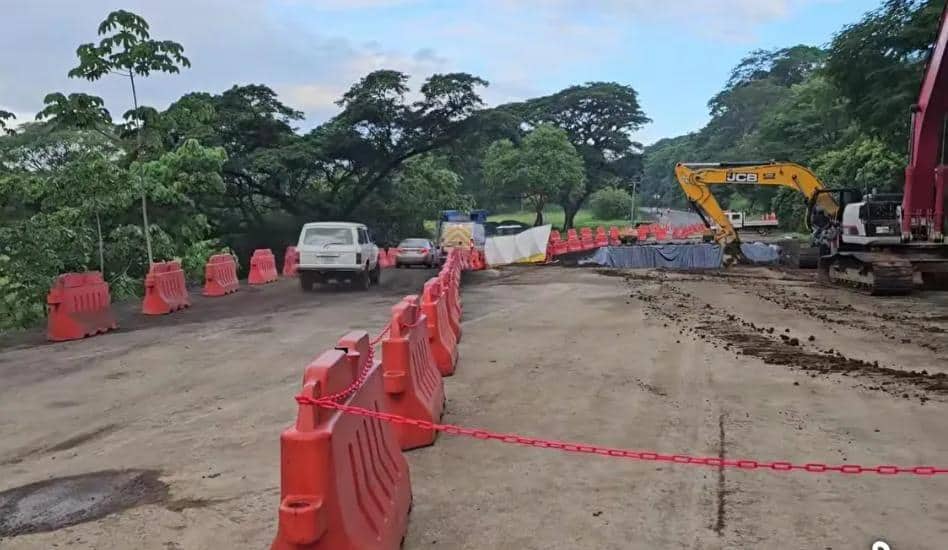
One month after a major sinkhole opened on Route 27 at kilometer 56 near Orotina, Costa Rica still has no definitive date for a full repair, leaving regulated passage in place on one of the country’s most important roads to the Pacific. The collapse was caused by the failure of a culvert during heavy rains. The damage opened a large hole across the highway, forcing a total closure before authorities later allowed limited traffic through the affected area.
Route 27 connects San José with Caldera, Puntarenas, Guanacaste and the Central and South Pacific, making the delay especially important for beach travel, tourism, freight movement and weekend traffic between the Central Valley and the coast.
The first expectation was that a definitive solution could take about two weeks. That timeline has not been met. Officials initially discussed using a modular Bailey bridge to restore more normal traffic, but that option was later ruled out because of the size and conditions of the work area.
For now, the route continues to operate with one temporary lane and regulated passage in both directions. The setup began as a daytime measure for light vehicles, then shifted to 24-hour regulated passage while crews continued work at the site. Heavy vehicles have been directed to keep using Route 1 through Cambronero.
The repair has proven more complicated than first expected. Crews had to drill a relief tunnel near the damaged culvert to drain a large body of water that had formed beside the road. The flooded area covered roughly 24,000 square meters, with an approximate depth of six meters, creating pressure on the damaged structure.
Rain has also slowed the work. Intense downpours in the area complicated the job, though crews have moved into mud and debris removal before replacing the culvert. The final schedule still depends on weather, site conditions and the pace of reconstruction. The sinkhole has now reached the one-month mark without a definitive solution. In recent days, work crews were installing new concrete ducts measuring 3.2 meters in diameter on the foundation already built at the site.
The continued delay means drivers heading between San José and the Pacific should still expect slower movement near Orotina, especially during peak travel periods. Authorities have asked motorists to reduce speed, respect temporary signs and follow instructions from Traffic Police and workers in the area.
Anyone driving Route 27 should check current road conditions before leaving, build extra time into trips toward the Pacific or San José, and consider alternate routes during heavy rain or peak weekend traffic. Until the damaged culvert is replaced and the road surface rebuilt, one of Costa Rica’s most important highways remains in temporary mode.





