
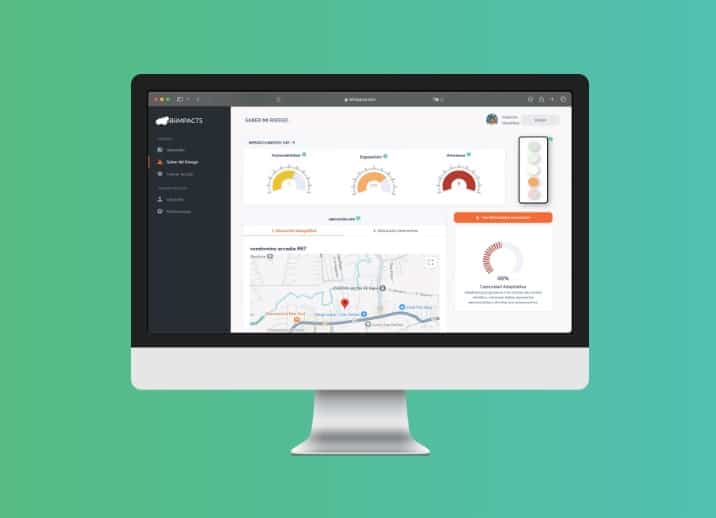
Costa Rica’s hospitality sector has a new way to measure how exposed it is to a warming, less predictable climate. Officials launched FU-TURISMO, a free online platform that lets hotels assess their vulnerability to weather-driven hazards and build plans to keep their businesses running when those hazards hit. Available at futurismocr.com, the tool is aimed primarily at the micro, small and medium-sized lodging businesses that make up the bulk of the country’s tourism industry, and its backers describe it as the first platform of its kind in Latin America.
The premise is straightforward: many tourism operators understand that the climate is changing but struggle to translate that awareness into concrete steps. FU-TURISMO is built to close that gap. The platform is organized around three modules — one focused on learning, one on assessing the specific climate risks facing each business, and a third centered on action, which delivers tailored recommendations to reduce the vulnerabilities the assessment turns up. A hotel creates an account, sees risk metrics based on its geographic location, and receives an index rating its level of exposure to phenomena such as droughts and floods.
Beyond diagnosis, the system is designed to point operators toward solutions. It connects users with specialists in financial products and more accessible insurance options, and the risk models it generates can also feed the design of insurance and financing tailored to the tourism sector. “This project is a practical, accessible, free and democratic solution,” said Fernando Víquez, general manager of Sagicor, framing the platform as a way for individual businesses to turn uncertainty into specific action.
The tool is the product of a public-private alliance led by the General Superintendence of Insurance (Sugese), together with the Costa Rican Tourism Institute (ICT) and the insurance industry. Participating companies included Internacional de Seguros Costa Rica and Sagicor, alongside the intermediaries BN Seguros and Popular Seguros, with support from the Association of Private Insurers of Costa Rica and international cooperation.
Tomás Soley, the superintendent of Sugese, was among the officials presenting the launch, which organizers cast as an effort to bring the public sector, private industry and outside partners together around a problem that touches a strategic part of the economy.
That strategic weight is hard to overstate. According to figures cited by the ICT and the Central Bank, tourism generated roughly $5.54 billion in foreign exchange for Costa Rica in 2025 and accounts for around 8% of gross domestic product. The sector supports more than 500,000 direct and indirect jobs and includes over 3,000 tourism businesses — more than 65% of them microenterprises.
Those smallest operators are often the most exposed to climate shocks and the least equipped to absorb them, whether the disruption comes as a washed-out road, a cancelled booking, or rising costs after a storm.
The launch also lands at a pointed moment. The Instituto Meteorológico Nacional has signaled a developing El Niño expected to run through the second half of 2026, a pattern that typically brings a wetter Caribbean and a drier Pacific, raising the odds of both flooding and drought depending on the region.
Tourism ranks among the economic activities most directly exposed to that kind of variability, through damage to infrastructure, interruptions to operations, effects on the biodiversity that draws visitors in the first place, and higher operating costs.
For the many small lodges, cabinas and boutique hotels run by individual owners around the country, a free resource that quantifies local risk and suggests next steps fills a real gap — the kind of planning that larger chains handle in-house but that smaller properties rarely have the time or budget to commission. Whether the platform sees broad uptake will depend on how usable operators find it and how current its underlying data stays, but the entry cost is low: registration is free.
FU-TURISMO is available now to hospitality businesses through futurismocr.com, and forms part of a broader push to strengthen the Costa Rican tourism industry’s resilience as climate pressures intensify. Operators can create a user account, run an assessment for their location, and review the recommendations the platform generates at no charge.