
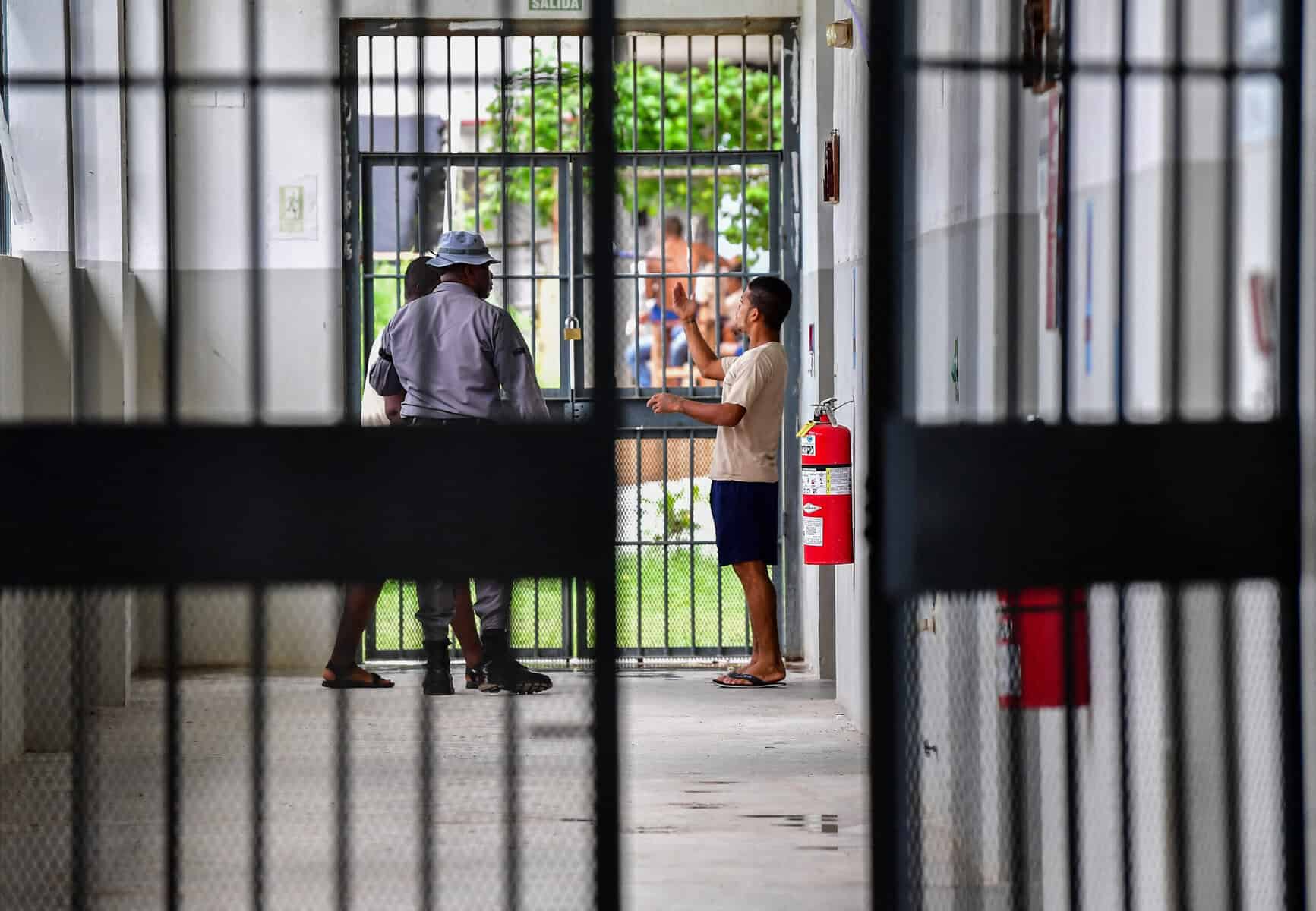
Panama will adopt the kind of “hardline” prison reforms of its Latin American neighbors to address failures of its penal system following a mass escape this month, President Jose Raul Mulino said Thursday. The right-wing leader said the escape of nearly 200 inmates from La Joyita prison outside Panama City on June 1 reflected a “collapse” of the system, where prisoners continue criminal activities with the “complicity” of guards.
“What happened…makes me ashamed,” Mulino told a press conference. “It’s time to use hardline models that are producing results in other regions, with new structures and public policies.” The government plans to announce the new measures on July 1. Local media have reported that includes three new prisons to reduce overcrowding. Panama’s about 20 prisons hold 24,000 inmates — 10,000 more than their capacity.
Several Latin American governments have sought to emulate Salvadoran President Nayib Bukele, who declared a war on gangs in 2022 that led to the creation of mega-prisons and the mass imprisonment of around 92,000 people – over one percent of the country’s population.
Ecuador and Costa Rica are constructing prisons inspired by the Center for Terrorism Confinement (Cecot), which has become a symbol of Bukele’s anti-gang offensive in El Salvador. Rights groups have alleged that Cecot has been a venue of torture and sexual violence. Panama is transit point for cocaine produced in neighboring countries. Street gangs are active, though on a far smaller and less violent scale than in Guatemala or Honduras.
Mulino said that inmates in Panamanian prisons plan killings behind bars, which reflected a “worrying…spillover of the narcotrafficking business.” The president said that 178 of the 195 inmates who escaped from La Joyita have been recaptured. He said those who remain at large are not high-profile criminals or gang leaders.