

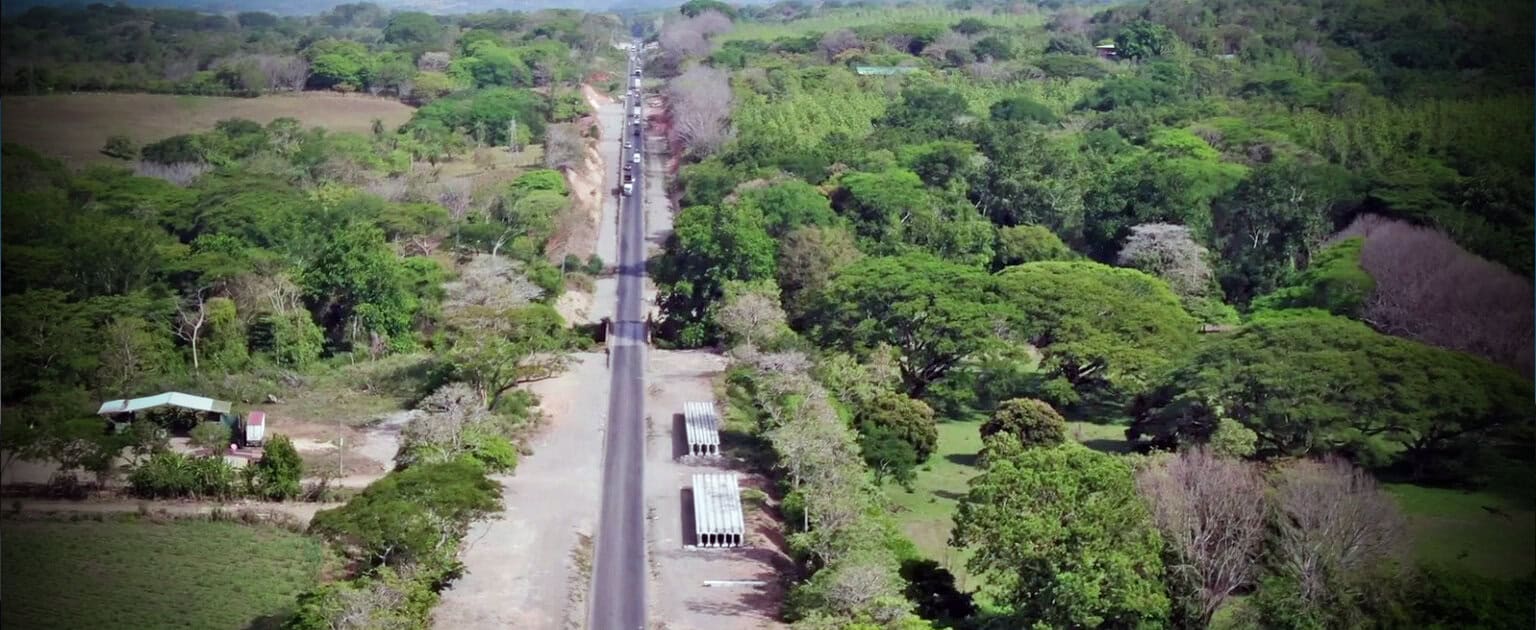
An internal audit at Costa Rica’s National Roadway Council (Conavi) has warned that construction work on the Barranca-Limonal highway disrupted natural overhead routes used by wildlife, potentially leaving animals more exposed to traffic. Conavi’s executive director, Mauricio Sojo, disputed the audit’s description of what happened. He said the natural crossings were not deliberately removed but fell during earthmoving work and were later restored.
The warning appears in preventive services report signed on April 14, 2026. It followed a March 5 inspection involving Conavi auditors and the project’s environmental manager. During the visit, the group found that natural overhead wildlife crossings connecting vegetation on opposite sides of the highway had been removed, according to the report.
The affected area was between the Aranjuez River and the main entrance to Judas de Chomes, where crews were cutting trees and clearing the highway right-of-way. The environmental manager told auditors that the design plans available at the construction site did not contain enough information about the crossings.
The report did not specify how many natural crossings were affected or which wildlife species used them. Auditors warned that the loss of those connections could force animals onto the roadway. “Wildlife in the area where the project is being carried out is exposed to the risk of being struck by vehicles,” the report said.
The audit reminded project officials that aerial wildlife crossings must be provided under Costa Rica’s environmental guidelines for wildlife-friendly roads. It also cited the precautionary principle recognized by the Constitutional Chamber, which requires authorities to take preventive action when public works could create environmental harm.
Conavi’s project unit was instructed to coordinate the immediate installation of temporary crossings in the affected areas. Auditors also asked the agency to make sure workers receive complete design plans before similar clearing begins elsewhere. The report identified possible legal, contractual and administrative consequences for Conavi, including sanctions or unfavorable court and administrative decisions. It also warned of potential harm to the agency’s reputation.
Sojo offered a different account when questioned about the findings. He said the natural crossings fell because of construction activity in the area, rather than being intentionally removed, and that temporary connections were subsequently restored. The Conavi director added that permanent wildlife crossings are included in the project’s tender documents and will be built as part of the highway expansion.
The Barranca-Limonal project covers approximately 48 kilometers (30 miles) of the Inter-American Highway North in Puntarenas province. Work resumed in January after more than three years of delays. Public Works and Transport Minister Efraím Zeledón said in July that the expanded highway will include 45 terrestrial and aerial wildlife crossings.
The project also calls for widening the road to four lanes, building or rehabilitating bridges and constructing pedestrian bridges, interchanges and drainage systems. Construction had reached approximately 20% overall completion by late July. The government expects the work to be completed in January 2028.





