

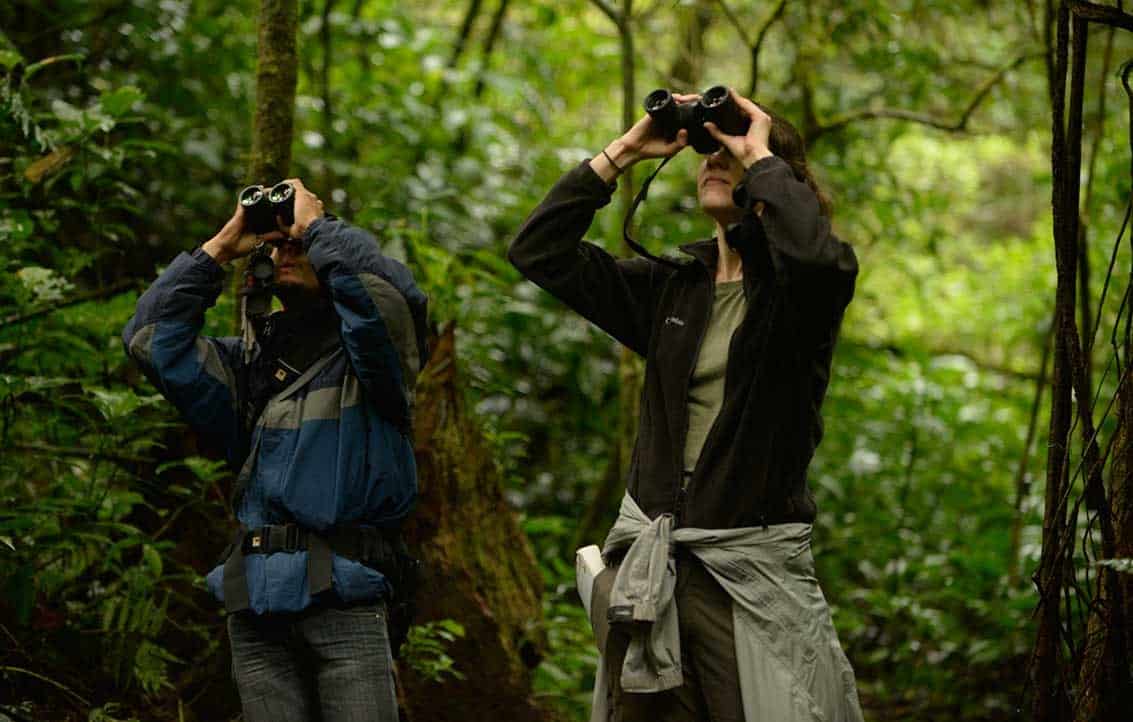
Birdwatching is becoming one of Costa Rica’s most valuable tourism niches, as travelers seek trips built around wildlife, local guides and rural destinations rather than the country’s traditional beach-and-volcano circuit. Known in the tourism field as avitourism, the activity centers on travelers who visit reserves, farms, forests, wetlands and highland areas to see and photograph birds in their natural habitat. For Costa Rica, that is a natural fit.
Costa Rica has more than 900 known bird species in a small area with Caribbean lowlands, Pacific dry forest, cloud forest, mangroves, wetlands and highland oak forests all within reachable distance. That concentration has helped Costa Rica build a reputation as one of the leading international birdwatching destinations.
For serious birders, it offers rare targets such as the resplendent quetzal, scarlet macaws, toucans, manakins, hummingbirds and regional endemics. For casual travelers, the activity can be as simple as a guided walk before breakfast or a stop at a lodge garden where feeders attract tanagers and hummingbirds.
Tourism planners see growth for a reason: birdwatchers tend to spend on specialized guides, rural lodges, private reserves, transport and early-morning tours. Unlike short-stay beach tourism, avitourism can push visitors into smaller communities and extend itineraries across several regions.
Industry estimates from before the pandemic placed bird-related tourism in Costa Rica at hundreds of thousands of visitors a year and more than $800 million in linked spending, with thousands of direct and indirect jobs. That is why birding is increasingly being treated as a tourism product in its own right, rather than an extra activity attached to general nature travel.
The Costa Rican Tourism Board has promoted a National Birdwatching Route and maintains regional birding materials for areas such as Monteverde, Sarapiquí, Turrialba, Osa, Los Santos, Golfito, Santa Rosa and South Guanacaste. These tools help turn scattered birding sites into clearer travel circuits for visitors and guides.
Turrialba shows the direction of this type of tourism. Local leaders in this field have promoted the area as an avitourism destination after records of more than 630 bird species. Its elevation range, proximity to the Caribbean slope and conservation work by farms and private properties have helped make the Cartago area a strong birding base. Similar efforts are expanding in Caño Negro, Coto Brus, Barra del Colorado, Sarapiquí, Carara, Los Santos, Puriscal and the Osa Peninsula.
Growth also brings pressure. Birdwatching depends on healthy habitats, quiet trails, patient guiding and responsible conduct. Overcrowding, repeated use of recorded bird calls, disturbance of nests and poor trail management can damage the same resource the industry sells. The birding market has responded by promoting good-practice manuals for guides, lodges and tour operators, with emphasis on lower-impact observation, waste control, visitor limits and respect for nesting and feeding behavior.
That conservation link is one reason avitourism matters for Costa Rica’s rural economy. A birding trip often begins before sunrise, requires local knowledge and rewards landowners who keep forest, wetlands and river corridors intact. A small lodge or farm with strong bird habitat can sell guided walks, photography platforms, meals, lodging and transport without needing large-scale construction.
Commercially, Costa Rica’s advantage is access. A visitor can watch quetzals in the highlands, macaws on the Pacific coast, toucans in the Caribbean lowlands and waterbirds in northern wetlands in a single itinerary. Few destinations offer that many ecosystems with the country’s tourism infrastructure, experienced guides and relatively short travel distances.
The challenge is keeping that advantage as competition grows. Colombia, Panama, Ecuador and other Latin American destinations are heavily promoting birding and hold larger species lists. Costa Rica’s edge rests less on raw numbers and more on ease of travel, protected areas, private reserves, trained guides and the ability to see many species in limited time.
As Costa Rica looks for tourism growth outside its busiest beach towns, birdwatching offers a path that fits the conservation brand and brings income to communities that visitors often miss. Done well, it can keep travelers moving through rural areas, support small businesses and give forests a clear economic value.
The birds are already here. The next step is making sure the tourism built around them stays disciplined enough to protect what people came to see.





