

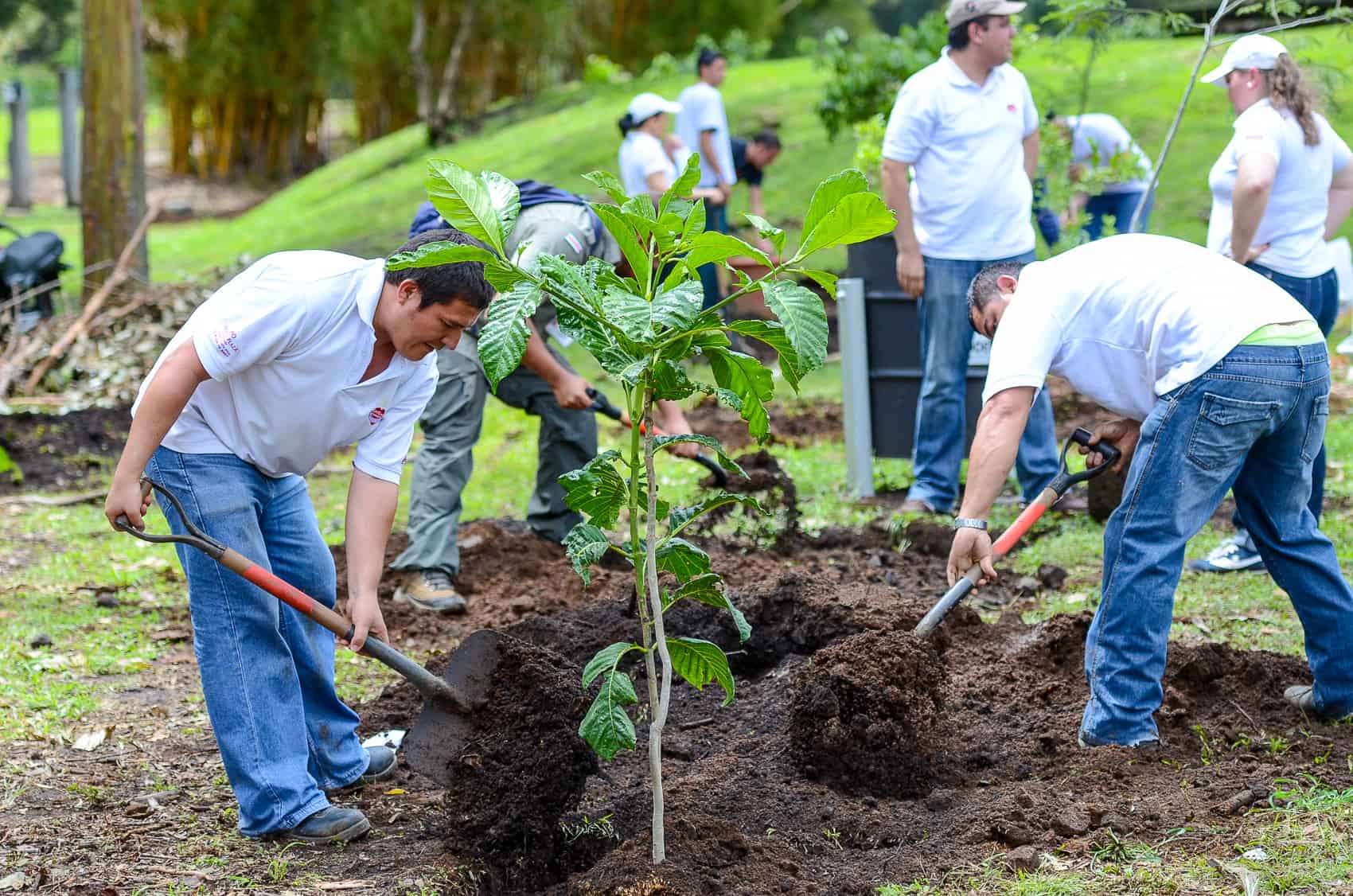
San José is moving to confront one of the capital’s most visible climate problems: heat trapped by concrete, asphalt and traffic. The Municipality of San José has announced a reforestation push to plant 3,000 trees across the capital this year, with the goal of lowering heat in public spaces and expanding shade in a city where some sectors have recorded temperatures between 35°C and 36°C.
The program will focus on parks, boulevards, pedestrian corridors and other public areas across the canton’s 11 districts. It marks a sharp increase over recent planting levels, after 1,500 trees in 2024 and 1,680 in 2025.
The target is not cosmetic. San José has long struggled with limited tree cover in heavily paved areas, where sidewalks, roads, buildings and parking surfaces absorb heat during the day and release it back into the city. That creates urban heat islands, pockets of higher temperature that can make walking, waiting for buses or working outside more uncomfortable, especially during hot afternoons.
The city is selecting native and urban-adapted species such as roble de sabana, corteza amarillo, jacaranda, júpiter and copey. The species were chosen for shade, adaptability to city conditions and their value for birds, insects and other urban wildlife.
For residents and visitors, the most immediate change should be felt at street level. A tree canopy can make a city block feel cooler long before it changes citywide temperature readings. Cooler sidewalks matter in San José’s center, where many people still move by foot or public transport and often have little protection from direct sun.
The reforestation effort also seeks to connect green areas around schools, sports facilities and public services. That makes the project broader than scattered tree planting. If the trees survive and mature, they could help link small pockets of urban nature while improving conditions for pedestrians.
The challenge will be keeping them alive. Planting 3,000 trees is easier than maintaining them through heat, vandalism, poor soil, limited root space and irregular watering. Urban trees also compete with sidewalks, underground pipes, power lines and traffic visibility. Without proper planning, a tree planted with good intentions can become a maintenance problem or be removed before it provides real shade.
That is where San José’s initiative will be judged. The capital needs shade, but it also needs follow-up: watering during dry periods, pruning, monitoring and site selection that gives young trees enough room to grow. A smaller number of healthy trees would do more for the city than a larger planting count that fails after the first dry season.
The new effort builds on earlier greening work in the city center. In 2025, a public-private project involving Planta Mi Árbol, Pro San José and the municipality began with the planting of 100 native trees between Paseo Colón and Avenida Central. That first phase was framed as a response to urban heat and a way to make the capital more walkable.
San José is not alone. Cities across the tropics are facing hotter streets as climate change meets dense construction and shrinking green space. Costa Rica often promotes itself abroad as a green country, but its urban centers tell a more complicated story. Our country’s environmental reputation has not always translated into shaded sidewalks, comfortable bus stops or cooler public plazas.
The 3,000-tree goal is an attempt to close part of that gap. For anyone living or going to downtown San José, the results will not appear overnight. Young trees need time to grow. But if the program is managed well, the benefits could be felt in lower surface heat, cleaner air, better rainwater absorption and a more livable capital.





