

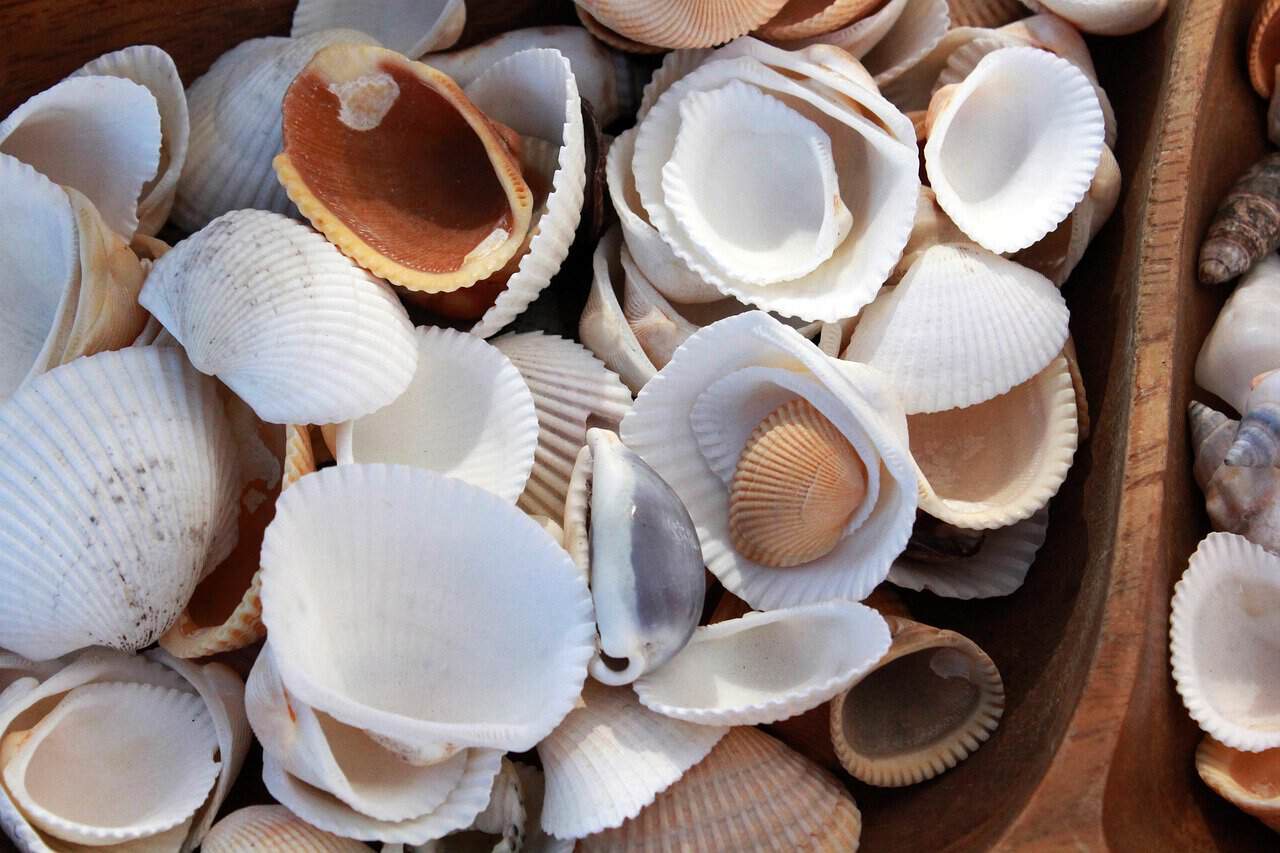
It looks innocent enough. A beautiful spiral shell sitting on the sand, worn smooth by the waves, glinting in the afternoon light. The instinct to pick it up and slip it into a beach bag is almost automatic for many visitors. In Costa Rica, that instinct can end your vacation very differently than you planned.
Over the past six years, authorities at Daniel Oduber Quirós International Airport in Liberia, Guanacaste, have confiscated nearly 8,900 kilograms of seashells from travelers attempting to take them out of the country. To put that figure in perspective, it is roughly equivalent to the weight of an adult male African elephant. Every kilogram of that total was once part of a living coastal ecosystem. And every person caught carrying those shells faced the consequences of Costa Rica’s Wildlife Conservation Law.
This is not a matter of a small fine and a polite lecture. Under Costa Rica’s legal framework, removing shells, coral, sand, or rocks from beaches and protected areas is classified as the extraction of natural heritage. More significantly, transporting wildlife products, which is precisely what shells are considered under the law, is treated as illegal wildlife trafficking. The penalties are not trivial.
Article 95 of the Wildlife Conservation Law sets out the sanctions clearly. For species not considered endangered, the penalty for unauthorized removal, transport, or transfer runs from one to five base salaries in fines, or a prison sentence of four to six months. For species whose populations have been declared reduced or at risk of extinction, the penalties escalate sharply to fines of 10 to 40 base salaries and a prison sentence of one to three years. In both cases, the shells or wildlife products in question are confiscated entirely.
Using Costa Rica’s 2026 base salary figure of 462,200 colones as the reference point, a fine at the lower end of the scale for non-endangered species runs to roughly 462,200 colones, equivalent to approximately $900. At the upper end for endangered species, 40 base salaries translates to nearly $36,000. Those figures do not include legal costs, potential deportation, or the impact of a criminal record on future travel to Costa Rica or other countries.
Airport scanners at both Liberia and Juan Santamaría International Airport in San José are specifically calibrated to detect shells in luggage. Enforcement is active and routine. The days of slipping a conch shell into a checked bag and hoping for the best are over. Between August 2024 and March 2025 alone, Juan Santamaría authorities seized 1,800 kilograms. Liberia collected another 1,648 kilograms in roughly the same period.
The ecological reasons behind the law are straightforward and serious. Shells are not decorative leftovers from dead animals. They are active components of coastal ecosystems. Hermit crabs depend on them for shelter. Fish and invertebrates use them as breeding grounds. Shells hold sand in place, reduce beach erosion, and help regulate the chemical balance of the seabed. When large volumes are removed, the effects ripple outward through the ecosystem in ways that take years or decades to reverse.
Costa Rica’s Ministry of Environment and Energy and the National System of Conservation Areas have been running public awareness campaigns since 2020 under the message “Leave the Nature, Take Only the Memory.” A dedicated application has been developed to help identify the origin of confiscated shells so they can be returned to the appropriate coastal zone, with more than 450 kilograms successfully reintegrated to date.
The message for visitors is simple. Leave the shells where you find them. Photograph them, admire them, and walk away. The souvenir shop has plenty of legally produced alternatives. The beach does not have plenty of shells to spare, and Costa Rica’s enforcement agencies are making that point at the departure gate every single day.
To report suspicious activity involving wildlife removal, contact the environmental complaint hotline at 1192, use the SITADA reporting platform, or visit any SINAC office in the country.





