

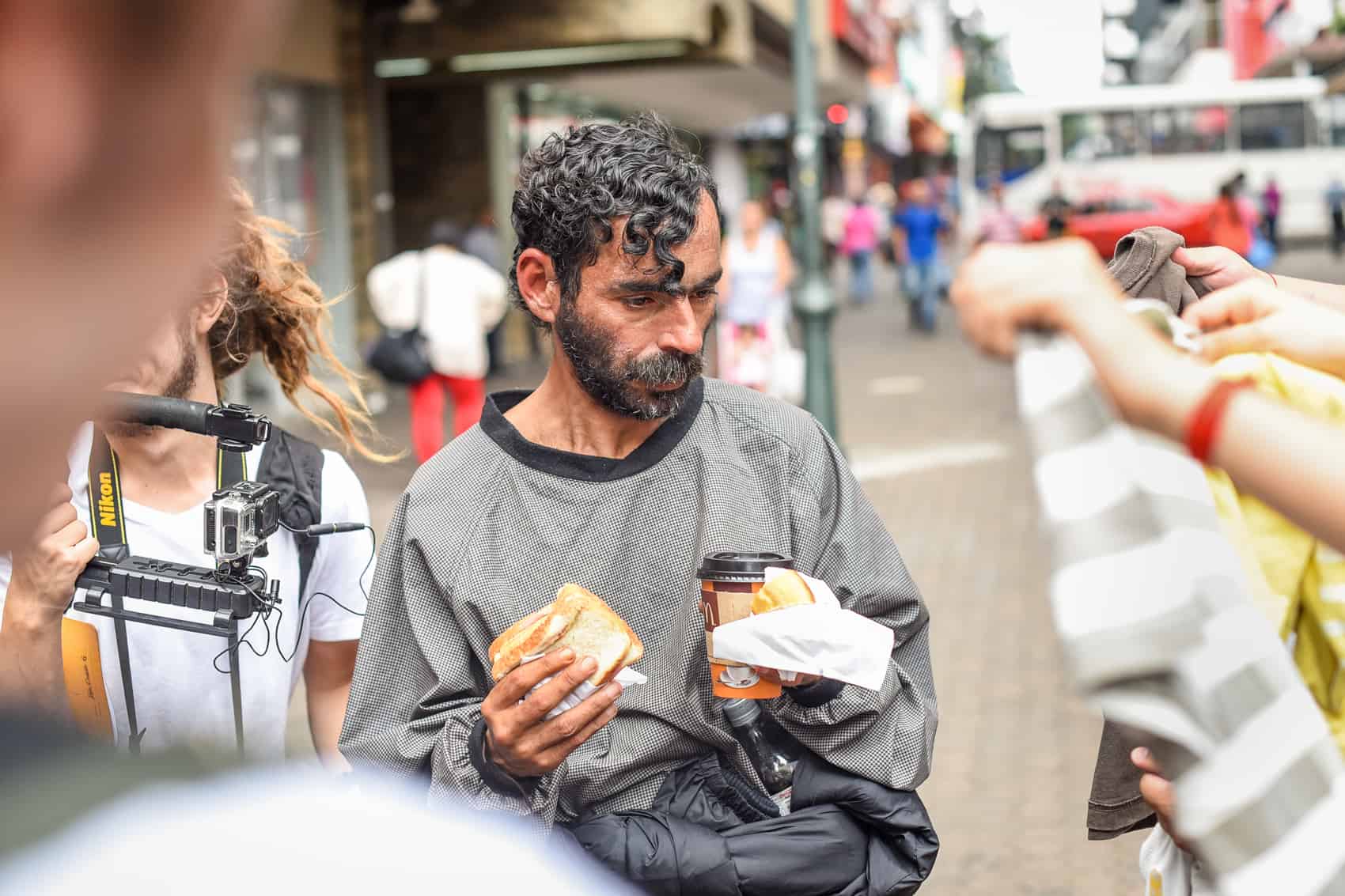
An estimated 7,133 people were living in street conditions in Costa Rica in 2025, more than half of them in the capital, San José — a population that has grown markedly over the past decade and has become an increasingly visible presence on downtown sidewalks.
The figure comes from the Mixed Institute of Social Aid (IMAS), the state agency responsible for tracking and assisting this population. According to IMAS data, 51.07% of people in street conditions are concentrated in San José, where encampments and people sleeping rough under cardboard or plastic have spread well beyond the historic “zona roja” into surrounding blocks.
How fast the population has grown depends on the baseline used. An opinion column published this week put the increase at roughly 291% over a decade, citing a rise from 1,825 people in 2015 to 7,133 in 2025. Drawing on the same 2025 IMAS estimate, the trend has alsop been framed as a 46% increase over seven years.
Both point in the same direction — sustained, accelerating growth — but the gap underscores an important caveat: Costa Rica did not begin applying more rigorous identification strategies until 2024, when authorities ran nationwide registration operations using door-to-door sweeps, fixed points and service tents to count and characterize the population. Some of the measured increase therefore reflects improved counting rather than purely new cases, and organizations estimate undercounting may still run as high as 30%.
Even allowing for those methodological shifts, the trend is clear. The 2025 figure is roughly three times the level recorded before the COVID-19 pandemic, according to IMAS data. The economic fallout of the pandemic pushed many into the street for the first time, and advocates note a growing share of people who lost stable jobs rather than the population historically associated with substance use alone.
Costa Rica has had a National Policy for the Comprehensive Care of People in Street Situations since 2016, running through 2026, which promotes local support networks under a human-rights framework. The San José municipality operates dormitories for people living on the street, but capacity falls short of demand, with a portion of spaces reserved for people with disabilities, older adults and women.
The recent death of a person living on the street, from cardiac complications linked to hypothermia, reignited public debate over how the country counts and cares for this population.
The issue is also one of the most visible to the tourists and newcomers who move through downtown San José, where the deterioration of public space has been noted by residents and visitors alike. Advocates and commentators argue that the numbers represent not only a social challenge but a test of our country’s self-image as a nation built on rights, health and education — and a call for coordinated action across the institutions responsible for housing, health care and social reintegration.





