

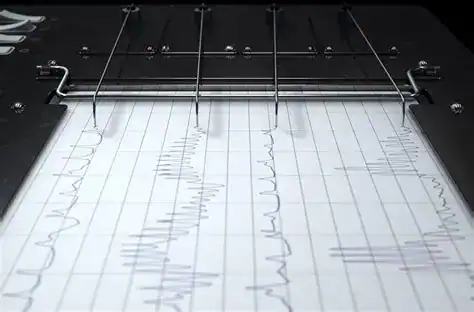
President Laura Fernández has widened a controversial order requiring polygraph tests for officials involved in her government’s new security strategy, declaring Friday that judicial branch personnel who attend her weekly “Fuerza Élite” meetings must also submit to lie-detector exams.
Speaking to reporters after a closed-door session with representatives of the Legislative Assembly and the Supreme Court of Justice, Fernández was asked whether the requirement she imposed on police commanders earlier in the week would apply to members of the other branches of government. “Polygraph for everyone. I already took it myself without any problem, and so did the vice presidents,” she said, framing the tests as a way to build “an environment of mutual trust” among the institutions joining the talks.
The expansion follows the order Fernández issued Monday at the first meeting of “Fuerza Élite” (Elite Force), a weekly working session she has convened at the Ministry of Public Security for the remainder of her term to coordinate the fight against organized crime. Surrounded by police chiefs and flanked by Security Minister Gerald Campos and Justice Minister Gabriel Aguilar, the president directed that all police directors, ministers, vice ministers and regional Fuerza Pública commanders present undergo polygraph examinations featuring questions on organized crime and drug trafficking.
“I won’t tolerate the slightest whiff of organized crime,” Fernández said at the time, adding that officials who fail the test would have “their days numbered” within state institutions. She said she had taken the exam herself before launching her presidential candidacy and stressed that the measure reflected no specific distrust of Campos’s team, but rather a push for what she called “total cleanup.”
The polygraph drive is rooted in the case of Celso Gamboa, a former magistrate and prosecutor who became the first Costa Rican extradited to the United States, on international drug-trafficking charges. The case has fueled an intensifying confrontation between the Fernández administration and the judiciary over how deeply criminal networks may have penetrated the country’s institutions. Fernández has previously cited the practices of U.S. agencies such as the FBI and DEA in arguing for periodic testing of officials who handle sensitive corruption cases.
At Monday’s session, the president also announced she would soon seek approval for tighter regulations on visits to the maximum-security wing of La Reforma prison and a bill that would criminalize membership in a criminal gang. She told reporters the meeting reviewed crime “heat maps” province by province, identifying gang activity and territorial movements in San José, Limón, Cartago, Puntarenas, Liberia and Tamarindo. Fernández said crimes against life fell 13.3% in 2026 compared with 2025, a result she called insufficient, while flagging a rise in vehicle thefts carried out with technology that blocks remote-locking signals.
The mandate has drawn criticism from legal and scientific quarters. Critics note that the American Psychological Association, the U.S. National Academy of Sciences and most courts worldwide do not accept polygraph results as proof of guilt or innocence, given longstanding doubts about the technique’s reliability. The expansion to judicial officials has also sharpened concerns among observers about the balance between aggressive anti-crime measures and constitutional guarantees, amid mounting friction among Costa Rica’s branches of government.
Fernández, 39, took office May 8 as our 50th president and the second woman to hold the post, campaigning on continuity with predecessor Rodrigo Chaves and a hard-line approach to surging drug-related violence. “Fuerza Élite” is set to convene every Monday, with the polygraph requirement now positioned as a condition of entry for participants across all three branches of government.





