

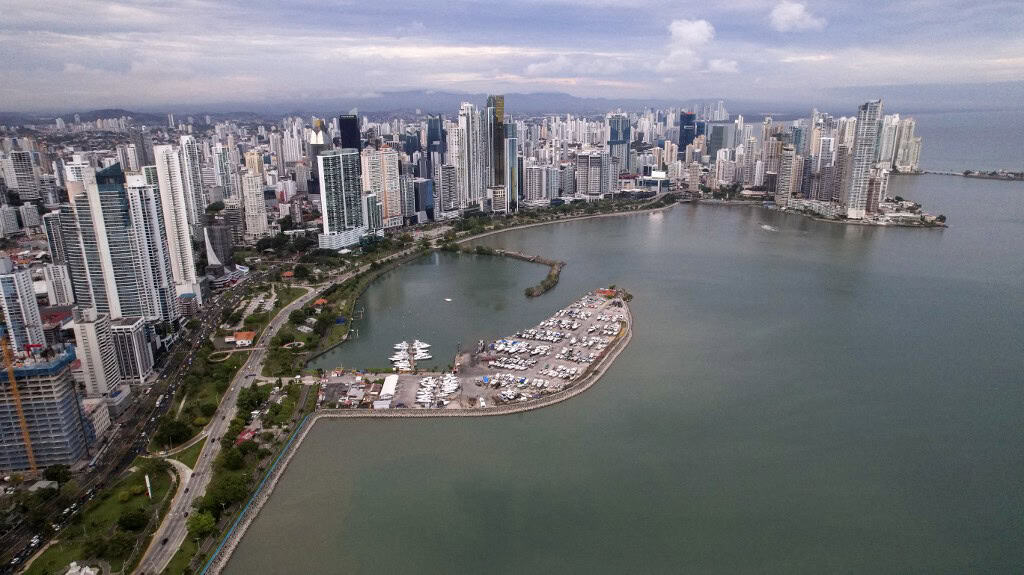
When NPR reporters traveled to Panama City to find Polymarket’s official corporate headquarters, they found something unexpected: an empty law office where nobody had ever heard of the company.
As NPR reported, the $15 billion prediction market platform lists its home base as the 21st floor of the Oceania Business Plaza skyscraper in the upscale Punta Pacifica neighborhood of Panama City. On paper, the company operates there under the name Adventure One QSS Inc.
But when NPR visited the address, there was no trace of Polymarket. Reporters found a nondescript lobby, about a dozen unoccupied computer stations, and an office worker who had never heard of either Polymarket or Adventure One. The attorney who runs the firm, Mario García de Paredes, was unavailable and did not respond to repeated requests for comment.
Polymarket is far from alone. NPR found that at least 15 other cryptocurrency companies, including Helix, Drift Protocol, Goldfinch, and Parti, also list the same Panama City law office as their official headquarters. Court records also show that the firm did work for FTX, the collapsed exchange whose founder, Sam Bankman-Fried, is serving a 25-year prison sentence for fraud.
Corporate law experts told NPR there is nothing inherently illegal about this kind of arrangement, but they described it as a deliberate strategy. Panama offers American companies significant advantages, including no income tax on business conducted outside the country, no capital gains tax, and strong legal protections against foreign civil judgments.
Under Panamanian law, rulings from foreign courts are considered presumptively invalid unless the country’s own Supreme Court approves them. “If you’re someone trying to enforce a judgment, good luck getting a Panamanian court to do that,” one attorney familiar with the practice told NPR.
Polymarket’s path to Panama began after the Biden administration cracked down on the platform in 2022 for operating as an unlicensed exchange. The Commodity Futures Trading Commission fined the company $1.4 million and forced it to shut down its U.S. operations. Two years later, FBI agents broke down CEO Shayne Coplan’s Manhattan apartment door as part of an investigation into whether the company was violating that settlement.
The political winds shifted dramatically with Donald Trump’s return to the White House. According to NPR, the Justice Department dropped its investigation into Polymarket. Trump’s son, Donald Trump Jr., joined the company’s advisory board, and his venture capital firm invested millions in the platform.
Trump administration regulators also approved a deal allowing a separate domestic version of Polymarket to re-enter the U.S. market, and Coplan was invited to a White House cryptocurrency roundtable.
Yet the overseas exchange remains technically off-limits to American users under the 2022 settlement, even as billions of dollars flow through the platform each week in bets on subjects ranging from nuclear detonations to California wildfires and the fate of foreign leaders. U.S. visitors can browse Polymarket in view-only mode but are blocked from placing wagers.
NPR noted that those restrictions can be bypassed with a VPN, citing a recent federal case in which a U.S. Army master sergeant was charged with using classified information about the potential capture of Venezuelan leader Nicolás Maduro to profit on the platform while masking his location.
Legal experts interviewed by NPR suggested that Polymarket’s Panama structure gives Trump administration officials political cover to take a hands-off approach, since the controversial betting activity technically falls outside U.S. regulatory jurisdiction. But those same experts cautioned that the arrangement may not survive a change in administration.
“Offshore platforms still have a responsibility to determine where their customers come from,” international criminal law specialist Bruce Zagaris told NPR. “If you don’t have law enforcement difficulties with this administration, they might have them in the next.”
Polymarket did not respond to NPR’s questions about why it chose Panama as its legal home. Given what reporters found on the 21st floor of that Panama City skyscraper, the silence may speak louder than any answer.





