
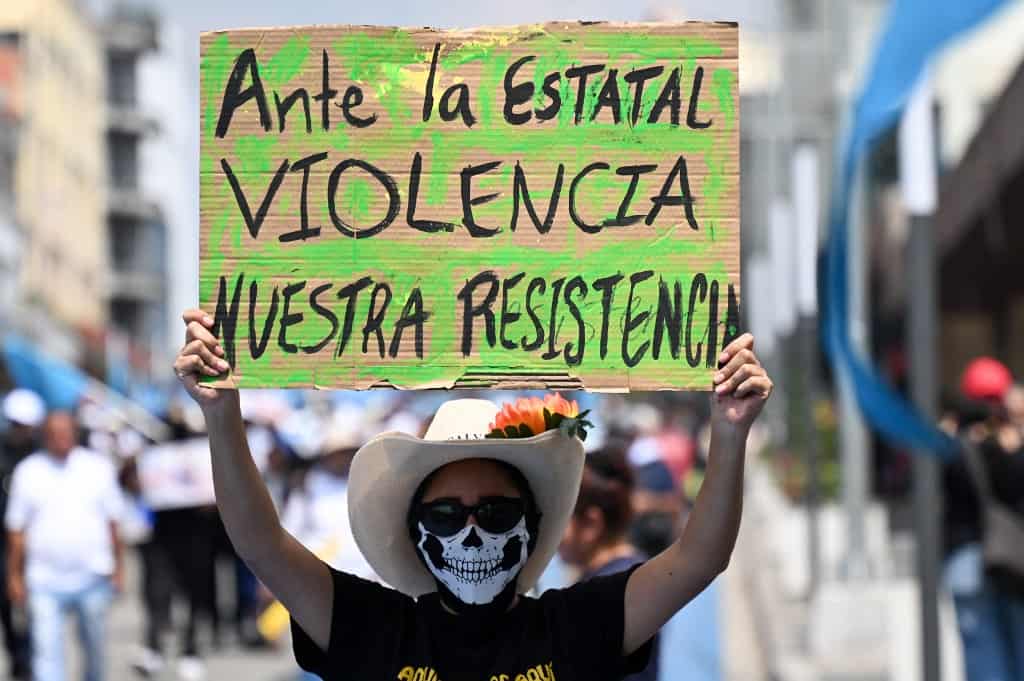
Thousands of Salvadorans marched through the capital on May 1 to denounce what they called democratic setbacks under President Nayib Bukele and to demand the release of people they described as innocent who were detained in the government’s crackdown on gangs.
The demonstration marked International Workers’ Day and highlighted persistent criticism of a state of exception in place since March 2022. That measure suspends certain constitutional rights and permits arrests without a court order. Some 91,000 people have been arrested under the ongoing measure, according to official figures. Humanitarian organizations say many innocent people remain behind bars.
“In recent years, we have been victims of this government and its completely regressive policies, which attack the dignity and freedom of the Salvadoran people,” Marisela Ramírez, spokeswoman for the Bloque de Resistencia y Rebeldía Popular, told reporters.
Ramírez denounced the dismissal of thousands of doctors and teachers as part of what she called the president’s “policies of death.” Bukele has led the country since 2019. One banner at the event read “Bukele, enemy of the poor.” It hung alongside photos of detainees whose relatives insist they are innocent.
Social organizations said security checkpoints on highways stopped buses carrying demonstrators headed to the protest. About 5,000 people took part in the march in San Salvador, according to journalists at the scene. “We are defying the terror generated by this state of exception,” said Samuel Ramírez, leader of the Movement of Victims of the Regime, known as Movir. The group brings together families of prisoners they consider wrongly detained in the anti-gang operation.
The state of emergency began on March 27, 2022, after a spike in gang killings. Authorities have renewed it dozens of times, and it remains in force. Human rights organizations have documented complaints of arbitrary arrests and called for investigations into conditions for those detained. The government has released several thousand people it determined had no gang ties, but activists maintain the number of innocent detainees is higher.
A report published in March by El País, citing internal intelligence documents, indicated that 36 percent of those arrested were not previously listed as gang members or collaborators in police records. The march came as Salvadorans continue to grapple with economic pressures. A survey by the Jesuit-run Central American University published earlier this year found that the economy and unemployment remain the main concerns for most people in the country.
The protest drew together dismissed public-sector workers, environmental activists, families of detainees and labor groups. Participants marched from Cuscatlán Park toward the historic center, chanting slogans and carrying signs that criticized government policies. Bukele’s administration has pointed to sharp reductions in homicide rates since the state of exception took effect as evidence that the security strategy works. Official data show killings dropped to historic lows in the years following the measure.
Still, the May Day event reflected continued opposition from sectors that say the policy has come at too high a cost to civil liberties and due process. Organizers said they planned to keep pressing for the release of those they view as wrongly held and for an end to what they describe as regressive labor and social measures.
No immediate government response to the specific protest was issued as of yesterday.