
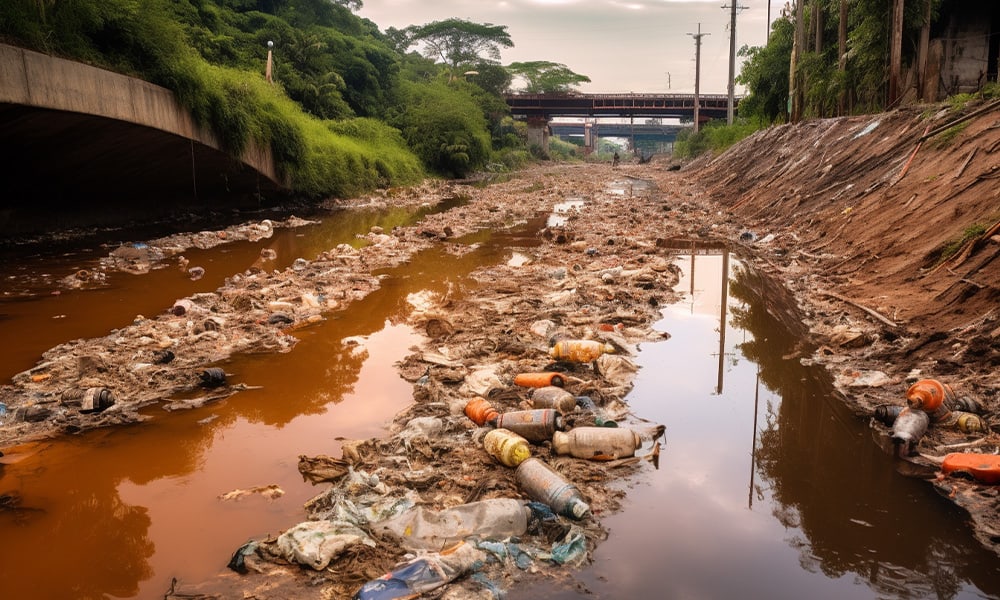
Costa Rica is known for waterfalls, cloud forests, wildlife, beaches and the kind of green reputation that draws travelers from around the world. But the country’s river systems tell a more complicated story. Some of the same waterways that flow from the mountains toward the Pacific and Caribbean carry the weight of decades of urban growth, weak wastewater treatment and agricultural runoff.
For visitors, this does not mean Costa Rica has lost its natural appeal. The country remains one of the best places in the region for wildlife, national parks, surfing, sport fishing and ecotourism. But it does mean the travel story is bigger than postcard beaches and rainforest lodges. Clean rivers matter to everything travelers come here to enjoy.
The Greater Metropolitan Area, where San José and surrounding cities sit, is at the center of the problem. The Virilla River, one of the main rivers draining the capital region, has long been listed among Costa Rica’s most polluted waterways. A 2026 University of Costa Rica report warned that the river is now also showing signs of antibiotic-resistant bacteria, with researchers identifying 65 resistance genes in samples from the river.
The problem is not new. Research on the Virilla basin found that urban river pollution in Costa Rica is closely tied to untreated wastewater from homes and industries. One study noted that, at the time, 76% of Costa Rican homes used septic tanks, only 22% were connected to sewerage, and only 8.2% of wastewater was treated before entering rivers. The Virilla basin also receives a large share of the country’s wastewater discharge because it drains the densely populated GAM.
The Tárcoles River, famous to many travelers for its crocodile-viewing bridge on the road to the Central Pacific, is one of the clearest examples of the contradiction. It supports wildlife and tourism, but it also carries pollution from the country’s most urbanized region toward the Gulf of Nicoya. Environmental groups have described it as one of the most contaminated rivers in Central America, fed by wastewater and runoff from the metropolitan area.
That pollution does not stay inland. Rivers are natural highways between the mountains and the sea. During heavy tropical rains, they move sediment, organic matter, plastic waste, sewage-related contaminants and agricultural chemicals downstream. NASA’s Earthdata program notes that river plumes often carry sediments and organic matter into coastal waters, creating physical, chemical and biological changes visible from space.
Agriculture adds another layer to the issue. Studies on banana and pineapple production in Costa Rica have found pesticide contamination risks for aquatic ecosystems, including field water samples where fungicides, insecticides, nematicides and herbicides were detected. The concern is especially serious in watersheds connected to intensive export agriculture, where heavy rains can move chemicals from farms into rivers, wetlands and coastal areas.
For travelers, the impact is easy to overlook. A polluted river may be miles away from a beach hotel, surf break or fishing marina. But the connection is there. Rivers feed mangroves. Mangroves protect coastlines and serve as nurseries for fish. Fish support marine life, local food systems, sport fishing and coastal communities. When upstream water quality declines, the effects can move quietly through the entire tourism chain.
Costa Rica is not ignoring the problem. Wastewater treatment projects, including work connected to the Los Tajos plant and broader sanitation improvements, are part of the long-term response. But infrastructure has struggled to keep pace with urban growth, aging systems and widespread reliance on septic tanks.
Local conservation groups are also pushing the issue from the coast inward. The Costa Rican Fishing Federation, known as FECOP, works on marine conservation, sustainable fishing and protection of coastal livelihoods. It says sport and recreational fishing supports more than 30,000 direct and indirect jobs and contributes more than $520 million a year to the national economy. For groups like FECOP, clean rivers are not only an environmental concern. They are part of the economic foundation for coastal tourism.
Science is also changing how Costa Rica can monitor its waters. NASA’s PACE mission, launched in 2024, studies ocean color, phytoplankton, aerosols, clouds and pollutants, giving researchers better tools to monitor ocean health, air quality and climate change. NASA’s applied remote sensing program also identifies PACE data as useful for water quality monitoring in large bodies of water, including analysis of water quality parameters.
Costa Rica has already connected that space-based monitoring to local research. A collaboration involving NASA, FECOP, the University of Costa Rica and the National University has worked on ocean monitoring along the Pacific coast, including research tied to red tides, microplastics, heavy metals and marine conditions.
Costa Rica’s natural beauty is real, but it is not automatic. It depends on sewage systems, land use, farming practices, river protection and community action. Travelers can help by choosing responsible operators, avoiding single-use plastics, respecting wetlands and mangroves, supporting local conservation efforts and remembering that the health of a beach often begins far upstream.
Costa Rica’s rivers should be seen as part of the travel experience, not as background scenery. They connect the Central Valley to the sea, the mountains to the mangroves, and the country’s green image to the hard work needed to protect it.