

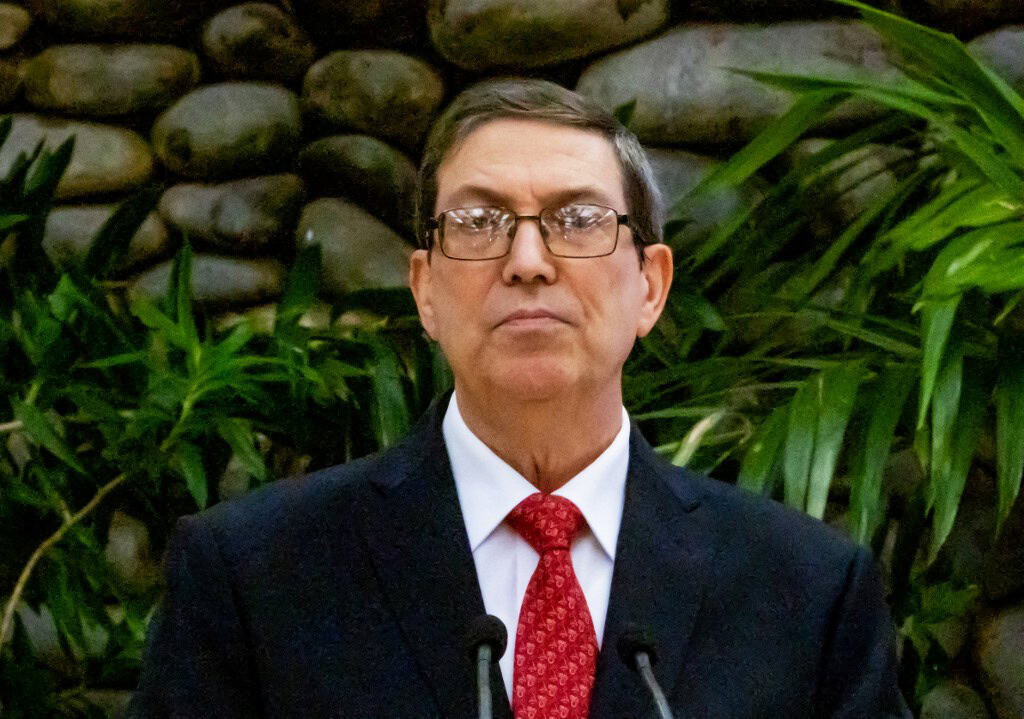
Cuba accused the United States on Thursday of extorting countries in Latin America and the Caribbean to cancel medical cooperation agreements with Havana in order to strangle the island’s economy. The dispatch of medical brigades abroad remains the main source of foreign currency for Cuba’s communist government, bringing in 7 billion dollars in 2025 according to official figures. Last year about 24,000 Cuban doctors and other health professionals worked in 56 countries.
In recent months Guatemala, Honduras, Jamaica and Guyana have ended those agreements, some of which had allowed Cuban health personnel to operate for more than 25 years. “The US government pursues, pressures and extorts other governments to end the presence of Cuban Medical Brigades in various countries, under false pretexts,” Cuban Foreign Minister Bruno Rodríguez wrote.
Rodríguez added that the US government’s objectives and its diplomatic and media campaign aim to continue encircling the Cuban economy and cutting off legitimate sources of income in order to asphyxiate the Cuban people. The administration of President Donald Trump applies a policy of maximum pressure against Cuba.
It has blocked petroleum exports to the island since US forces removed Venezuelan leader Nicolás Maduro in early January. Maduro had been Havana’s main ally. Washington has also threatened sanctions against countries that send oil to Cuba.
That measure has deepened Cuba’s economic and energy crisis, which has brought frequent and prolonged blackouts. Last week Trump made an exception and allowed a Russian tanker to deliver 730,000 barrels of crude, the first cargo to reach the island in three months.
The Republican leader has not hidden his desire for regime change in Cuba, located only 150 kilometers from the United States. According to Washington the island poses an exceptional threat because of its close ties with Russia, China and Iran.
Forced labor
Rodríguez spoke after the Inter-American Commission on Human Rights (IACHR) released a report on Tuesday that denounces serious human rights violations in Cuba’s international medical missions. The violations include wage withholding from participants, threats of prison terms of up to eight years for those who abandon the missions, and confiscation of passports.
In an interview, IACHR President Edgar Stuardo Ralón said there are grounds to describe several practices in the program as forced labor and human trafficking. “It is a situation of dramatic helplessness that ignores the concept of decent work and treatment, as if the participants were treated in a totally abusive manner, forced to follow rules, turned into entities that lack the minimum inherent to every person,” Ralón added.
According to Cuban official statistics cited in the IACHR report, island professionals receive only between 2.5 percent and 25 percent of what recipient countries pay Cuba for the medical services. As a result, the personnel involved “would not have remuneration that allows them to subsist with dignity” nor “cover basic living costs,” the Commission states.
The Cuban foreign minister insisted that his country’s medical brigades “carry out solidarity work in places of difficult access, help develop health systems with experienced human resources, and their personnel are contracted voluntarily, legally and sovereignly” under international norms.
Amid rising tensions between Cuba and the United States, the two countries maintain a dialogue that remains in a “very preliminary” stage, Cuban Deputy Foreign Minister Josefina Vidal said on Monday. Vidal played a key role in the restoration of bilateral relations in 2015.





