

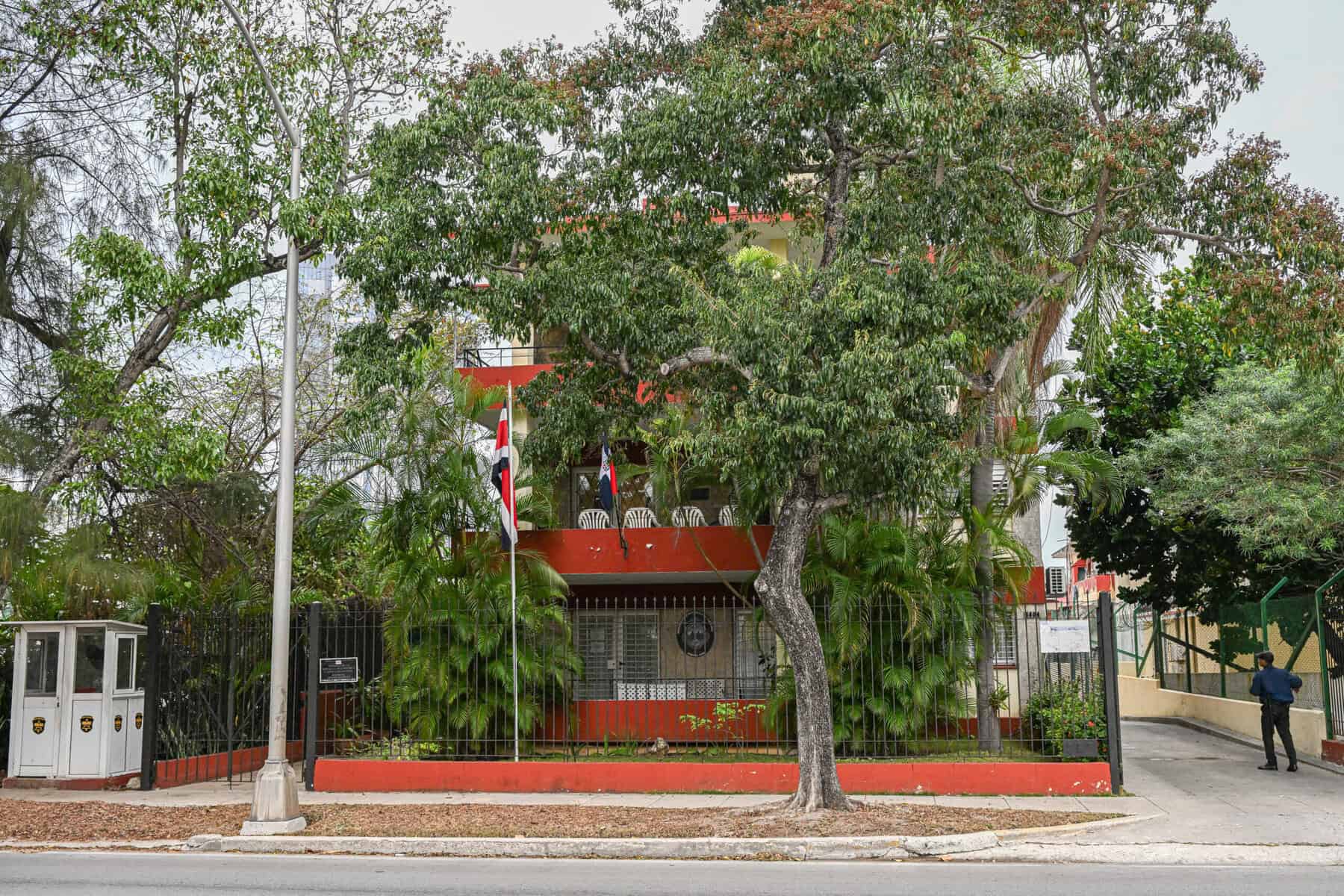
Costa Rica on Wednesday closed its embassy in Havana and told Cuba to withdraw its diplomatic staff from San José, while allowing consular services to continue for citizens who still need routine assistance. President Rodrigo Chaves announced the decision publicly and said his government does not recognize the legitimacy of Cuba’s communist system.
Foreign Minister Arnoldo André said the measure responds to what Costa Rica described as a sustained deterioration in human rights on the island, along with growing repression, tighter limits on free expression and protest, and worsening living conditions.
The closure is more than a diplomatic gesture. It effectively downgrades the relationship to a consular level and marks one of Costa Rica’s sharpest foreign policy breaks in years. André said the embassy in Havana had been without diplomatic staff since February 5, making it increasingly difficult to operate normally. Costa Rica also said its citizens in Cuba who need assistance should now turn to the Costa Rican Consulate General in Panama.
Why it matters starts with the symbolism. Costa Rica restored full diplomatic ties with Cuba in 2009 after nearly five decades of estrangement. Closing the embassy now reverses that opening and sends a signal that San José wants to place political and human rights concerns ahead of the old strategy of engagement. It also shows that the outgoing Chaves administration and president-elect Laura Fernández are aligned on Cuba policy at a moment of regional tension.
It also matters because the move fits a broader regional hardening toward Havana. In recent weeks Costa Rica had already urged its nationals to leave Cuba while commercial flights remained available, citing worsening shortages of fuel, electricity, food, water and medicine.
Human rights groups have also continued to document arbitrary detentions, harassment of dissidents, restrictions on expression, and pressure on activists and journalists. Costa Rica’s decision did not come out of nowhere; it followed months of mounting concern about conditions on the island.
For ordinary people, the immediate effect is practical more than commercial. Diplomatic representation will shrink, making direct state-to-state contact harder and forcing Costa Ricans in Cuba to rely on Panama for many official needs. Trade effects may be limited because bilateral commerce is relatively small, but the political message is much larger than the economic one. The decision places Costa Rica more openly in the camp of governments willing to isolate Havana rather than maintain full diplomatic engagement.
Cuba rejected the move and said it was taken under pressure from the United States, calling it unilateral and unjustified. That response adds another layer to why this matters: the dispute is no longer only about bilateral ties between San José and Havana, but also about Costa Rica’s place in a wider hemispheric fight over Cuba, democracy, sanctions and regional influence.
The result is a diplomatic break with consequences beyond the embassy doors. Costa Rica has chosen to make Cuba a foreign policy line in the sand, tying its position to human rights, democratic legitimacy and regional alignment. Even if consular channels remain open, full relations are now in retreat, and any return to normal diplomatic ties would depend on major political change that San José says it does not see today.





