

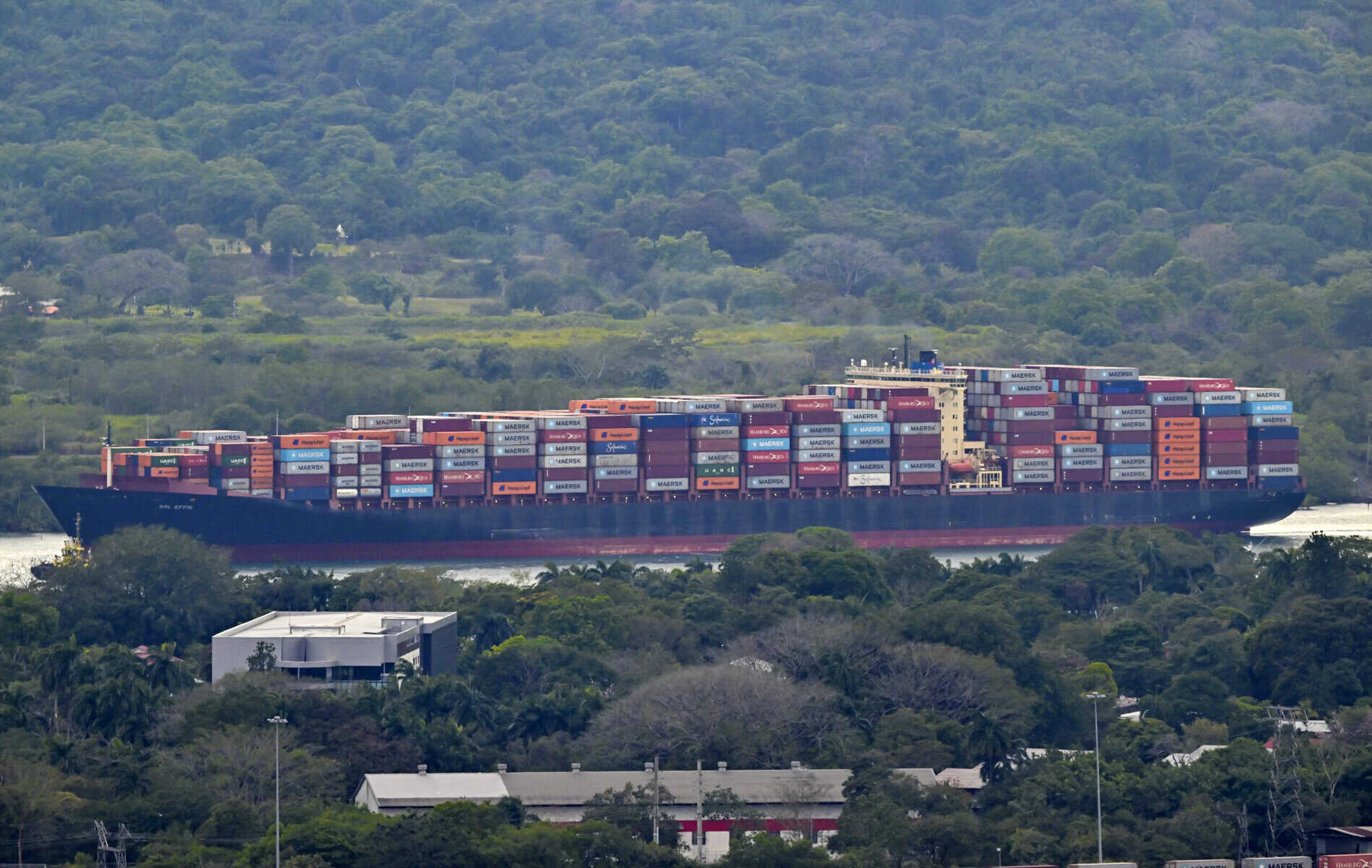
Two major international developments have Costa Ricans watching their fuel bills and trade routes with concern. The dispute over ports at the Panama Canal has escalated into a direct confrontation between the United States and China. At the same time, conflict in the Middle East has disrupted global oil supplies.
A Hong Kong conglomerate, CK Hutchison Holdings, operated two strategic port terminals at the Panama Canal — Balboa on the Pacific side and Cristóbal on the Atlantic — for nearly three decades under concessions granted in 1997. Panama’s Supreme Court ruled in late January that those terms violated the country’s constitution. The decision followed months of pressure from Washington. It came about a year after U.S. President Donald Trump threatened to seize control of the Panama Canal and claimed it operated under Chinese influence.
China responded quickly. Its government described the ruling as absurd and shameful. Officials warned Panama it would face heavy prices both politically and economically. Panama President José Raúl Mulino rejected the threats in public statements on social media.
The situation grew worse. China’s state-owned COSCO Shipping Lines paused operations at the Pacific port of Balboa on March 10. The company suspended all arrivals and departures in a notice to customers. China directed state firms to stop talks on new projects in Panama. It also asked shipping companies to consider rerouting cargo. U.S. officials said Chinese authorities threatened to detain Panamanian-flagged vessels in China as retaliation for the court decision that removed the Hong Kong company from the ports.
Panama gained full control of the canal in 1999. This year the waterway has turned into a flashpoint between the world’s two largest economies. Panama sits caught in the middle. The Trump administration treats the denial of outside control over key assets in the Western Hemisphere as a main goal of its foreign policy.
Panama balances the demands. It has met Washington’s expectations while steering clear of open criticism of Beijing. Some observers call this a practical approach that other small countries can follow in similar situations. While those events played out, a separate crisis broke out halfway around the world. The developments carry direct effects for Costa Rica.
On February 28, the United States and Israel launched joint strikes on Iran. The operation included the death of Supreme Leader Ali Khamenei when his compound was hit. Iran answered with hundreds of missiles and drones aimed at targets across the Gulf region. Those attacks struck U.S. military bases in Bahrain, Jordan, Kuwait, Qatar, Saudi Arabia, Turkey and the UAE.
The fighting entered its third week after U.S. forces targeted military sites on Kharg Island, a main hub for Iran’s crude exports. Iran’s new supreme leader, Mojtaba Khamenei, son of the assassinated leader, said attacks would continue until U.S. bases in the region closed. Iran sent more waves of drones and missiles toward Gulf countries and oil facilities.
Iran’s Health Ministry reported at least 1,444 people killed and over 18,000 injured in the U.S.-Israeli attacks since February 28. The economic results hit hard. The conflict cut off about 20 percent of global oil supplies moving through the Strait of Hormuz. Brent crude prices rose from around $70 to more than $110 per barrel in days.
Oil reached $119.50 per barrel at one point, the highest level since Russia’s invasion of Ukraine in 2022. Analysts at Wood Mackenzie said prices could reach $200 per barrel if the fighting lasts. The International Energy Agency released a record 400 million barrels from reserves to ease the shortage — twice the amount used during the Ukraine crisis.
Shipping and travel faced new problems. Flights in and out of the Middle East stopped. Vessels rerouted to avoid the Strait of Hormuz and the Red Sea. Lebanon entered the conflict after Hezbollah restarted actions. Israeli strikes killed at least 773 people there since March 2. Costa Rica sits on Central America’s Pacific coast. The events reach its shores through higher costs, trade shifts and diplomatic choices.
Fuel prices come under direct pressure first. Costa Rica brings in oil for transport and industry. Risks in the Gulf drive up global crude prices. Those increases move straight into local gas station rates and then into transport and consumer goods. With Brent crude at multi-year highs, Costa Rican families and companies will see the results in coming months.
Tourism counts among Costa Rica’s main economic drivers. Worldwide uncertainty can reduce visitor numbers. Travelers from key markets may delay trips if the situation worsens or markets turn volatile.
The United States stands as Costa Rica’s largest goods trade partner. Any drop in U.S. demand or logistics problems appears quickly in exports and production lines. Supply chains already carry stress from the Gulf disruptions, the Strait of Hormuz issues and the Panama Canal situation.
The Panama Canal moves huge volumes of cargo between Asia and the Americas. Extended problems from Chinese actions, legal disputes or uncertainty raise expenses and slow deliveries for goods entering or leaving Costa Rica. The country uses that route for much of its Asia trade.
Costa Rica also handles a delicate diplomatic position. With no army, strong support for international law and a record of neutrality, the country faces an uneasy spot. The Trump administration’s firm stance across the region puts pressure on smaller nations to show support for Washington. Governments on the left may speak about the human losses and oil price warnings. Those more aligned with the United States may gain favor in Washington.
These forces will not reduce the immediate economic strain on Latin American countries that depend on stable oil prices. They will not ease the political effects of higher food and transport expenses. Oil price jumps lift shipping rates and fertilizer costs. Costa Rica’s farms, which send pineapples, coffee and other products abroad, feel those changes.
The world moves through a period of major realignment. The Panama Canal dispute concerns more than port rights. It centers on which power will guide key infrastructure in Latin America in the 21st century. The Iran conflict involves more than weapons programs. It touches oil flows, sea lanes, order in the region and the readiness of the current U.S. administration to apply military power.
For a small country like Costa Rica that values peace and depends on trade, these matters stand as real factors. They will shape fuel bills, export income, visitor numbers and import prices in the months ahead. Costa Rican leaders must steer through the changes with the same steady and neutral approach the nation has followed for years while staying alert to the economic pressures building ahead.





