
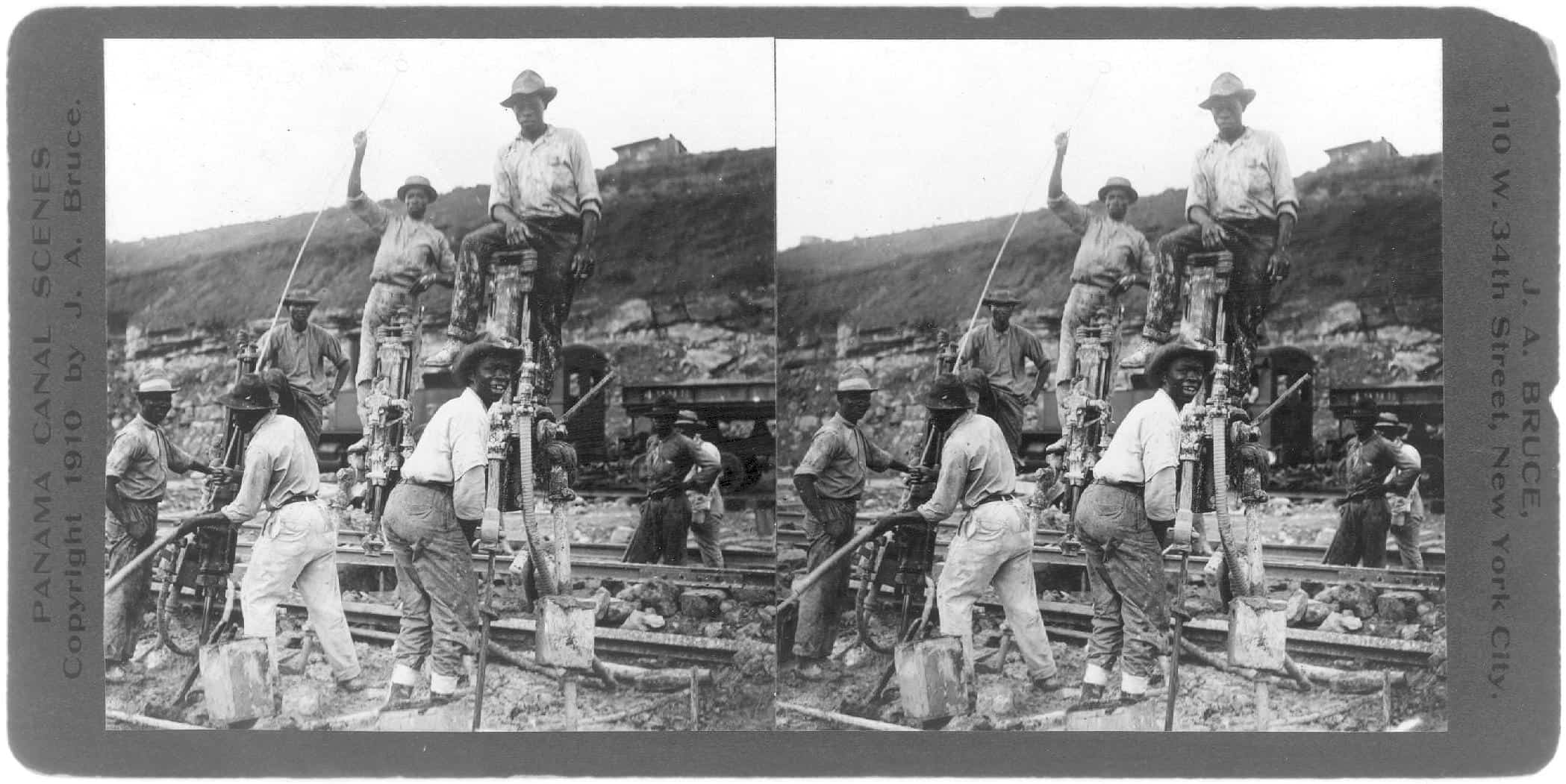
A French historian says France’s failed 19th-century attempt to build the Panama Canal was as significant and daunting for the French as going to the Moon, he said on Wednesday. In 1880, the French, led by Count Ferdinand de Lesseps, began work on an interoceanic canal across Panama. But tropical diseases that killed thousands of people, along with waste and corruption, halted the project.
The United States resumed construction in 1904 and inaugurated the canal a decade later. Today, about 5% of global maritime trade passes through it. For the French at the time, building the canal was “like going to the Moon or Mars,” in the sense that it was a massive project in a distant territory with major technical challenges, said French historian Samuel Poyard.
He spoke during the presentation in Panama, before more than 100 people of his book Le Canal de Panama, une ambition française (The Panama Canal, a French ambition). The event took place at the Canal Museum, where Ferdinand de Lesseps had an office during his time in the country.
“The project was very important in France. There was a global impact because the issue was followed in London, the United States, and South America, because if the canal opened it would facilitate trade between all those regions,” Poyard said. According to the historian, more than one billion French francs of the era were raised for the works, while the iconic Eiffel Tower cost about 8 million francs.
Some estimates put the death toll at around 22,000 workers, mainly from malaria and yellow fever. Most laborers were Antilleans, especially Jamaicans, as well as Chinese and French workers. But disease was not the only factor behind the French failure. De Lesseps, who had built the Suez Canal, tried to construct an interoceanic route at sea level rather than using locks, making the undertaking harder and more expensive.
De Lesseps was sentenced to prison for embezzlement of funds along with Gustave Eiffel, who worked on the canal project while building his metal tower in Paris, although the sentence was never enforced.