

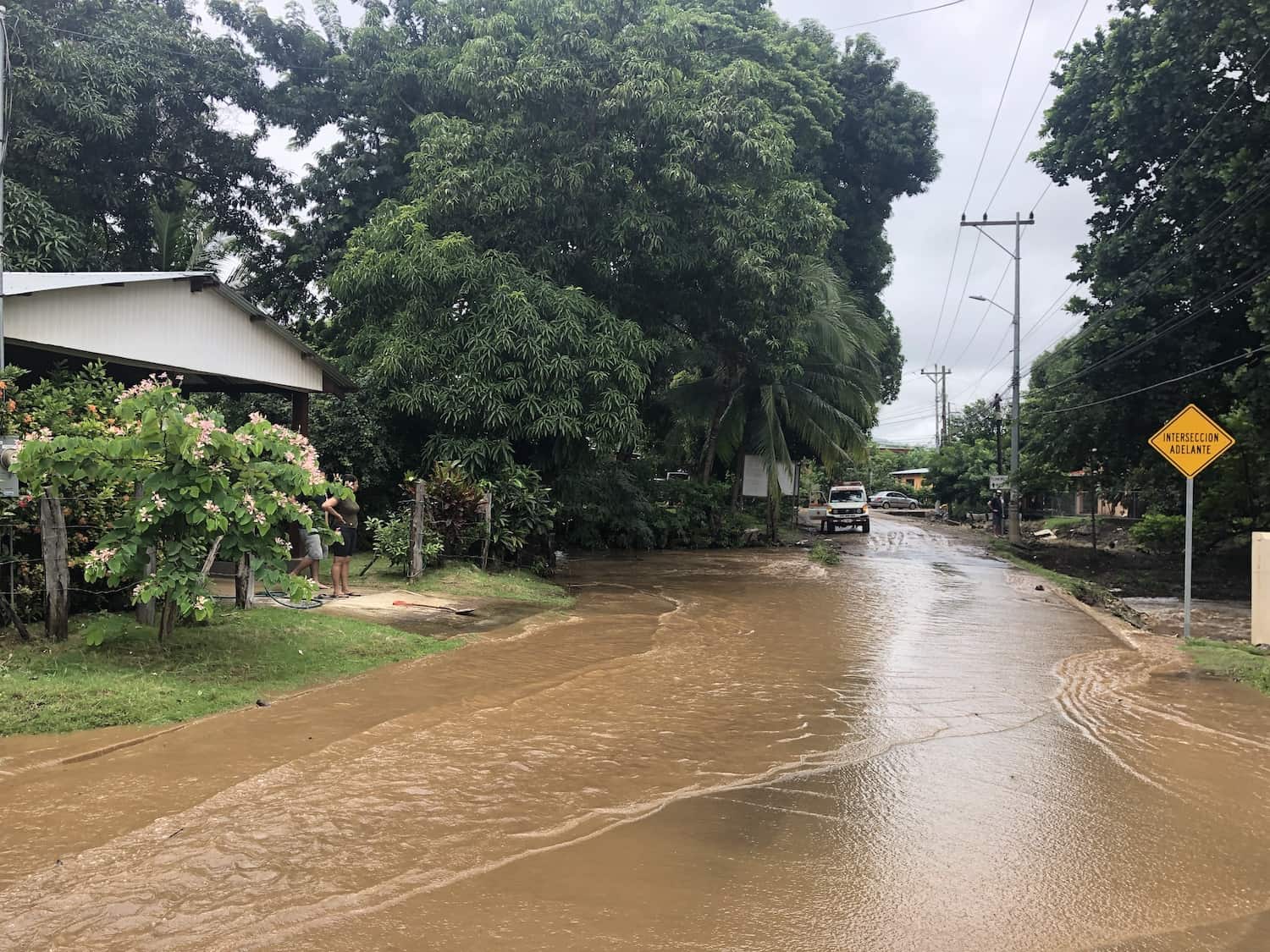
A low-pressure system off Central America’s Pacific coast became Tropical Depression Three-E this morning as Costa Rica continued to deal with heavy rain, saturated soils, and increased risk of flooding and landslides.
The system formed off the coast of Nicaragua and was located about 90 miles west-southwest of Managua at 9 a.m. Central America time, with maximum sustained winds of 35 mph. It was moving north at 7 mph and was expected to strengthen into a tropical storm by Tuesday, according to the National Hurricane Center.
For Costa Rica, the main concern is rain rather than wind. The National Meteorological Institute (IMN) reported heavy rainfall across parts of the Pacific between Sunday morning and early Monday, with totals reaching roughly 100 to 170 millimeters in some areas. Those amounts fell on already wet ground, increasing the threat of flash flooding, river overflow, landslides, and falling trees.
The Pacific slope remains the area of greatest concern, especially communities near rivers, steep terrain, and roads prone to washouts. The Central Valley could also see periods of rain, fog, and poor visibility, particularly in mountain passes and routes connecting San José with the Pacific.
The National Emergency Commission had already raised a yellow alert for the Pacific slope and the Central Valley because of strong rains, while the rest of the country remained under green alert. Authorities also warned of strong wind gusts in the North Pacific, the Nicoya Peninsula, and parts of the Central Valley.
The weather pattern is tied to an active Intertropical Convergence Zone (a tropical rain zone that often brings heavy showers and thunderstorms) over Costa Rica and Central America, along with the developing Pacific system. The IMN had warned that Costa Rica was entering one of the most unstable and rainy periods so far this year, with the Pacific, Central Valley, Northern Zone, and mountainous areas of the western Caribbean among the areas most likely to see heavy showers and thunderstorms.
Rain is expected to continue in waves rather than as one constant storm. That can make conditions deceptive. A break in the rain does not mean rivers have dropped or that slopes have stabilized. In saturated areas, a later downpour can trigger problems quickly, especially along secondary roads and rural routes.
The National Hurricane Center said the depression is expected to track near the Pacific coast of Nicaragua, Honduras, and El Salvador through Tuesday, then parallel the coast during the week. The broader system could bring heavy rain and dangerous flash flooding across parts of Central America through midweek.
Anyone driving should watch road conditions before driving to beach towns, national parks, waterfalls, or mountain destinations. Routes through the Pacific, including areas of Guanacaste, Puntarenas, the Central Pacific, and the South Pacific, may see localized flooding, fallen branches, reduced visibility, and delays. Visitors planning hikes, river tours, waterfall visits, or long drives should check local conditions before leaving.
Costa Rica is in the early part of the rainy season, but the current pattern is more active than a normal afternoon shower setup. The IMN said the combination of atmospheric systems would favor strong afternoon and nighttime downpours, with rain also possible during the early morning hours along parts of the Pacific coast.
Emergency officials are urging residents and visitors to avoid crossing swollen rivers or flooded roads, keep drainage areas clear, and stay alert in zones with a history of landslides. Drivers should be especially cautious at night, when damaged roads, debris, and rising water are harder to see.
The depression had not produced a tropical storm warning for Costa Rica as of the latest advisory reviewed. The risk for us remains centered on rainfall and secondary hazards from saturated soils
For current regional breakdowns and the weekly outlook, see the Tico Times forecast page





