

Costa Rica deals with mounting pressures along its northern border as illegal gold mining expands and a potential influx of Nicaraguan migrants’ looms. Officials point to Crucitas, in San Carlos, Alajuela province, as the focal point where these issues converge, threatening the environment, local communities, and border control.
Security Minister Mario Zamora addressed lawmakers, highlighting the risks. He stated that Nicaragua’s recent mining concessions to Chinese firms, spanning over 4,000 hectares near the border, could drive between 10,000 and 15,000 Nicaraguans into Costa Rica. These people would seek work in gold extraction amid limited opportunities at home. Zamora noted that the Chinese operations use advanced methods to recover up to 95% of gold from sediment, far surpassing traditional yields, which intensifies cross-border activity.
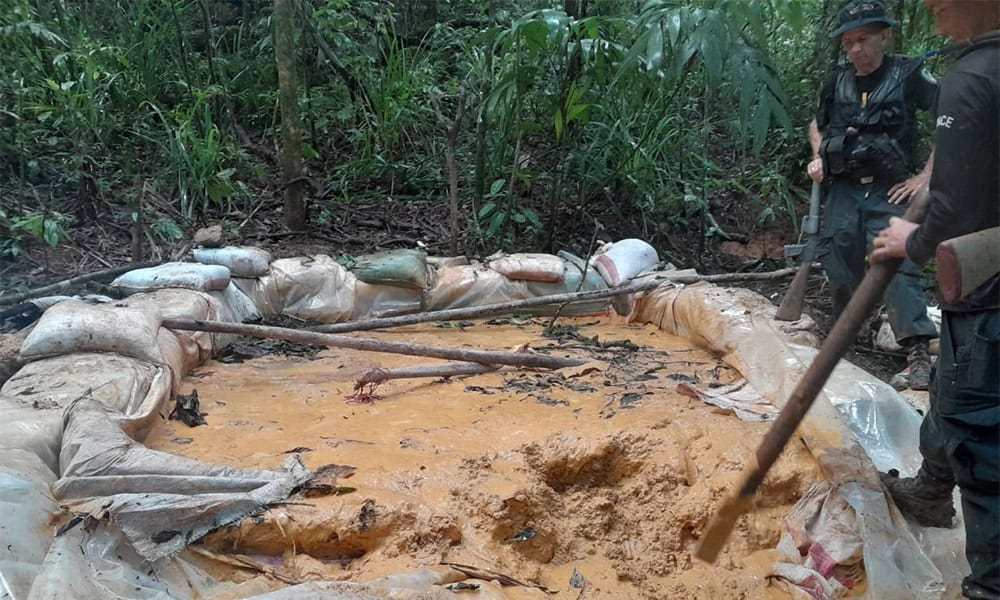
The minister reported that illegal mining has spread from 900 hectares to 3,000 hectares in recent months. Authorities have identified more than 130 pools used for processing, heightening contamination risks from chemicals like mercury and cyanide. About 90% of the miners, known as coligalleros, are foreigners, primarily from Nicaragua. This growth strains Costa Rica’s resources, with patrols struggling to cover the terrain.
Law enforcement has stepped up efforts. In October of last year, police dismantled nine illegal camps in Crucitas and arrested 13 Nicaraguans without legal status. Similar operations in December led to the detention of six more Nicaraguan miners, one armed, and the shutdown of a clandestine site. These actions reveal ties to organized networks, including smuggling of extracted material to Nicaragua for processing.
The situation echoes long-standing conflicts in Crucitas. In the 1990s and 2000s, foreign firms like Canadian company Industrias Infinito pursued open-pit mining. Environmental groups and locals opposed it, leading to a 2002 moratorium on such projects and the 2010 court annulment of Infinito’s permit. An international arbitration later ruled in Costa Rica’s favor, denying the company’s compensation claim.
Without legal operations, informal mining filled the gap. Rising global gold prices drew coligalleros, who dig tunnels and process ore without oversight. This has caused deforestation, soil erosion, and water pollution. Studies show mercury levels in local rivers exceed safe limits, affecting drinking supplies and wildlife.
New tactics among miners add complexity. Coligalleros now buy and process high-gold-content sediment sacks, making operations more efficient. Investors from Nicaragua, backed by government concessions, buy this material for advanced extraction. Some reports link Venezuelan capital to these networks, funding equipment and labor.
Those in San Carlos express alarm. The area, once tied to tourism and farming, now deals with crime, health risks, and social strain. Rescue operations have recovered bodies from collapsed tunnels, including two Nicaraguan brothers in a recent incident.
A bill (expediente 24.717) to allow regulated mining in Crucitas sits in parliament. Supporters argue it would generate revenue, create jobs, and curb illegality. Opponents, including legislator Priscilla Vindas from the Frente Amplio party, call mining a destructive force that harms all residents. They push for alternatives like turning the site into a geopark for conservation and education.
Zamora urged approval of the bill, warning that without it, the state lacks tools to manage the crisis. He described the expansion as a threat to national sovereignty, with foreign miners dominating the landscape. As the debate continue, Crucitas symbolizes the struggle to protect resources while addressing economic needs.





