

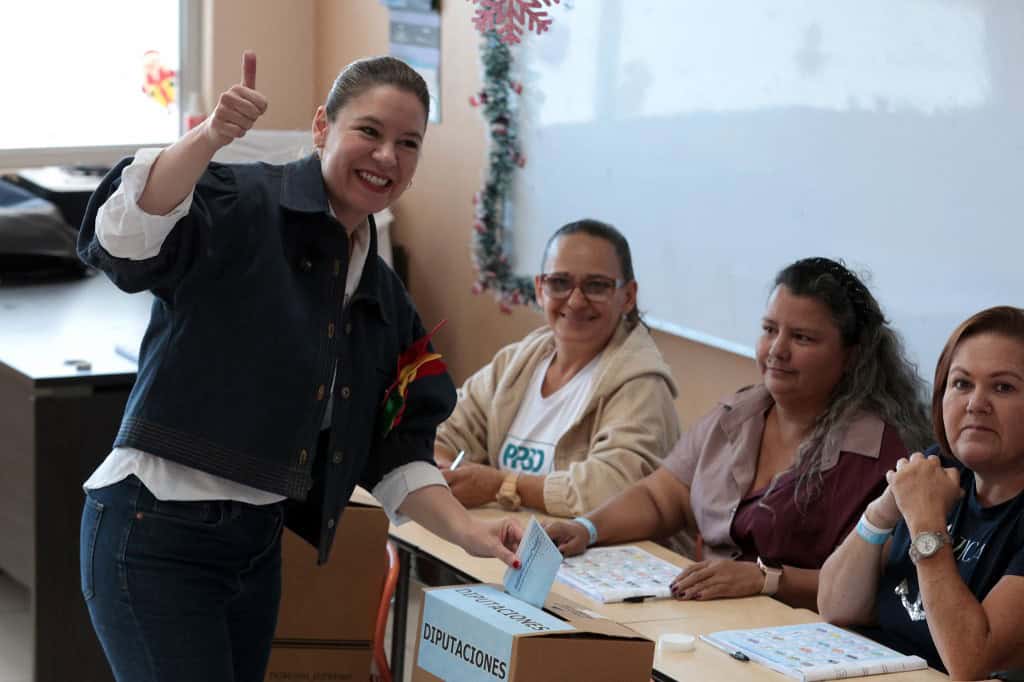
Voters across the country headed to polling stations today to select the next president and reshape the Legislative Assembly. The election drew 3.7 million eligible participants who chose among 20 candidates for the top office, along with deputies for the 57-seat congress.
Laura Fernández of the Sovereign People’s Party led the pack as the day began. She carried forward President Rodrigo Chaves’ agenda, focusing on strict measures against crime amid a surge in drug-linked violence. Surveys placed her support near the 40 percent mark required to claim victory without a second round in April.
Álvaro Ramos, an economist from the National Liberation Party, positioned himself as a centrist option. He called for balanced economic policies to address unemployment and inequality. Claudia Dobles, a former first lady running on a progressive platform, pushed for social reforms and environmental protections. Other contenders, including Ariel Robles and Juan Carlos Hidalgo, appealed to niche groups but lagged in polls.
Security dominated discussions during the campaign. Citizens expressed concerns over rising homicides, prompting candidates to outline plans for law enforcement and prison systems. Economic recovery and public services also featured prominently, as the nation seeks stability after recent challenges.
The Supreme Electoral Tribunal oversaw operations at over 7,000 voting centers, which opened at 6 a.m. and closed at 6 p.m. Officials reported smooth proceedings overall, though minor disruptions occurred. At one site, supporters clashed briefly when Dobles and Ramos arrived to vote. In another instance, a ballot bag traveled in a vehicle with Fernández’s campaign materials, but the tribunal deemed it non-irregular.
Efforts to boost participation targeted the high abstention rate from 2022, when over 40 percent stayed home. Community groups and celebrities encouraged turnout through social media and events. Cold weather and winds affected some areas, yet many braved the conditions to exercise their right.
Overseas voting proceeded at consulates, with Costa Ricans in places like Japan and the United States casting ballots. The tribunal implemented accessibility aids at 200 locations to assist disabled voters. Preliminary counts started after polls closed, with the first release set for 8:45 p.m. Updates followed every 15 minutes until late night, resuming the next day. Manual verification begins Tuesday, ensuring accuracy in the final tally.
This election tests the appeal of Chaves’ populist style. Fernández aims for a strong mandate to pursue reforms, including changes to the judiciary. Opponents warn against concentrated power and advocate for checks on executive actions. As votes get tallied, the outcome will set the course for 2026-2030. A runoff remains possible if no one hits the threshold, prolonging the decision until April 5.
The process highlights Costa Rica’s commitment to democratic traditions, even as fragmentation and apathy pose hurdles. Citizens now await confirmation of their choice for leadership.





