

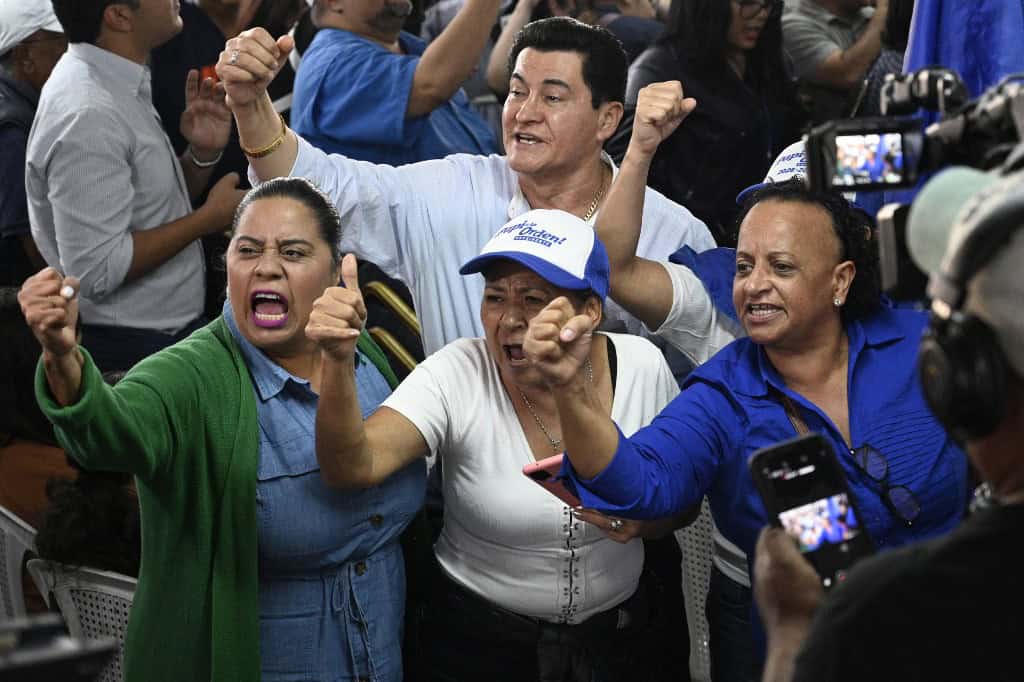
The Honduran National Electoral Council on Wednesday named Nasry Asfura the winner of the country’s presidential election, capping a tense period of delays and disputes that has drawn attention across Central America.
Council President Ana Paola Hall made the announcement during a plenary session in Tegucigalpa. “The plenary session of the national electoral council CNE declares Nasry Juan Asfura Zablah elected for a four-year term,” she stated. Asfura, a 67-year-old conservative businessman and son of Palestinian immigrants, secured the victory with 40.26 percent of the votes, according to official tallies.
The declaration comes nearly a month after the November 30 polls, where a sluggish vote count and manual recount fueled allegations of irregularities. Asfura’s main rival, Salvador Nasralla, a fellow conservative and former television host, had called for a full recount, citing inconsistencies in ballot processing. Nasralla, who ran under the Liberal Party banner after serving as vice president, finished closely behind but conceded no ground until the final count.
Asfura, widely known as “Tito” or “Papi a la Orden” for his approachable style during his time as mayor of Tegucigalpa, campaigned on promises to boost infrastructure and curb migration. His construction background played a key role in his appeal to voters seeking economic stability in a nation grappling with poverty and gang violence.
The win marks a shift back to right-wing leadership in Honduras, following the left-leaning administration of Xiomara Castro. Asfura’s campaign received a notable endorsement from U.S. President Donald Trump, who publicly supported him and pledged assistance, including a potential pardon for former Honduran President Juan Orlando Hernández, currently facing drug trafficking charges in the United States.
Trump’s involvement has sparked debate in the region, with some analysts viewing it as an extension of U.S. influence in Central American politics. In Costa Rica, officials have watched the developments closely, given shared borders and migration flows that often affect both nations. Honduran migrants frequently pass through Costa Rica en route to the north, and any policy changes under Asfura could impact regional dynamics.
Opposition figures in Honduras expressed frustration over the process. Nasralla’s team pointed to discrepancies in polling stations, echoing concerns from international observers about transparency. The Organization of American States, which monitored the vote, noted delays but stopped short of declaring widespread fraud.
Asfura addressed supporters shortly after the announcement, vowing to unite the country and tackle corruption. “We will work for all Hondurans,” he said in a brief statement. His term begins in January, with priorities including strengthening ties with the U.S. to address security and trade.
The election outcome has prompted mixed reactions in Central America. In neighboring El Salvador and Guatemala, leaders congratulated Asfura, while progressive groups raised questions about electoral integrity. For Costa Rica, the result underscores the need for stable relations in the isthmus, where economic ties and environmental cooperation remain key.
As Honduras moves forward, attention turns to Asfura’s ability to deliver on reforms in a divided political landscape.





