
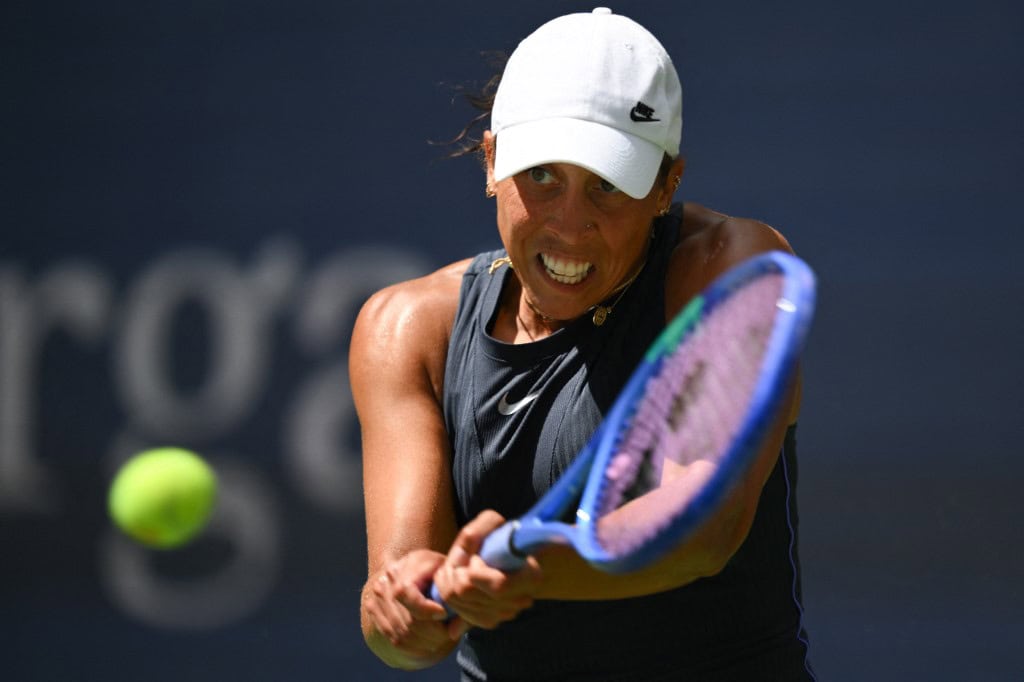
Central America will again have a modest footprint at the 2026 Australian Open – but the region’s lone singles representative arrives in Melbourne with real momentum and a growing symbolic weight. Mexican Renata Zarazua, coming off a career-defining 2025 season, headlines Latin America’s presence from north of the Darién. She is expected to be the only Central American player in the singles main draws at Melbourne Park, in a year when 99 of the world’s top 100 men and 98 of the top 100 women are entered for the first Grand Slam of the season.
Her presence highlights both sides of the story: Latin American tennis is enjoying one of its strongest Australian Open contingents in years, but Central America still faces a steep climb to turn junior promise into Grand Slam depth.
A historic run that changed Mexican tennis
Zarazua, 28, has become the reference point for tennis in Mexico and much of the region. She cracked the world’s top 100 in singles in early 2024 and climbed as high as No. 51 later that year, the first Mexican woman to reach the WTA top-100 in almost three decades.
In 2025, she made more history. At the Australian Open she scored Mexico’s first main-draw singles win in Melbourne in 25 years, ending a drought that dated back to the days of Angélica Gavaldón.
Later that season, Zarazua stunned reigning Australian Open champion and world No. 6 Madison Keys in the first round of the US Open, her first victory over a top-10 opponent and the first time a Mexican woman had beaten a top-10 seed at a Grand Slam since the mid-1990s. Those results elevated her from regional curiosity to genuine standard-bearer. For young players from Mexico to Costa Rica to Panama, Zarazua has become proof that a pathway to the second week of major tournaments now exists – even if it remains narrow.
South America surges while Central America waits
Across Latin America as a whole, the picture looks far more robust. Australian Open organizers’ entry-list announcement highlighted a cluster of 17 Latin American players in the 2026 singles main draws, with Argentina, Brazil and Chile providing most of the names on the men’s side.
Argentina alone sends a half-dozen men, including Francisco Cerúndolo and Sebastián Báez, while Brazil brings rising star João Fonseca and established names Thiago Seyboth Wild and Thiago Monteiro. Chile contributes a four-player group led by Alejandro Tabilo and big-serving Nicolás Jarry, who returns using a protected ranking after injury.
On the women’s side, the South American contingent is smaller but still significant. Colombia, Brazil and Argentina all have direct entrants, from top-50 Colombian Emiliana Arango to left-handed Brazilian Beatriz Haddad Maia.
Central America’s singles representation, by contrast, is limited to Zarazua. No Central American man has yet reached the ranking cutoff needed for direct entry to the Melbourne main draw, and qualifying slots for January remain fiercely contested. That disparity is precisely what worries – and motivates – coaches and federation officials in the isthmus.
A growing pipeline: Copa del Café and Circuito Conteca
Underneath the surface, the region is busier than it looks. Costa Rica has quietly turned the historic Copa del Café in San José into a key stop on the global junior calendar, giving local teenagers a chance to test themselves against top-ranked peers from Europe, North America and South America without leaving the country.
In Panama, the Circuito Conteca tournament has become another regional hub. More than 120 young players from six countries – including Costa Rica, Panama, El Salvador, Guatemala, Honduras and Nicaragua – filled the courts this year, looking to collect ranking points and experience under the newly rebranded “World Tennis” structure that coordinates youth circuits.
Together, these events form the backbone of a still-fragile Central American pipeline: local tournaments feed players into ITF junior events, then into Futures and Challenger-level competition, and only then into qualifying draws of tournaments such as the Australian Open.
The rebrand of international youth circuits, tennis officials argue, should simplify that journey by making point structures and event categories more coherent across continents – a change that could benefit small federations with limited travel budgets.
Why Melbourne still feels far away
Even with those structural improvements, Melbourne Park sits a long way from San José, San Salvador or Panama City – in travel time, cost and ranking points. Most Central American federations operate on lean budgets, with national No. 1s often relying on family support and sporadic sponsorship to fund travel to South American or North American events. A full season of international play can require tens of thousands of dollars long before a player is competitive at Grand Slam level.
That financial gap is one reason South America’s numbers at AO 2026 look so different. Argentina and Brazil, with deeper domestic circuits and more established sponsors, can keep players competing eek in and week out. Those extra matches translate into ranking points and, eventually, direct Grand Slam entry.
For now, Central America’s best-known Grand Slam presence remains in doubles, where Salvadoran Marcelo Arévalo has become a fixture at majors and a champion at Roland Garros. But if the youth circuits keep filling and regional events continue to grow, the logic goes, the singles side will eventually catch up.
AO 2026 as both mirror and motivation
The 2026 Australian Open will open its main draws on January 18, with qualifying rounds the week before and a new, high-profile opening ceremony planned at Rod Laver Arena.
For most Costa Rican and Central American fans, watching Zarazua and the large South American contingent will happen from afar – on late-night broadcasts and streaming screens rather than from seats in Melbourne. Still, what happens in Australia will echo back across the region.
- A deep run from Zarazua would reinforce to young Central American players that the leap from junior tournaments in San José or Panama City to the sport’s biggest stages is possible, if rare.
- Strong performances from South American neighbors will add pressure on local federations not to fall further behind.
- And every mention of “Latin America” in coverage of the Melbourne fortnight will quietly raise the question: when will more Central American names join that list?
For now, Australian Open 2026 will serve as a mirror of where the region stands and a motivator for where it hopes to go. Zarazua, the trailblazer, will lead that charge alone in singles. The next generation, training today on the courts of San José, Panama City and beyond, will decide whether she stays an exception – or the start of a trend.