

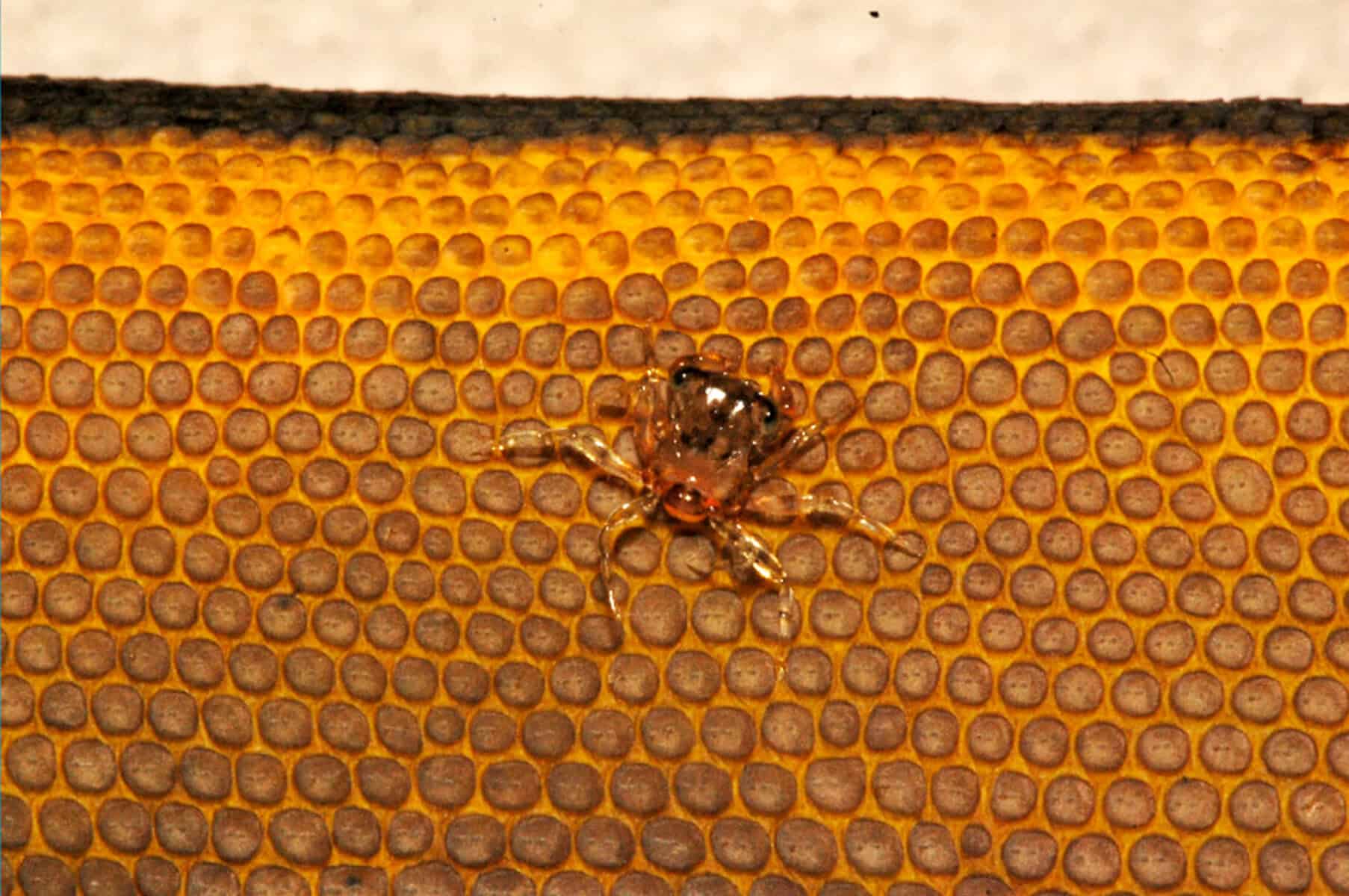
A study built on specimens collected in Costa Rican waters has documented something never before recorded in the scientific literature — crabs living on sea snakes — and the animals turned out to be nothing like what the researchers expected.
The work traces back to 2012, when a research expedition led by University of Florida professor Harvey Lillywhite went out off Costa Rica’s Pacific coast to study yellow-bellied sea snakes, Hydrophis platurus. Joseph Pfaller, then beginning his doctoral degree, was on the boat. On roughly the first snake the team pulled from the water, a small crab dropped off.
Most herpetologists would have been watching the snake. Pfaller had previously worked on sea turtles and the communities of organisms that live attached to them, known as epibionts, and among the best known of those are crabs in the genus Planes, which shelter in the pocket of space between a turtle’s tail and the rear edge of its shell.
Until then, barnacles and other immobile organisms were essentially the only creatures known to live on sea snakes. Charles Darwin described an unfamiliar barnacle a colleague had found growing on a sea snake near Borneo, and in 1975 researchers reported tube-dwelling worms and a colonial moss animal attached to a Dubois’ sea snake. Nothing with legs had ever been reported.
Pfaller and his colleagues eventually collected 371 sea snakes, and the hitchhikers kept appearing — crabs, shrimp, snails and even a small clingfish. The most plausible explanation for their total absence from more than a century of scientific writing, the researchers concluded, is that generations of biologists were simply looking at the snake and not at what was riding on it.
Most of the crabs were megalopae, the developmental stage between larva and adult, which can look radically different from the animals they become. With little reference material available for that life stage, Pfaller could not identify them, so the specimens were preserved and deposited in the invertebrate zoology collection at the Florida Museum of Natural History, where they sat for more than a decade.
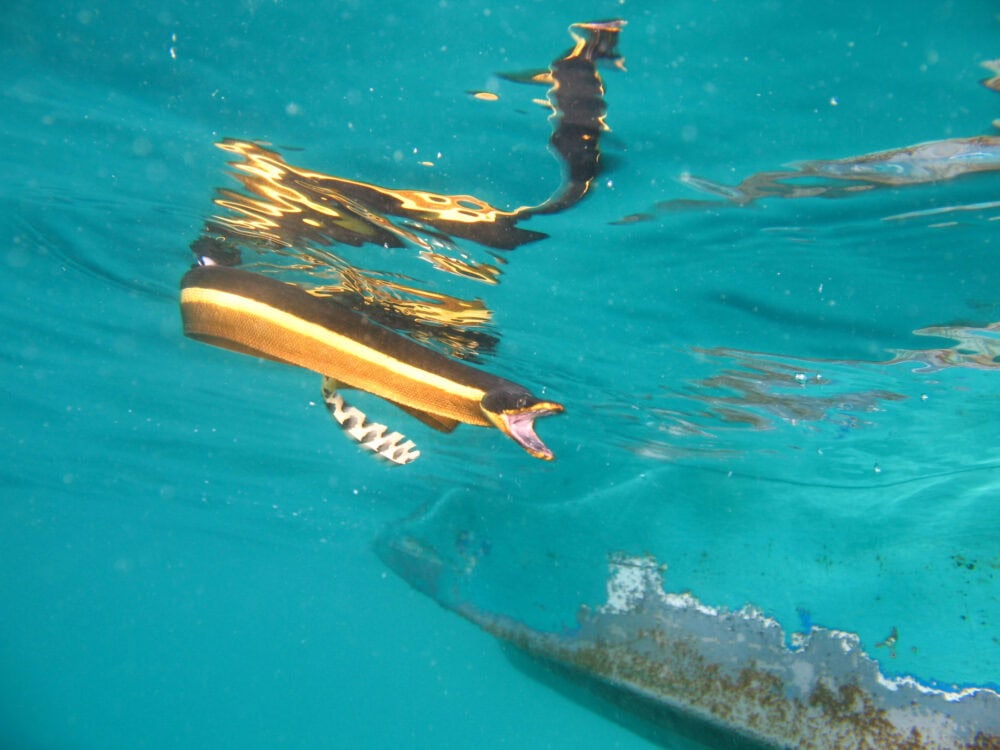
The project restarted after Pfaller mentioned it in passing to crab specialist Robert Lasley, then a postdoctoral researcher at the museum and now an assistant professor and curator of invertebrate zoology at the University of Guam. Lasley heard “Planes on a snake,” recognized the pun on the film Snakes on a Plane, and the study effectively named itself. Soma Elefánti, an undergraduate newly arrived in the lab, did the DNA sequencing.
The results did not match the hypothesis. None of the megalopae were Planes — the one genus in the family known to live on other animals and an animal so indiscriminate about rafting that it has been found on driftwood, feathers, seaweed, tarballs, plastic, buoys, pumice and explosive mines.
Instead, the DNA identified three species whose adults live on or near shore and do not raft at all — the Sally lightfoot crab, Grapsus grapsus, familiar to anyone who has watched red-and-blue crabs scatter across coastal rocks; the racer mangrove crab, Goniopsis pulchra; and the mottled shore crab, Pachygrapsus socius, at home across the intertidal zone. All three belong to a single family, Grapsidae, even though dozens of crab species from several other families live along the same coastline.
The explanation the authors propose has to do with how coastal crabs get home. Most crabs release their larvae into open water, and the survivors that become megalopae must then find the habitat they will occupy as adults. Currents do much of that work, concentrating drifting animals and debris along slick lines where two downwelling currents meet.
A megalopa that grabs onto floating debris at one of those lines stands a better chance of being washed ashore, particularly near a river mouth where the tide pushes debris back inland. Sea snakes favor the same slick lines, because that is where the food is. As Pfaller put it, the snakes are simply there, and the crabs cannot tell the difference.
For the crabs, it is a costly mistake. Yellow-bellied sea snakes stay away from shore, so a megalopa that holds on is unlikely to survive to adulthood. Lasley’s assessment was blunt — the crabs have made a poor decision.
Why Planes stayed off the snakes appears to be a matter of suitability. Sea snakes offer no sheltered pockets, no algae-covered shell to graze, and they periodically shed their skin in long continuous sheets rather than the small flakes a turtle produces. Planes, the authors reason, knows better. Other grapsids heading for land are less discerning.
That leaves the larger puzzle of why only grapsid crabs climb aboard at all, and the authors suspect they may be watching evolution at the family level — an inherited inclination to rise toward the surface and haul themselves onto anything floating, the same impulse that may have set Planes on its path to living on turtles.
The findings were published in the journal Ecology and Evolution, with Gustav Paulay of the Florida Museum of Natural History as a co-author. The work was supported in part by the National Science Foundation.
The yellow-bellied sea snake remains one of the more remarkable animals in Costa Rican waters, so specialized for life at sea that it has lost the ability to survive on land. Individuals that strand on a beach do not last long — and, as this study shows, they may not arrive alone.





