

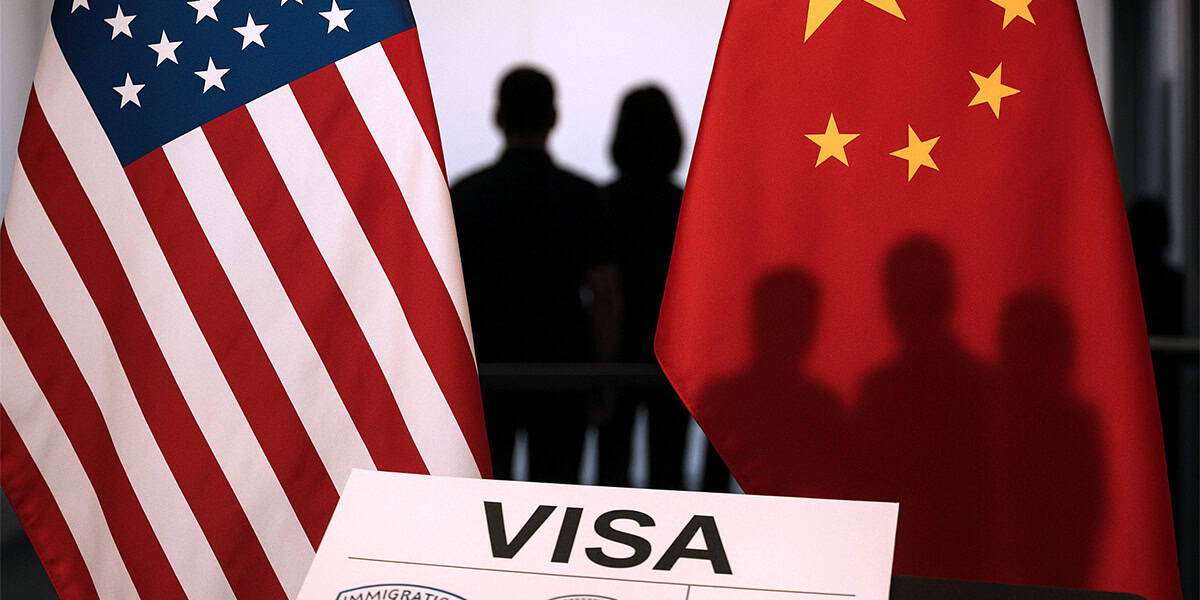
The United States has rolled out a new policy that bars visas for certain Central American citizens linked to China’s Communist Party. Secretary of State Marco Rubio made the announcement on Thursday, targeting people who help advance Beijing’s agenda in the region at the expense of local laws and stability.
This move hits individuals who, while in Central American countries, knowingly lead, approve, finance, back, or perform actions that weaken the rule of law on behalf of the Chinese Communist Party (CCP). Their immediate family members also face entry bans into the US. The policy draws from Section 212(a)(3)(C) of the Immigration and Nationality Act, which lets the US deny visas to protect national interests.
Rubio stated, “The United States stands firm against China’s corrupt sway in Central America and its efforts to erode the rule of law.” He added that the US will keep holding accountable those who partner with the CCP to unsettle the hemisphere. The statement did not name specific people or nations, but it applies across Central America, including Costa Rica.
Officials have already started applying these restrictions to several individuals involved in past activities. This signals a broader push under President Donald Trump to safeguard US economic and security stakes in the area.
For us here in Costa Rica, this could affect business leaders, officials, or others engaged in deals with Chinese entities that the US views as harmful. Costa Rica shifted diplomatic ties from Taiwan to China in 2007, leading to increased trade and investment from Beijing, such as infrastructure projects and technology partnerships. While many see these as economic boosts, Washington worries they mask efforts to expand influence and bypass democratic norms.
In recent years, China has ramped up its presence in Latin America, a zone long under US influence. Several Central American countries, like Nicaragua and El Salvador, have followed Costa Rica in recognizing Beijing over Taipei. This policy aims to curb that trend by making collaboration riskier for locals.
Experts note that the restrictions fit into ongoing US-China tensions over trade, tech, and global power. Beijing’s embassy in Washington has not yet responded to the announcement.
Local reactions in Costa Rica vary. Some business groups express concern over potential chills in Sino-Costa Rican relations, which include exports like coffee and imports of electronics. Others back the US stance, arguing it protects regional sovereignty.
The policy does not list exact criteria for what counts as undermining the rule of law, leaving room for case-by-case decisions. People affected can expect visa denials or revocations, impacting travel for work, family visits, or studies.
This is not the first time the US has used visa tools against perceived threats. Earlier this year, similar measures targeted officials in other regions for different issues. But this focus on Central America highlights Washington’s intent to counter Beijing close to home.
Costa Rican authorities have not commented yet, but the foreign ministry may address how this affects nationals. For now, those with US visas and China ties should review their activities to avoid surprises.





