
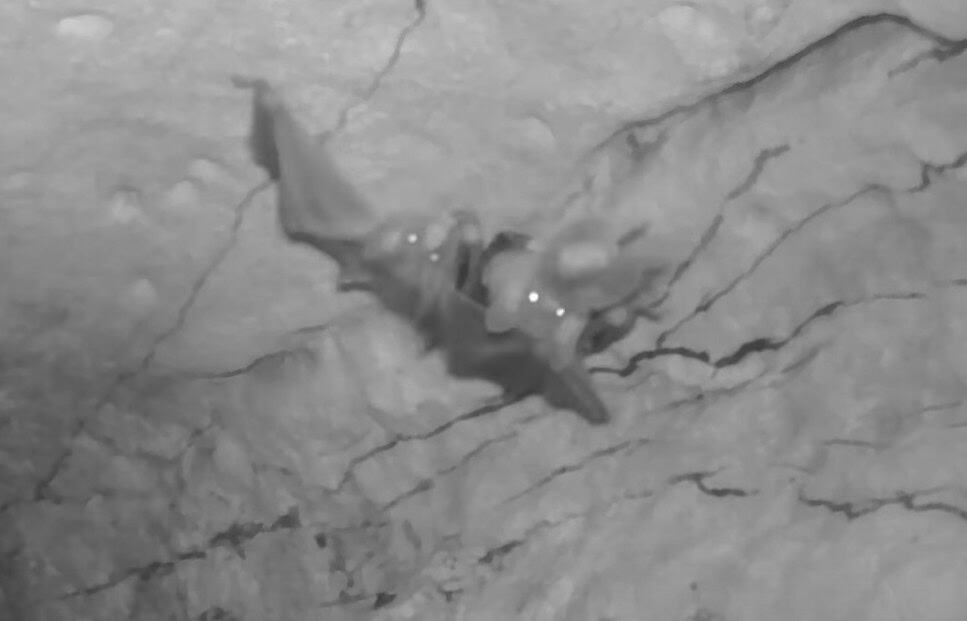
New footage from Costa Rica’s forests shows spectral bats in a fresh light, far from the lone predators many pictured them as. These large carnivorous bats, known as Vampyrum spectrum, display clear signs of family bonds through hugs, play, and food sharing. Researchers captured the scenes over three months in Guanacaste, offering a close look at their social side.
The videos come from a motion-sensitive infrared camera placed inside a hollow Manilkara tree, where a group of four bats roosted. Scientists suspect the group included an adult male, an adult female, and two offspring from different years. The camera recorded whenever it picked up movement, gathering 502 short clips across 60 days. Among them, 73 clips highlighted social moments that surprised the team.
One standout behavior is the greeting ritual. When a bat returns to the roost, others wrap their wings around it in what looks like a hug. These embraces last several seconds and often include soft vocalizations. The bats also groom each other, cleaning fur and wings, which strengthens their ties. At rest, they form tight clusters, or cuddle balls, with snouts touching as they sleep wrapped in each other’s wings.
Food sharing appears often in the footage. Adults bring back prey such as rodents, birds, and insects, then pass pieces to pups or mates. This helps young bats shift from milk to solid food and learn to handle meals. In one clip, a bat shares a rat with another, showing direct cooperation. Play shows up too, with bats chasing insects around the roost, wrestling lightly, or batting at objects. These interactions build skills for hunting and keep the group connected.
The study challenges old ideas about spectral bats as solitary hunters. The footage reveals they sometimes leave and return to the roost together, even foraging in pairs or groups. Extended care for offspring points to a family structure more like some social mammals than typical bats. With wingspans reaching up to a meter, these bats rank as the largest meat-eaters in their kind, yet their behaviors show a softer, cooperative nature.
Led by researchers from the University of Costa Rica, including Bernal Rodríguez-Herrera, the work appeared in PLOS One. They aimed to document interactions in the wild, where nocturnal habits make observation tough. The team identified eight main behavior types, from social calls to prey provision. Findings suggest these actions ensure young bats get enough nutrition and practice for independence.
Spectral bats face threats from habitat loss in tropical areas, earning a Near Threatened status on conservation lists. The videos provide details that could guide protection efforts, like preserving roosting trees and forest patches. Understanding their group needs highlights how family dynamics play into survival.
The footage has drawn notice for its rare glimpse into bat life. Clips show the animals in dim infrared light, their large ears and sharp features clear as they interact. One video captures a hug after a hunt, while another displays playful chases. These moments make the bats relatable, countering myths of them as fearsome creatures.
For bat fans or those curious about wildlife, the study opens a window into hidden forest routines. Spectral bats hunt by night, gliding through canopies to snag prey with strong bites. But back at the roost, they focus on family. As more clips surface, they add to knowledge of bat societies across species.
This research builds on earlier work, which first noted prey sharing as biparental care. Now published, it confirms the behaviors and adds play and greetings to the list. In Costa Rica, where diverse bat species thrive, such studies support local ecology.
Spectral bats remind us that even top predators rely on bonds. Their hugs and shares sustain the group, much like in other animals. As forests change, these insights help keep them around.