

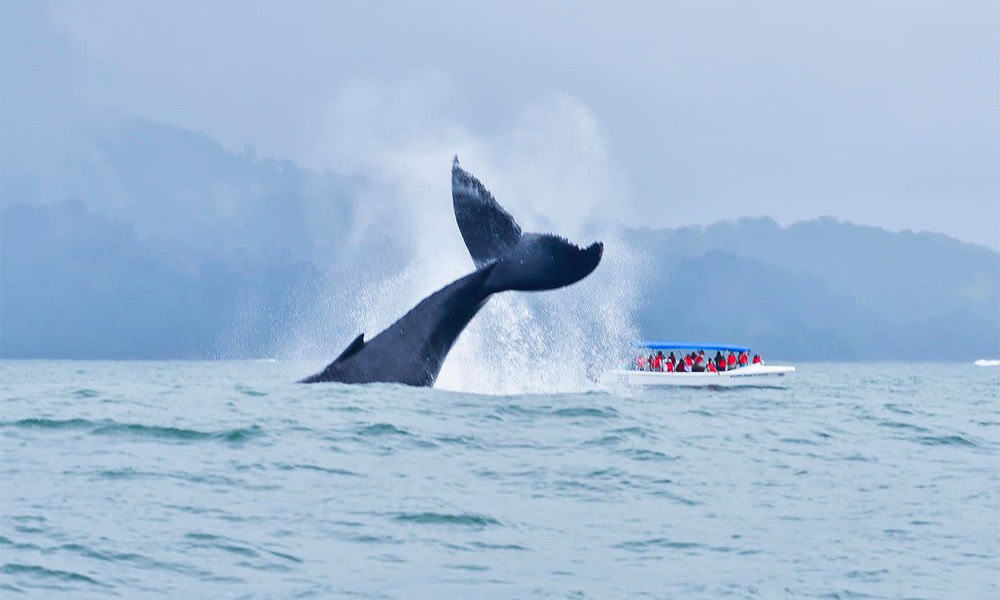
The arrival of September marks the peak of humpback whale-watching season, continuing through October. In Costa Rica, this spectacular event unfolds annually in the warm, calm waters of Golfo Dulce, as well as in Osa, Uvita, and near Marino Ballena National Park in the South Pacific.
To celebrate the whales and their calves, both national and international tourists can look forward to two exciting events this weekend: the Whale and Dolphin Festival in Uvita and the 2nd Whale Trail Festival in Golfito.
Visitors attending these events can enjoy a variety of activities such as sustainable guided whale and dolphin watching tours, snorkeling, mangrove tours, water sports, and hiking. There will also be cultural and artistic activities, band contests, lectures, an entrepreneur fair, a song festival, a pet parade, and local food and handicraft sales.
Throughout the weekend and continuing into the entire month of September and the first weeks of October, national tourists can benefit from discounts and special prices offered by certified local tour guides and organizations.
Rafael Soto, General Manager of ICT, encourages visitors to support companies that adhere to certification and environmental standards to protect these species and promote sustainable tourism practices. These practices include maintaining a distance of 150 meters from the whales, avoiding direct contact, and ensuring their habitat is not disturbed.
“Golfo Dulce was recognized as the first whale heritage destination in Latin America. We also recently set a Guinness World Record by forming the largest whale figure in the world with 466 people,” said Diego Quesada, Director of the Golfo Dulce Chamber of Tourism.
According to ICT, humpback whales travel vast distances from their feeding grounds in cold, polar seas to the warm waters of Costa Rica for breeding. Scientifically known as Megaptera novaeangliae, these whales, roughly the size of a school bus, belong to the rorqual family (Balaenopteridae), suborder Mysticeti (baleen whales), and the cetacean order.
The name Megaptera comes from the Greek words “mega” meaning “large” and “ptera” meaning “fin,” referencing their enormous pectoral fins, which can reach about five meters. These whales migrate from feeding grounds in the South Pacific off Canada and the western U.S. coast to breeding grounds in southern Mexico and Costa Rica.





