
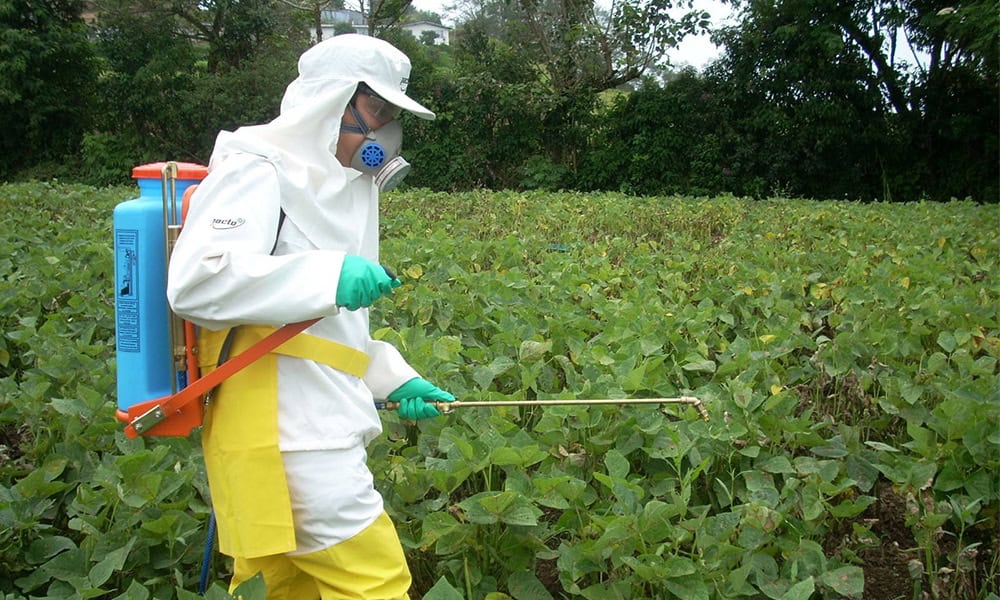
Kattia Cambronero, PLP Congresswoman, is promoting a bill to ban 17 agrochemicals considered hazardous by the Organization for Economic Cooperation and Development (OECD) and to regulate the general use of pesticides in the country.
Costa Rica is the country that uses the most pesticides per hectare, according to data from the Food and Agriculture Organization of the United Nations (FAO). Figures from the Food and Agriculture Data (FAOSTAT) database show that 23.44 kilograms of agrochemicals are consumed per hectare in Costa Rica.
The use of pesticides increased dramatically in the country since 1996. Specifically, the increase is linked to three crops: banana, coffee, and pineapple. Therefore, Cambronero believes it is urgent to address the issue. According to the congresswoman, the 17 pesticides that bill 23.783 seeks to prohibit have already been banned in other OECD countries.
“We have a backlog of pesticide legislation that is almost 20 years old,” she explained. A few days ago, the UNDP published a report revealing the contamination of the Sixaola river basin by pesticides.
The lawmaker also pointed out that Costa Rica lacks a proper evaluation system for the use of these products, so another objective of the law is to generate public health contamination statistics.
She stressed that the bill promotes research development and technical assistance for sustainable agriculture and provides incentives for companies that produce alternatives to chemical pesticides, which would also benefit the economy and sustainable development.
The congresswoman commented that the excessive use of agrochemicals is causing “rising illnesses,” such as cases of stomach cancer in Cartago. The province, known for its rich agricultural tradition, is also an area where pesticides are abundant.
Montserrat Ruiz, deputy of the National Liberation Party, also considers the project important for the country and beneficial for the sector. “The project is not just to prohibit; it has a series of important mechanisms to help producers,” she said.
The Minister of Agriculture and Livestock, Victor Carvajal, who strongly criticized UNDP’s report, mentioned he had “concerns,” as he believed only the environmental aspects were being considered and economic factors were being left out.