

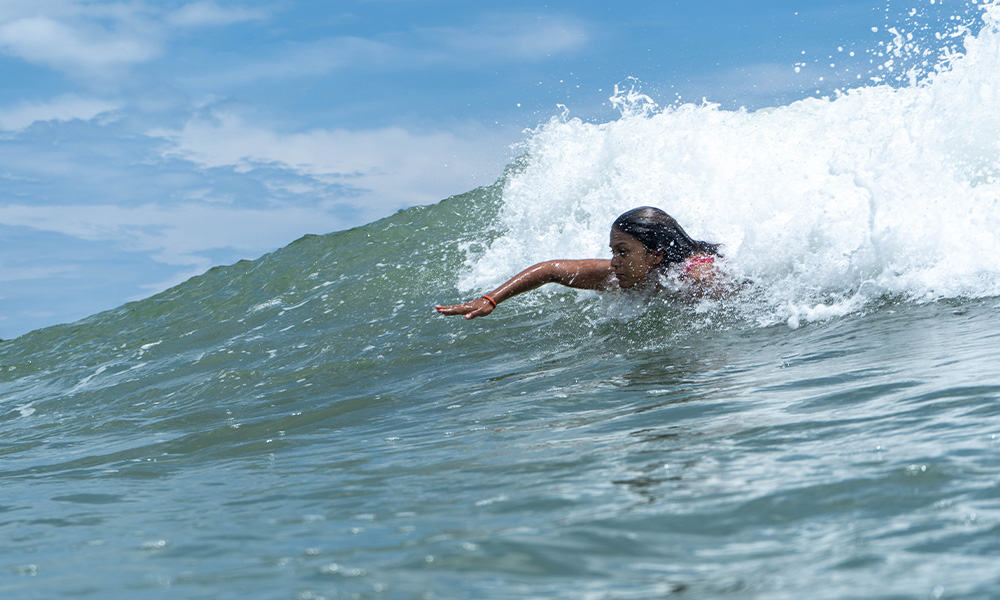
Often referred to as a “surfer’s paradise,” Costa Rica is one of the world’s top destinations for surf tourism. In fact, the Costa Rican Tourism Board (ICT) estimates that 17% of the country’s 3 million annual visitors participate in surfing at some point during their stay.
With over 1200 km (800 miles) of coastline, consistent swell year-round, warm water, and hundreds of surf breaks to choose from, there’s no wonder why surfers love traveling here. But some of the country’s most popular beaches are also quite dangerous.
Due to its high beach attendance, prevalence of strong rip currents, and understaffed lifeguard service, Playa Jaco was the site of 87 drownings between 2001 and 2019 (60 nationals, 27 foreigners). Sadly, drowning is the primary cause of unintentional death among international visitors to Costa Rica.
Most Costa Rican beaches don’t have lifeguards, and even the ones that do lack adequate resources to do their job effectively. Strong rip currents at steep-sloping beaches can easily pull swimmers and waders out to deep water, and in the presence of big waves, these swimmers may never make it back to shore.
Even surfers—especially beginner surfers—are at risk of drowning in the event the surf leash breaks and they are unable to swim back to safety. Therefore, it is crucial that all surfers and beachgoers learn basic bodysurfing skills before entering the surf zone at Costa Rica’s many beaches, especially the ones without lifeguards.
If you are new to the art of bodysurfing, here are a few tips to get you started in the white water:
Practice swimming in a pool first, find a safe beach to practice (gradually-sloping, sandy-bottom), go with a friend, practice with swim fins.
- Wade out to waist deep water. Keep your eyes on the horizon and look for a wave breaking far away from you. By the time the wave gets to you, it should be a fast-moving wall of whitewater.
- Just before the wave hits your backside, bring your chest down to the water and swing your arms out in front of you as you gently launch your body in front of the oncoming wave. Take a couple hard kicks to propel you forward with the wave.
- As you hydroplane across the surface of the water, keep your body rigid like a surfboard. Focus on maintaining a streamline position with your spine in a straight line (face submerged) as you ride to the beach.
Written by Spencer Dunlap, founder of thebodysurfblog.com





