

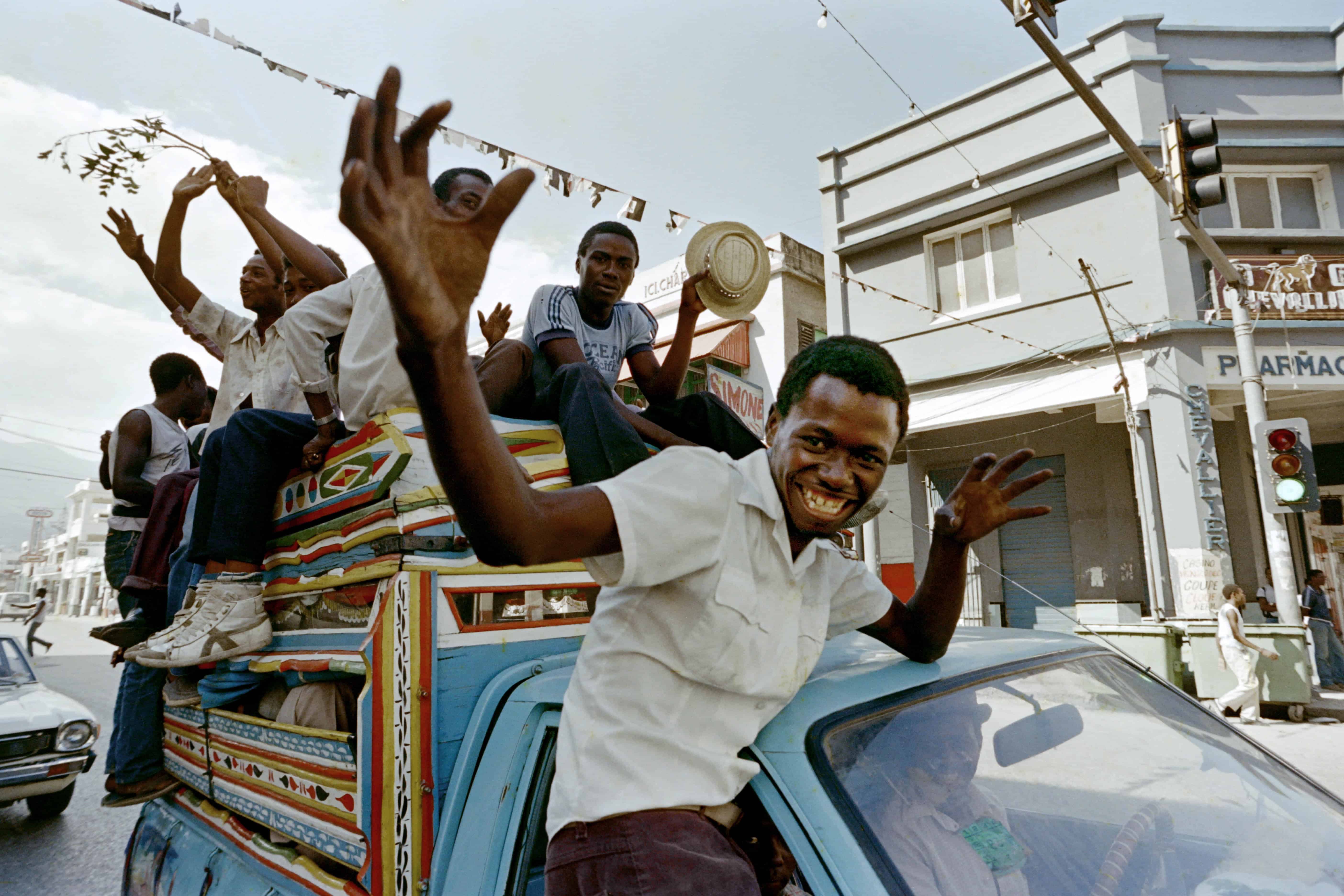
Two hundred years ago, Haitian slaves rose up against their owners and took the reins of their country. The newly freed black state became a lighthouse for slaves throughout the Caribbean and became the fulcrum for the eventual abolition of the slave trade from Africa. The United Nations has acknowledged the anniversary by dedicating this year to reflection on the abolition of slavery and on contemporary forms of enslavement.
As the world contemplates one of the most painful chapters of its history, Costa Rica is taking a look back as well and will host a conference next week in the heart of the country’s black population, the Caribbean port city of Limón.
Called “Breaking the Silence: 200 Years of Haitian Independence,” the Aug. 26-28 conference will include a string of guest speakers from universities such as York, Massachusetts, West Indies, New Orleans, Texas Christian, Copenhagen, California Berkeley, and Costa Rica, among others.
Rina Cáceres, director of the University of Costa Rica’s Historic Research Center, said slavery was abolished 180 years ago in Costa Rica as part of an isthmus-wide action. Three years after gaining independence from Spain, Costa Rica, as a member of the Central American Federation, outlawed slavery in April 1824 and set up an indemnity committee. The reparations, however, were not paid to the slaves, as might seem rational from today’s perspective; rather, they were paid to the former owners in compensation for their loss of property, Cáceres said.
In some cases, there were hitches in the plan. Some Costa Rican slave owners fought to keep their slaves into the 1830s, and in Guatemala, some agricultural business owners took their slaves and fled to Cuba.
In the 1500s and 1600s, Costa Rica did not have a powerful economy like Mexico, Colombia, Peru, or even Nicaragua, Cáceres said. It also had one of the lowest numbers of slaves in the region. “There’s no way to know for sure how many slaves there were. There are records, but every time a slave was sold, his (or her) name was changed,” Cáceres said. “We can estimate that 10% of the population was enslaved in the 16th and 17th centuries.”
From 1600-1800, the population of Costa Rica swelled from about 15,000 to about 52,500, according to the Revista de Costa Rica, 1921. Like everywhere in the Americas, the Spaniards first enslaved the natives, and when they were decimated by disease and harsh working conditions, the Spanish imported slaves from Africa. A trade of native slaves existed from Guatemala to Cuba, where there was a mining and agriculture boom, and from Guatemala, Costa Rica’s Pacific coast, and Nicaragua to Peru, where there was a booming mining economy.
When the African slaves were brought in, contrary to popular opinion, they did not go straight to Limón, Cáceres said. Rather, they were taken to Cartago, the Central Valley town east of San José and the former capital of the country. Slaves worked in Cartago in agriculture, construction, and as house servants in the late 1600s and early 1700s. Later, when cocoa plantations began to export to Caribbean markets and infiltrate illegal British trade networks to European markets, black slaves worked in the fields on the Caribbean slope. But not many.
Today’s black population in Caribbean Costa Rica has nothing to do with Costa Rican slavery, according to Cáceres. Their ancestors came from Honduras, Jamaica, Cuba, and other places at the end of the 1800s, after abolition, to build the railroad and work in the banana plantations. The former slave populations in Cartago and the Caribbean mixed with the rest of the population long before that, she said, which is one of the reasons there have been no efforts to compensate the descendants of slaves here.
Cáceres added that the idea of reparations for the victims of slavery is more North American because slavery was abolished there so much later.





