
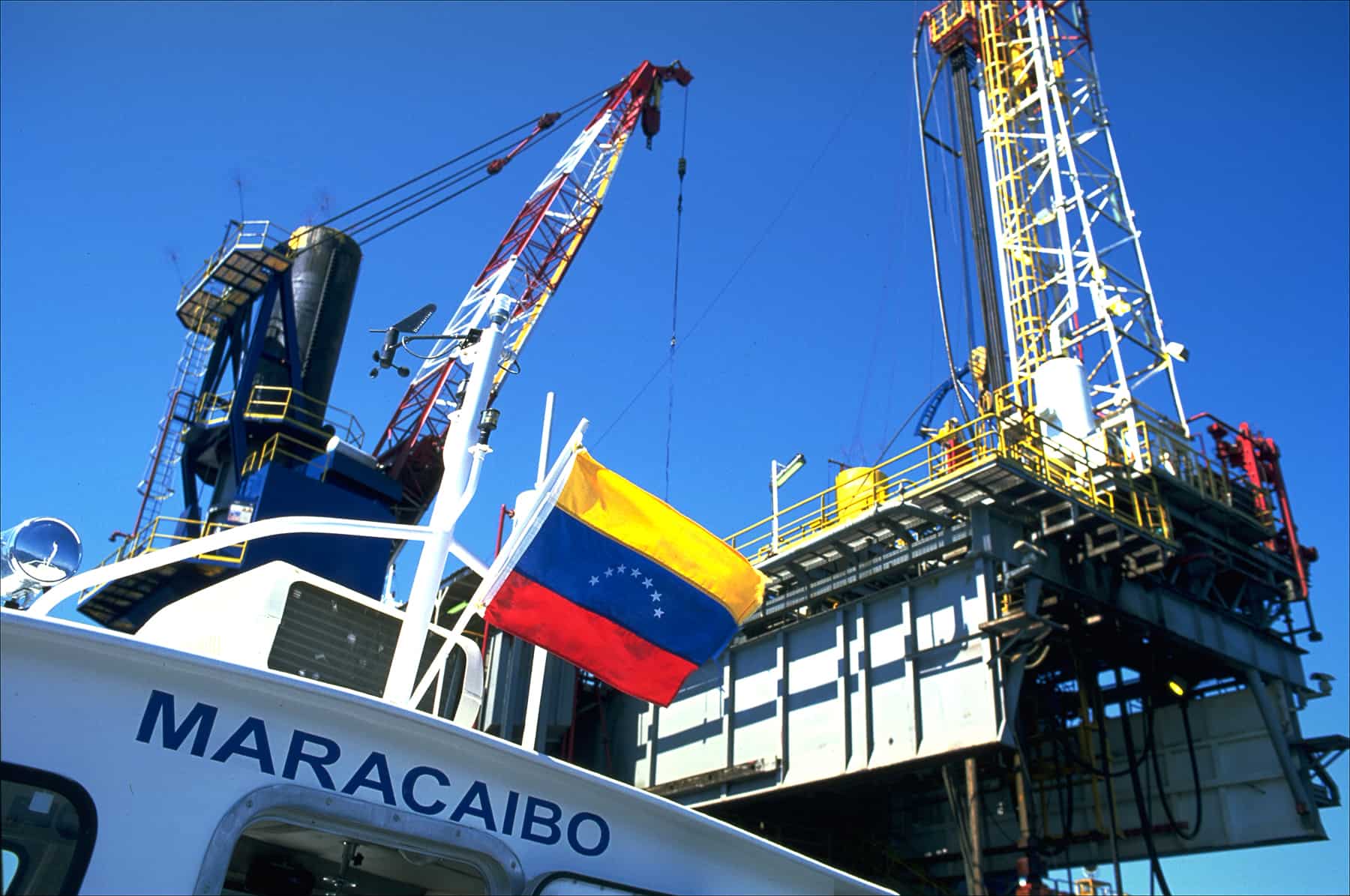
United States President Donald Trump announced on Friday an agreement guaranteeing the United States majority control over 65 billion barrels of Venezuela’s proven oil reserves. Described by Trump as the “largest oil deal in history,” it will bring Venezuela nearly $100 billion in private investment, according to U.S. Secretary of State Marco Rubio.
Venezuela has the world’s largest proven oil reserves. The United States has exerted intense pressure on the country since overthrowing and capturing Nicolás Maduro in January. His vice president, Delcy Rodríguez, assumed power on an interim basis and, under pressure from Washington, pushed through reforms in the oil and mining sectors that opened the door to foreign investment.
According to the Republican president, the agreement will allow his country to more than double its crude oil reserves. Rodríguez confirmed the agreement with Washington on Telegram and described it as “historic.” She said the deal covers the development of “17 strategic fields” and will generate “more than $209 billion in tax revenue for the state.”
The agreement “will have a significant impact on the rebirth of our nation,” Rodríguez added. “I am deeply grateful to the president of the United States of America, Donald Trump, as well as Secretary of State Marco Rubio and the U.S. government, for their willingness to develop this agreement,” she said.
Expanding transition
The agreement was negotiated by Rubio and Defense Secretary Pete Hegseth in partnership with “private companies,” Trump wrote on his Truth Social platform. “This transaction will greatly strengthen the already expanding relationship between Venezuela and the United States!” he added.
Rubio said the agreement demonstrates how “President Trump’s bold foreign policy is delivering victories” for the United States, this time by securing “stable reserves and low-cost oil” in the hemisphere. He said it would also lower domestic gasoline prices in the United States. “For the Venezuelan people, this agreement will bring nearly $100 billion in private investment, support thousands of well-paying jobs and help rebuild Venezuela’s economy,” the top U.S. diplomat said.
Jorge Piñon, a researcher at the University of Texas at Austin’s Energy Institute, said the agreement was unconventional and that questions remained about how the assets would be transferred. “We do not know how the transfer would be carried out,” he said. “Is it a sale? Is it a transfer of title? Does the transfer happen only once the reserves have actually been produced?”
Venezuelan crude oil production reached 1.2 million barrels per day at the end of July, according to official sources, an increase of 29.8% since January. Venezuela produced as much as 3 million barrels per day at the end of the last century, but a lack of investment and U.S. sanctions reduced its capacity.
Relief at the gas pump
With his approval ratings falling, Trump insisted that the agreement would lower gasoline prices for Americans, a sensitive issue ahead of November’s midterm congressional elections following the start of the war against Iran. The conflict, which has now lasted six months, has disrupted the global oil supply.
News website Axios reported on Thursday that the two countries were discussing about a dozen productive oil fields containing 90 billion barrels of proven reserves, approximately one-third of Venezuela’s total proven reserves. According to Axios, the agreement would more than double U.S. oil reserves at a time when the country’s Strategic Petroleum Reserve is at its lowest level in 40 years.
Trump is urging U.S. companies to invest in Venezuela, although they remain cautious because of deteriorating infrastructure and the Chávez movement’s history of expropriating assets belonging to foreign investors. John Kilduff, an energy expert at Again Capital, said the biggest concern for companies operating in Venezuela is “the security and protection of their investment.”
Chevron, the only U.S. oil company still operating in Venezuela when Maduro was overthrown, said in July that it had increased its daily crude production to 280,000 barrels and planned to raise output by 50% by the end of 2028. Meanwhile, the wells covered by the agreement announced on Friday will take between five and 10 years to reach “100% operation,” Oswaldo Felizzola, an oil expert and professor at Venezuela’s Institute of Advanced Management Studies, said.