

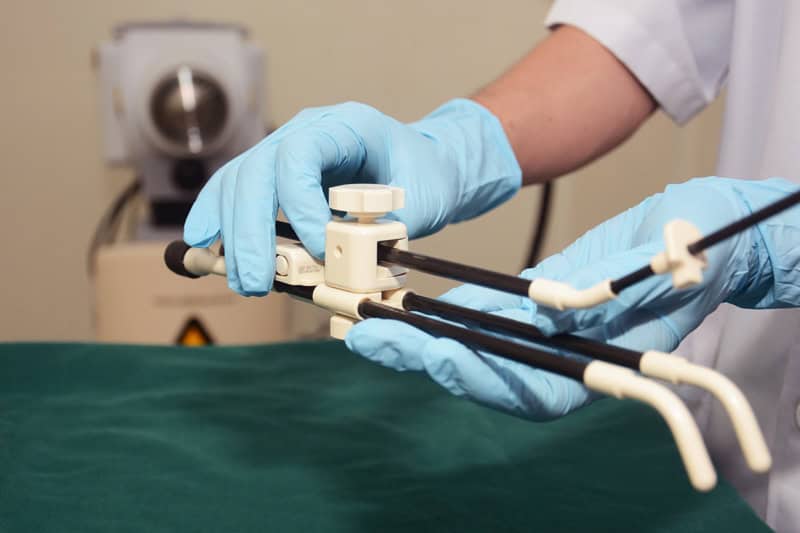
Costa Rica’s public health system depends on a single machine at Hospital México to provide an important form of cancer treatment, leaving patients vulnerable if the equipment stops working, according to the internal auditors of the Costa Rican Social Security Fund (CCSS).
The machine provides brachytherapy, a type of radiation treatment used particularly for cervical cancer. Instead of directing radiation at the tumor from outside the body, doctors place a small radioactive source inside or very close to the affected area. This allows doctors to deliver a strong dose directly to the tumor while limiting radiation exposure to nearby healthy tissue. Brachytherapy can also be used for prostate, breast and other cancers.
The CCSS Internal Audit raised the concern in an advisory issued on July 21. It warned that the institution’s entire ability to provide the treatment is concentrated in one unit at Hospital México. That means a mechanical failure, maintenance problem, shortage of specialized supplies or difficulty with the hospital’s infrastructure could interrupt brachytherapy across the public health system.
The risk is not theoretical. The previous machine failed beyond repair in December 2021, leaving Costa Rica without the equipment needed to continue the treatment. The CCSS responded by providing financial assistance for some patients to travel abroad for care. That arrangement increased costs, created additional paperwork and placed patients at risk of delays during treatment.
A replacement machine has since been installed, but Costa Rica still has no second public unit available as a backup. The concern is especially serious for patients with locally advanced cervical cancer. Brachytherapy is often used alongside chemotherapy and radiation delivered from outside the body. For some patients, ordinary external radiation is not considered an equal substitute.
Timing also matters. Cancer treatments are planned in a specific order and within a recommended period. An interruption can make it harder for doctors to complete the treatment as intended. The auditors said Costa Rica will continue to need brachytherapy for decades, even as vaccination against the human papillomavirus, commonly known as HPV, and improved screening help prevent more cervical cancer cases.
HPV causes most cervical cancers. Vaccination and early detection can greatly reduce the risk, but they do not remove the immediate need to treat people who already have the disease.
The audit urged CCSS authorities to examine ways to reduce the Costa Rica’s dependence on the Hospital México machine. Possible solutions would need to be considered as part of the institution’s plans for equipment purchases, hospital infrastructure, maintenance and emergency preparation.
The available information did not include a deadline for obtaining a backup machine or expanding the treatment to another public hospital. The warning comes as the CCSS is carrying out wider changes to Costa Rica’s radiotherapy services. Hospital México is replacing aging radiation equipment, while additional treatment capacity is planned for other hospitals.
However, those projects involve several types of radiation technology. A new external-radiation machine does not automatically provide the same treatment as a brachytherapy unit. For patients, the audit’s main point is that Costa Rica once lost access to this treatment because its only machine failed, and the public health system remains exposed to the same basic risk.





