
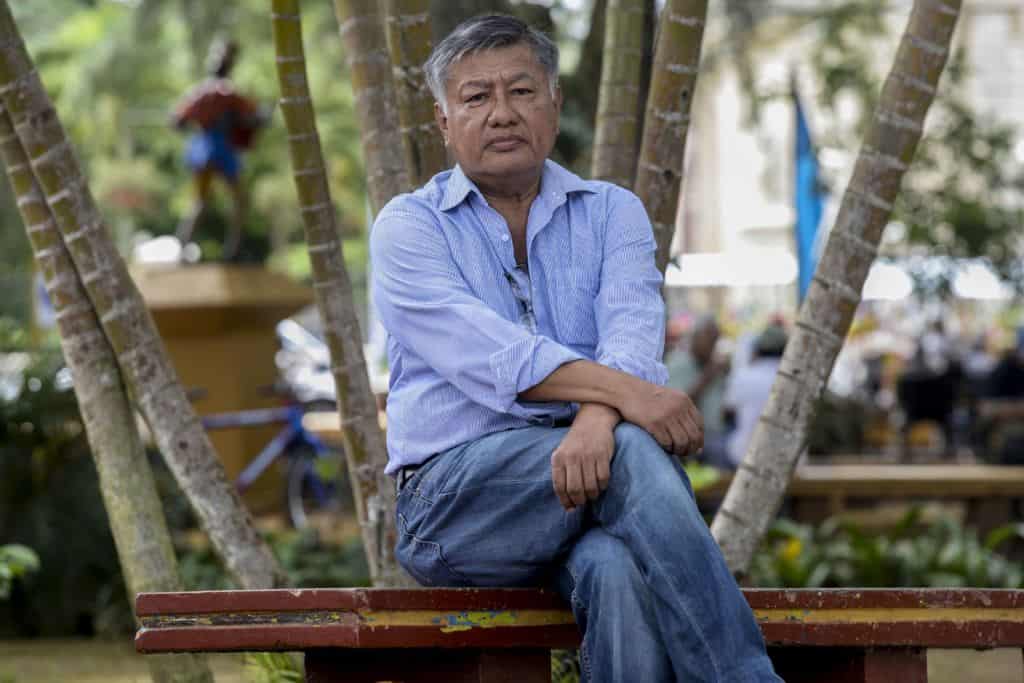
Relatives of a retired military officer and his wife, who were detained a year ago in Nicaragua, demanded Saturday that the government of Daniel Ortega and Rosario Murillo provide information about their whereabouts and health amid fears they could die in prison. Retired Colonel Carlos Brenes, 71, and his wife, Salvadora Martínez, 68, were detained last August, during police raids in the cities of Carazo and Masaya, in which several other people were also arrested, Thelma Brenes, the retired officer’s daughter, said.
“They have a duty to tell us where they are, how they are doing and to return them to us alive,” Brenes said from exile. Human rights organizations and relatives of detainees who maintain a search mechanism say that as of the end of July, there were 60 political prisoners in Nicaragua, 23 of whom were considered victims of enforced disappearance.
They warn that 15 are older adults, including Brenes and Martínez. Brenes’ daughter said the family fears a repeat of the case of leader Brooklyn Rivera, who died in May while in state custody after nearly three years without any information about his whereabouts.
She said her father, who was imprisoned between 2018 and 2019 and released under an amnesty, suffers from diabetes, high blood pressure and mobility problems. She also said Nicaragua’s prison system does not provide political prisoners with the medical care they need.
She also denounced what she described as a pattern of “detention by association” in Nicaragua, in which relatives of government opponents are also arrested, as she said happened with Martínez, her stepmother. Ortega and his wife Murillo, who holds the title of co-president, tightened their control over Nicaraguan society following the 2018 protests, whose repression left more than 300 people dead, according to the United Nations.
Opposition figures say Murillo is carrying out an internal purge across state institutions in preparation for the possible death of Ortega, who suffers from lupus and kidney failure. The government’s offensive against its opponents has also included a constitutional reform aimed at excluding opposition parties from elections. It is scheduled to be put to a vote in early September.