

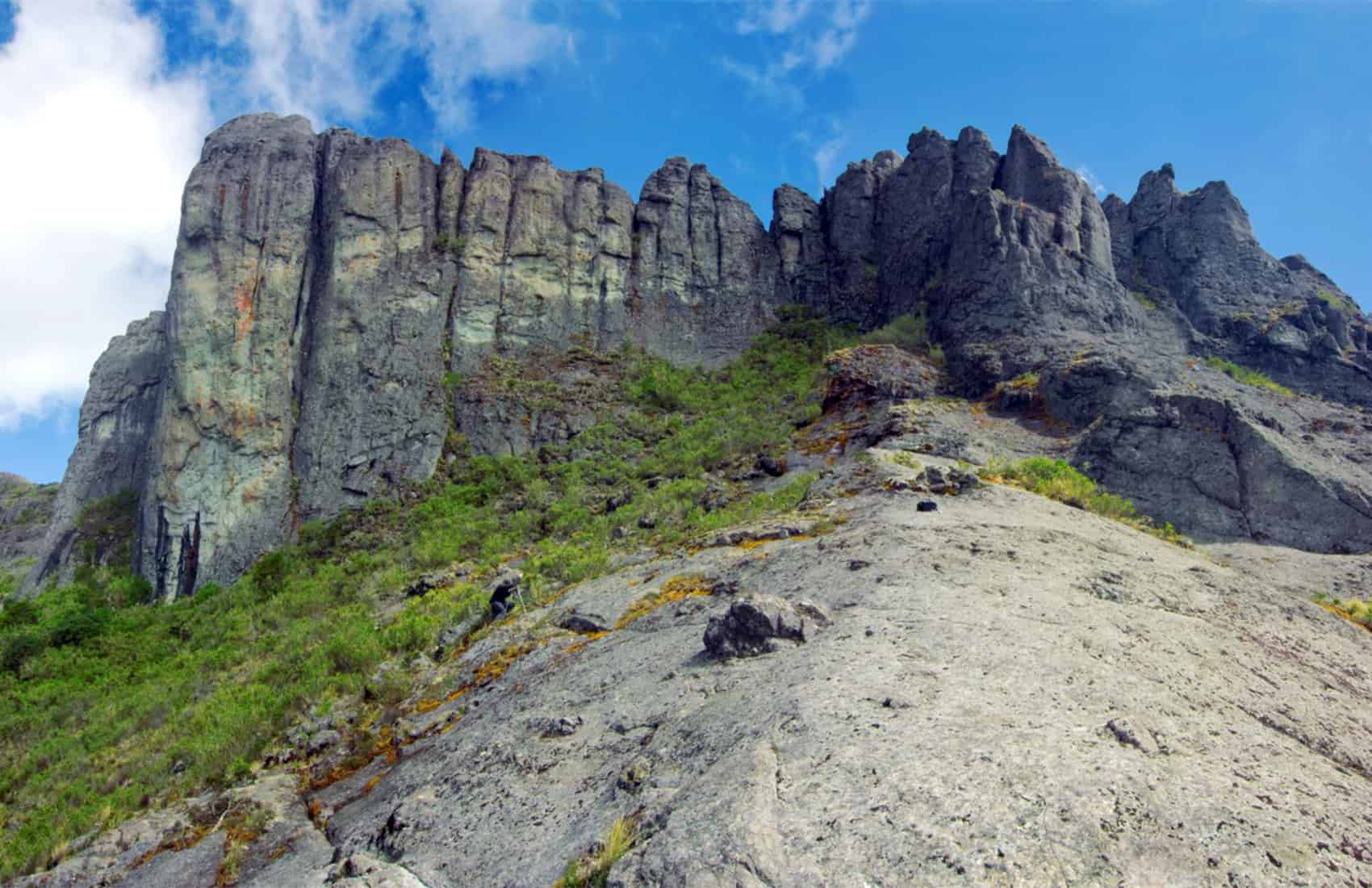
Costa Rica’s highest point is hard to reach, and for the past half-century that difficulty has been the policy. A proposal now circulating in the Legislative Assembly would change it. Álvaro Ramírez Bogantes, head of the National Liberation Party caucus and the deputy elected first on the party’s San José slate, said this week that he is evaluating a project to build a cable car to Cerro Chirripó, the 3,820-meter (12,533-foot) summit that crowns the Cordillera de Talamanca.
Ramírez said the idea is to widen access to the peak for more people, including those with different physical conditions, and that he has presented it to the Grupo de Acción Territorial de Pérez Zeledón, a civic organization headed by Antonio Mora. He described a group of business owners and community leaders with whom he has been discussing the concept, and said he has begun conversations with other legislative caucuses about it.
Beyond that, almost nothing about the proposal exists yet. There is no route, no engineering study, no cost estimate, no environmental impact assessment, no financing plan and no bill filed in the Assembly. Ramírez has not said whether the line would terminate at the summit itself, at the Base Crestones shelter, or somewhere below the park boundary — a distinction that would determine much of the project’s legal footing. What he has described is a conversation, and he has framed it as one.
The lawmaker said the concept borrows from a cooperation model developed for a proposed cable car to Turrialba Volcano, and that he wants to test whether the same approach could be replicated in Pérez Zeledón. That Turrialba initiative, promoted by former deputy Rosaura Méndez with support from then-legislators Alejandro Pacheco and Pilar Cisneros, is the furthest along of Costa Rica’s several cable car proposals.
Cisneros told reporters in February that the plan would stimulate tourism and improve park infrastructure. The initiative is budgeted at ₡2,053 million — roughly $4.5 million at current exchange rates — including ₡1,600 million from the Rural Development Institute for land purchase and ₡650 million from the Environment and Energy Ministry.
The Chirripó idea is not new either, and its earlier version collapsed on the same ground it would have to cross now. In February 2017 the Pérez Zeledón Municipal Council voted unanimously to declare a summit cable car a project of cantonal and public interest, and then-mayor Jeffrey Montoya asked President Luis Guillermo Solís to declare it of national interest. Montoya put the likely cost at around $20 million and said the municipality would seek a private partner.
Within weeks the plan drew organized opposition. Environmental attorney Álvaro Sagot argued that the National Parks Service Law expressly barred the kind of stations and infrastructure the municipality envisioned. Luis Diego Marín of Preserve Planet said the only route forward would be a bill amending that law, which he called very unlikely, and warned that the park supplies the water Pérez Zeledón residents drink. Osvaldo Durán of the Federación Conservacionista noted that no technical study had been produced before the council voted. The project went no further.
The legal question is genuinely contested rather than settled. The Parks Service Law restricts construction inside national parks, while Article 18 of the Forestry Law allows the state forestry administration to authorize recreation and ecotourism infrastructure within the State’s Natural Heritage under defined conditions.
Any Chirripó project would also have to reckon with the park’s international standing. Chirripó National Park sits within the Talamanca Range-La Amistad Reserves, inscribed on the UNESCO World Heritage List in 1983 and extended in 1990, and a major built structure inside a World Heritage property would attract scrutiny well beyond San José.
The practical arithmetic is equally unforgiving. Access to the summit today runs through a reservation system that caps overnight capacity at 60 people per night at the Base Crestones shelter, distributed across the San Gerardo, Herradura and San Jerónimo approaches, with bookings made through SINAC’s online platform.
Slots between December and April fill fastest. Critics of the 2017 plan argued that a cable car needs high throughput to pay for itself while Chirripó’s carrying capacity is deliberately low, and that the families around San Gerardo de Rivas who provide lodging, meals and porter services to hikers would lose the business that the overnight trek generates.
Neither SINAC nor the Environment and Energy Ministry, headed since May by Mónica Navarro Del Valle, has commented publicly on the Ramírez proposal. Both would be central to any serious evaluation, along with the National Environmental Technical Secretariat, which reviews environmental viability, and the park’s own management plan, which governs what activities are permitted where.
Two other cable car proposals have surfaced in recent years without producing anything built. The French group Poma pitched routes to the Cartago municipality in 2021, including Cristo Rey to Tierra Blanca and Tierra Blanca to Irazú Volcano. In 2022 then-deputy Carlos Andrés Robles, now Minister of Seas, promoted a line linking Quepos to Manuel Antonio National Park and proposed that the Rural Development Institute and the Costa Rican Electricity Institute fund a feasibility study.
For anyone planning a Chirripó climb anytime soon, nothing changes. The trek remains a reserved, multi-day hike, and any cable car — if it ever advances past conversation — would be years and several legal thresholds away.





