

A budget freeze blocking new Judicial Investigation Agency offices in high-risk coastal communities has revived scrutiny of earlier decisions that reduced Costa Rica’s security presence in border and maritime zones used by drug traffickers.
The latest dispute centers on roughly ₡8.687 billion that had been approved to strengthen the OIJ and the Prosecutor’s Office through new staff and offices in La Cruz, Cabo Velas and Puerto Jiménez. The Finance Ministry did not authorize the funds for execution and later removed them from the 2027 budget, leaving the planned offices stalled.
OIJ interim director Michael Soto has warned that the affected areas are not routine assignments. La Cruz faces violence and drug-trafficking pressure near the Nicaraguan border. Cabo Velas, in Guanacaste’s tourism corridor, has seen criminal structures tied to drug sales to visitors. Puerto Jiménez, on the Osa Peninsula, has limited police coverage and was identified as needing reinforcement after the withdrawal of Coast Guard presence from nearby maritime zones.
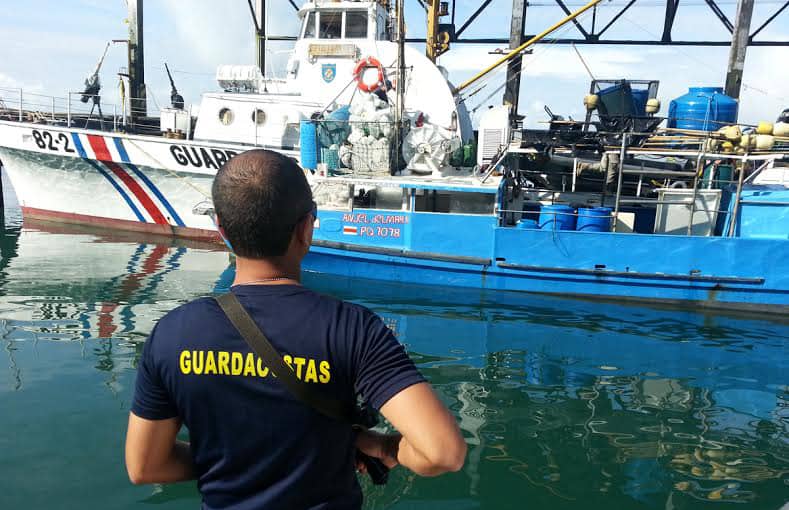
The budget fight follows a separate legislative investigation into security decisions made during the Rodrigo Chaves administration. Lawmakers concluded that the closure or relocation of key Coast Guard posts in Drake Bay and Sixaola reduced surveillance in high-risk areas and weakened Costa Rica’s ability to respond to organized crime.
The Sixaola decision was one of the most contested. Former Coast Guard director Martín Arias told lawmakers under oath that Manuel Jiménez Steller, then vice minister for special security units, verbally ordered the closure of the Sixaola post shortly after taking office in 2023. Arias said he repeatedly asked for the order in writing but did not receive it, forcing him to draft an internal memo to justify the personnel changes.
The government’s stated rationale was that the post lacked assigned boats, had no direct sea access and showed low criminal incidence. Six Coast Guard officers were transferred to Portete, near Limón, about 40 nautical miles away. Security officials acknowledged that the move increased response times in a border area where the navigable Sixaola River can be used as a route toward the Caribbean.
That decision later took on added weight in the investigation into the network linked to Edwin López Vega, known as “Pecho de Rata.” Investigators described properties in the Sixaola area with strategic access to Playa Gandoca and the Sixaola River, and later raised concerns about reduced police presence in an area linked to suspected clandestine airstrips.
Drake Bay became another point of dispute. GOPES, the Coast Guard’s elite special operations group, was moved from Bahía Drake to Quepos and Golfito. Former Coast Guard officials argued that Drake sits near one of the country’s most important maritime drug-entry corridors, around the Osa Peninsula, Isla del Caño, Corcovado and Sierpe. Arias said the move lengthened response times to suspicious-vessel alerts, at times to as much as two hours.
Government officials and another former Coast Guard director defended the Drake change on technical grounds. They argued that the post had no functional dock, required officers to reach boats by kayak, and could take 45 minutes to an hour to respond even under favorable conditions. A prior technical study had also found that building a floating or hinged dock there was not feasible.
The legislative investigation pointed to a broader pattern. The Coast Guard academy was moved from Quepos to Pococí, farther from open-water training conditions. Drug Control Police units were also removed from strategic points such as APM Terminals, Tablillas and Peñas Blancas without technical studies to support the changes.
The investigation did not find that every security move had the same cause or effect. It did, however, conclude that several decisions reduced operational capacity in places already considered vulnerable to organized crime. Arias described the Drake and Sixaola changes as an operational weakening and an abandonment of zones already affected by drug trafficking.
The new OIJ budget dispute now places the Judicial Branch in a similar position: asking for more presence in the same kinds of coastal and border communities where law-enforcement officials say criminal groups have gained room to operate.
Taken together, the Coast Guard withdrawals and the stalled OIJ offices show a recurring pressure point in Costa Rica’s security strategy. Whether through operational decisions or budget limits, several of the country’s most exposed areas are being asked to confront organized crime with less permanent state presence than officials say they need.





