

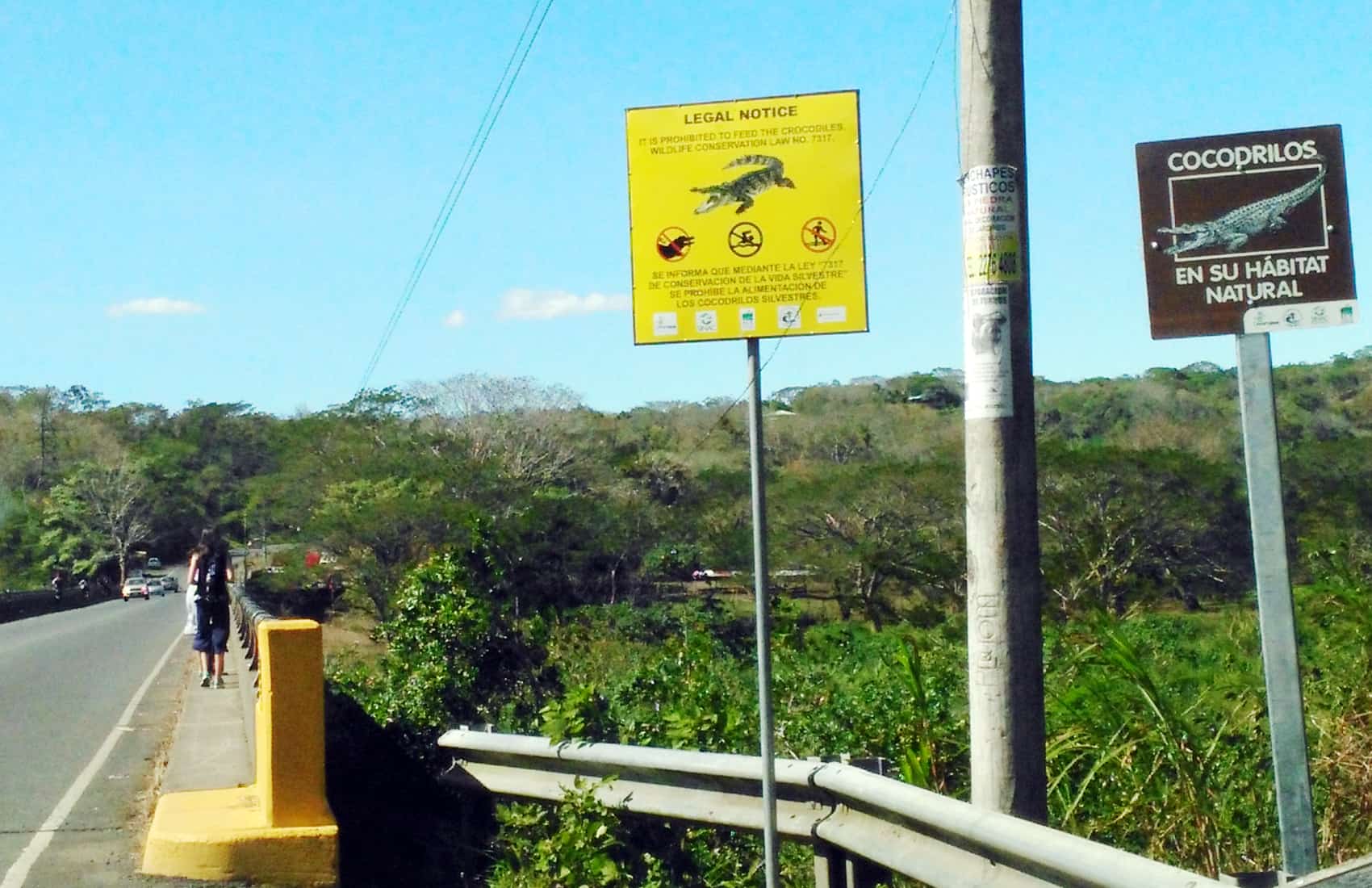
Costa Rica has begun installing 55 warning signs at beaches, rivers, national parks and conservation areas where crocodiles and caimans are known to live, as the country prepares for one of its busiest domestic travel periods of the year. The signs are being placed ahead of Costa Rica’s midyear school vacation, which runs from July 6 to July 17. The campaign is aimed at both local families and international tourists visiting coastal and river areas during the break.
Authorities said the warning signs are being installed in places where crocodiles and caimans are regularly present. The first sites include Sixaola, Puerto Viejo, Banano, Bananito, Matina, Mawamba, Caño Blanco, Lepanto and the ferry dock toward Playa Naranjo. Other areas identified for warnings include Manzanillo de Cóbano and the Bribri Indigenous Territory of Kéköldi.
The goal is to prevent visitors from entering risky areas without realizing the danger. Crocodiles are often found near river mouths, estuaries, mangroves, wetlands and quiet stretches of water that may look safe from a distance.
Officials are urging visitors to respect posted signs, avoid swimming in unauthorized areas, keep a safe distance from crocodiles and caimans, and never feed the animals. Tourists are also being warned not to approach reptiles for photos or videos, even if they appear still or far from the water.
The warning campaign comes as more families are expected to travel to beaches, rivers and national parks during the school break and public-sector vacation period. Roads to coastal areas are likely to see heavier traffic, while popular beach towns and ferry routes are expected to receive more visitors.
Costa Rica’s wildlife is one of the biggest tourism draws, but crocodiles and caimans require a different kind of caution. Unlike monkeys, sloths or birds, these reptiles can pose a direct risk when people enter their habitat or get too close to the water’s edge.
Authorities said the signs are part of a wider prevention effort that includes digital awareness campaigns, educational material and training for the tourism sector. The idea is to make sure hotels, tour operators, park staff and visitors all deliver the same message: observe wildlife from a safe distance and follow local warnings.
For tourists, the safest approach not to swim near river mouths, do not walk too close to muddy riverbanks, and ask local guides or park officials before entering unfamiliar water. A beach or river may look calm, but that does not mean it is free of crocodiles. The signs do not mean visitors should avoid Costa Rica’s beaches or protected areas.
They are a reminder that many of the most beautiful places here in Costa Rica are also wild places, and that safety depends on respecting the animals that live there.





