

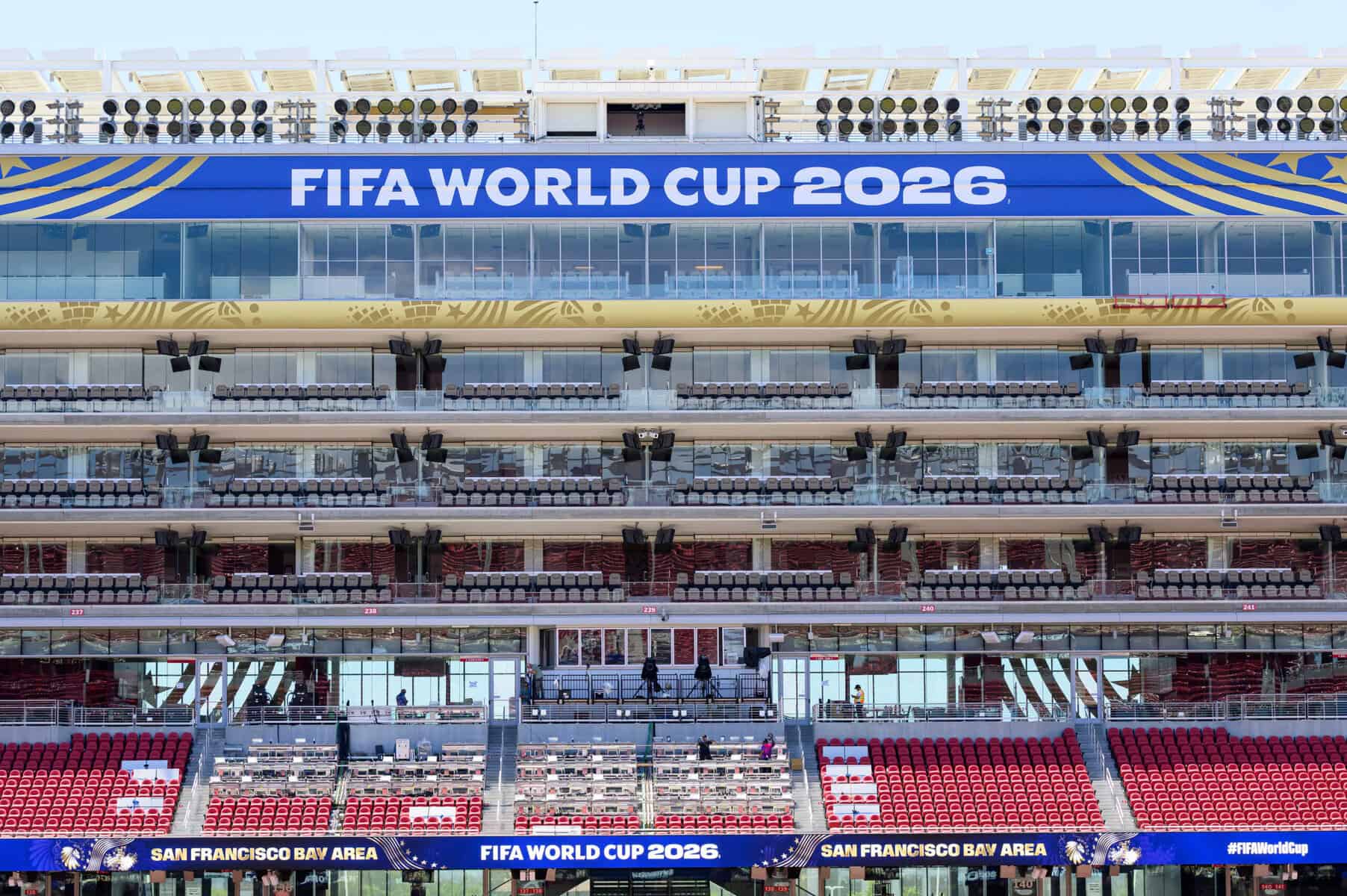
The 2026 FIFA World Cup has opened across North America, bringing the biggest field in tournament history and one of the deepest title races in years. For the first time, 48 teams are competing in a World Cup hosted by three countries: the United States, Canada and Mexico. The expanded format creates more room for surprises, but the race for the trophy still starts with a familiar group of powers.
Spain, France, England, Brazil and Argentina enter the tournament as five of the clearest contenders, backed by recent form, squad depth, star power and tournament experience. Portugal also belongs in the wider conversation, especially given its position in the betting markets, but these five nations carry the strongest mix of pedigree and present-day quality.
Spain
Spain arrives as the narrow favorite in several major betting markets and with strong backing from prediction models. The reigning European champion has rebuilt itself around a young, technically sharp squad that can control matches through midfield and stretch opponents with pace out wide.
The key storyline is the fitness of Lamine Yamal. The Barcelona winger has been dealing with groin and hamstring issues, and Spain’s staff has taken a careful approach before the opener against Cape Verde. If he returns close to full strength, Spain’s attack becomes far more dangerous. Even without him at maximum sharpness, La Roja have enough depth and structure to remain one of the hardest teams in the tournament to beat.
France
France enters with the most valuable squad in the competition and one of the strongest player pools in international soccer. Kylian Mbappé remains the face of the team, but the broader strength of Les Bleus comes from the options around him. France can win through pace, power, midfield control or defensive discipline, depending on the opponent.
This is also a group with serious World Cup muscle memory. France won the title in 2018 and reached the final again in 2022. That recent tournament record gives the squad a level of confidence few teams can match. With Didier Deschamps leading the side into his final World Cup as France coach, Les Bleus have both the talent and the experience to make another deep run.
England
England enters the tournament under Thomas Tuchel with one of the most talented squads the country has produced in decades. Harry Kane, Jude Bellingham, Declan Rice and Bukayo Saka give the Three Lions a core capable of matching anyone, while the depth across midfield and attack gives Tuchel several ways to shape the team.
The question is not talent. It is whether England can handle the weight of expectation. Tuchel has publicly played down the idea that England should be considered a top favorite, pointing to the country’s long wait for a major trophy. Still, bookmakers have England among the leading contenders, and their opening match against Croatia will provide an early test of whether this team is ready to turn promise into a serious title push.
Brazil
Brazil remains the most dangerous non-European contender. The five-time world champion has not lifted the trophy since 2002, but its attacking options still demand attention. Vinicius Junior gives Brazil one of the tournament’s most explosive wide players, while Raphinha, Matheus Cunha and Endrick provide more speed, movement and finishing quality.
Carlo Ancelotti gives Brazil a proven manager with the calm and tactical control needed for a long tournament. The concern is balance. Brazil’s qualifying campaign raised questions, and the defense has dealt with injuries and uncertainty. The opening match against Morocco, one of the strongest teams outside Europe and South America, should reveal quickly how stable this Brazil side really is.
Argentina
Argentina returns as the defending champion and with Lionel Messi set for what is widely expected to be his final World Cup. At 38, Messi no longer carries matches in the same physical way he once did, but his influence remains enormous. His passing, timing and decision-making still change games, and his presence gives Argentina a psychological edge.
What makes Argentina dangerous is not only Messi. Lionel Scaloni has kept much of the 2022 title-winning core together, including Emiliano Martínez, Rodrigo De Paul, Alexis Mac Allister, Enzo Fernández, Julián Álvarez and Lautaro Martínez. This is a team that knows how to suffer, defend, manage pressure and win ugly when needed.
The expanded World Cup format should give more teams a path into the knockout rounds, but it also increases the number of potential traps. One bad night may no longer end a group-stage campaign, yet the longer tournament creates more chances for injuries, fatigue and tactical surprises.
Still, the title race begins with the same basic truth: Spain have the form, France have the deepest squad, England have the talent, Brazil have the attacking ceiling and Argentina have the championship experience.
The 2026 World Cup may produce an unexpected run from outside that group. But if the trophy goes to one of these five nations, nobody will be surprised.





