

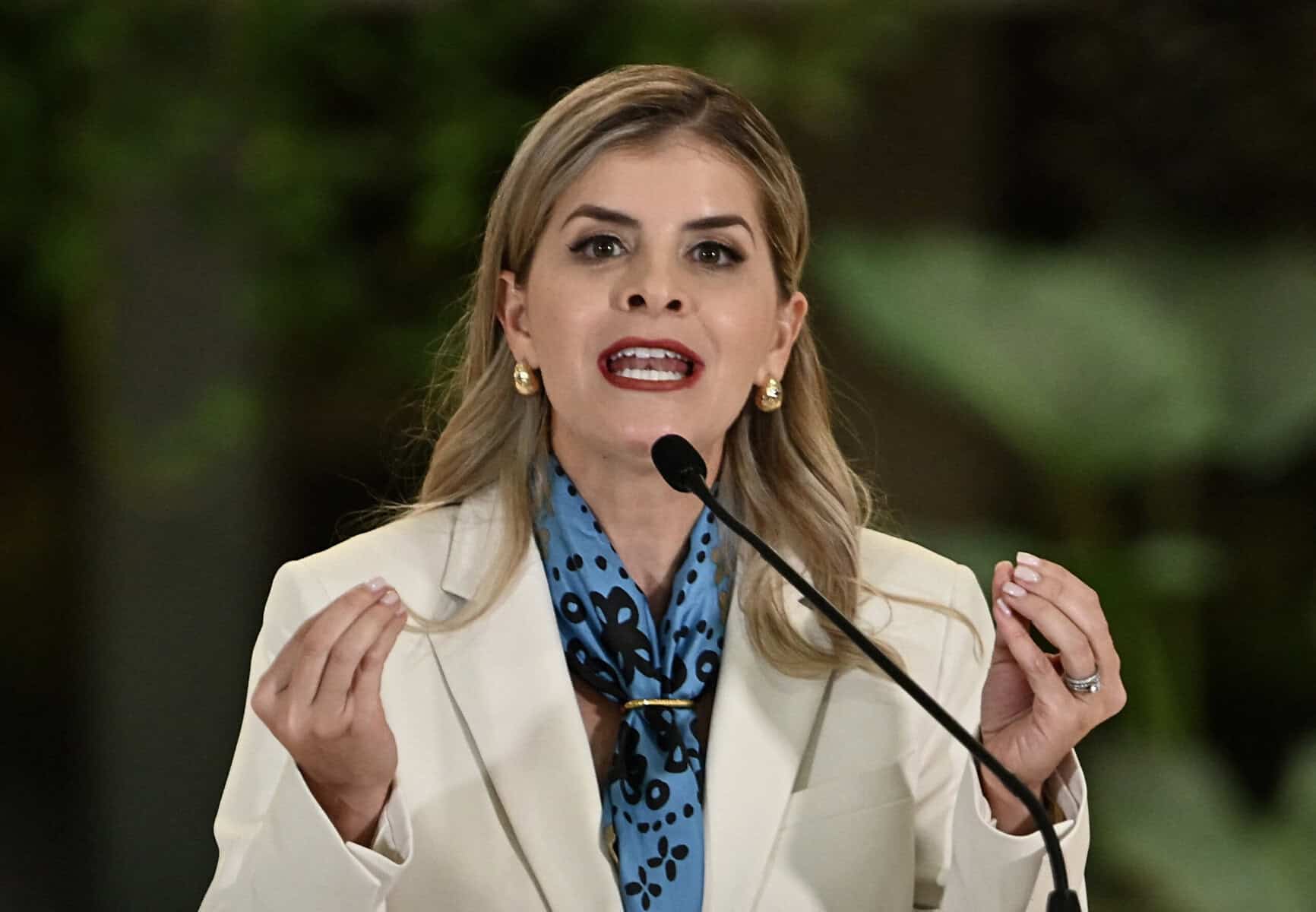
Costa Rica’s government said Tuesday it had received a report describing an alleged plan to attack President Laura Fernández, a plot that intelligence officials say was being coordinated from inside a maximum-security prison by leaders of the drug-trafficking gang known as Los Lara.
The Ministry of Justice and Peace acknowledged the report in a statement to local media but declined to elaborate, saying it would refrain from issuing comments on matters of security, intelligence or possible investigations. Authorities have not confirmed that the threat is credible, and no arrests tied specifically to the alleged plot have been announced.
According to documents, the warning is contained in an internal penitentiary alert dated May 29 and built from information provided by an official source. The document states that imprisoned leaders of Los Lara, held in the maximum-security wing of La Reforma prison in Alajuela, were allegedly planning an attack on the president. It identifies two inmates as possible organizers without publicly disclosing their full identities.
Prison authorities have already responded. The two men, who were already in maximum security, were isolated, held incommunicado and moved to individual high-containment cells — a decision the penitentiary system attributed to institutional security.
Fernández addressed the reports directly Wednesday in San José, striking a defiant tone. “I’m not afraid of them,” she told reporters, adding that she “sleeps like a baby” and would not change her agenda. “My purpose is far greater than that of anyone who wants to harm me,” she said, calling on the courts and the Legislative Assembly to act in unison against organized crime.
Fernández took office in early May, replacing her mentor and predecessor, Rodrigo Chaves, on a platform of hard-line security policies aimed at the trafficking organizations she blames for a sharp rise in violence in a country long considered one of the safest in the region.
In her first weeks she launched a police coordination body dubbed the Fuerza Élite and announced plans to restrict communications for high-risk inmates and to record their prison visits, measures she says are meant to stop gang leaders from directing crime from behind bars. She has repeatedly cited Los Lara, based in San José, as an example of a network still operating from prison.
The episode echoes an earlier, unresolved case. Chaves’s government reported in January 2026, weeks before the February 1 election, that it had uncovered an alleged plot against the then-president, but authorities never produced concrete evidence. The main suspect, a human rights activist who had criticized Chaves on social media, dismissed the accusation as a fabrication.
The latest allegations come amid deteriorating security in Costa Rica. Roughly seven of every 10 homicides in the country are linked to drug trafficking, and the homicide rate climbed to about 17 per 100,000 residents in 2025, up from 11.2 in 2019.Fernández, who has expressed admiration for El Salvador’s President Nayib Bukele, has not ruled out adopting some of the hard-line tactics he has used against gangs.





