

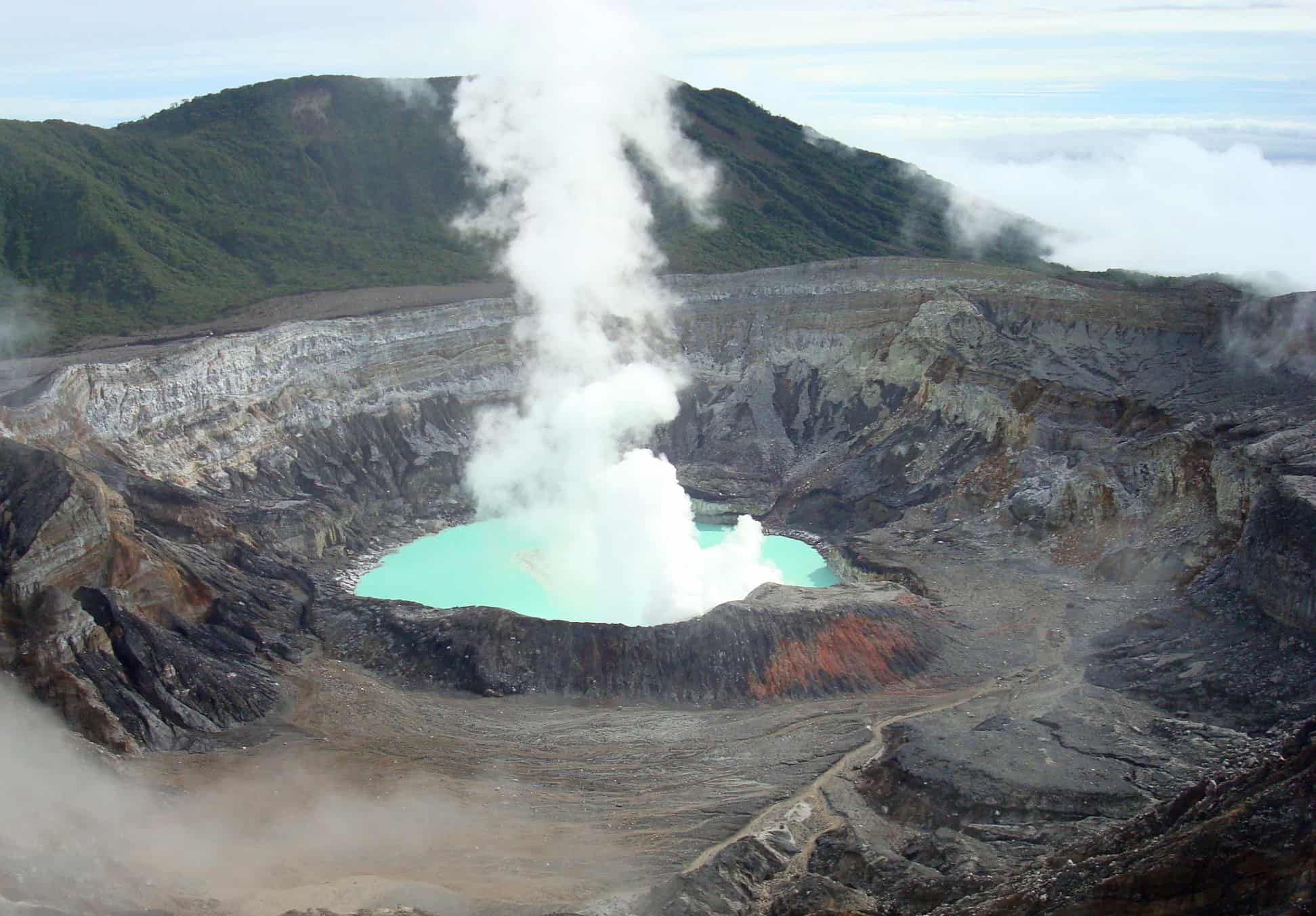
An unusual eruption inside Poás Volcano on April 10 sent ash into the air, pushed the crater lake up by as much as three meters, and opened a new fumarole field, according to Costa Rican volcanologists tracking the event. Scientists say the episode was not the kind of explosion seen during Poás activity last year, but a collapse inside the crater that suddenly released trapped gas and ash.
According to OVSICORI volcanologist Geoffroy Avard, the event began in the western sector of the lake, where part of the crater wall that had already shown hydrothermal activity gave way. The collapse appears to have triggered a rapid decompression in an area where gases had been building beneath the surface, producing an ash plume that later drifted into surrounding communities, with residents reporting ashfall in parts of Sarchí.
Avard said the event stands out because it was driven by structural collapse rather than a more typical explosive burst. He said only one similar eruption has been documented recently, in 2022, while other recent events at Poás have been explosive. A large mass of fine ash and loose material, estimated at 20 to 30 meters deep in the affected area, appears to have slumped into the lake, generating new deposits on the crater floor.
One of the most interesting changes came in the lake itself. During a field visit this week, scientists found that the water level had risen by about three meters in just days. Avard said rain alone does not explain such a jump, and that the more likely cause is the collapse material changing the shape of the lake bottom and surrounding crater floor, forcing the water upward.
The inspection also confirmed a new fumarole field in a part of the crater where gas output had not previously been as visible. Rather than a single new vent, scientists found several gas outlets grouped together. At the same time, a sulfur rich zone on the eastern side of the lake that had been prominent in recent months appears to have weakened, suggesting activity has shifted from one side of the crater to the other.
Despite the dramatic visual changes, volcanologists say there is still no clear sign that Poás is moving into a deeper magmatic phase like the one seen in 2025. Avard said monitoring instruments have not detected major changes in seismicity or deformation before or after the April 10 event, and OVSICORI’s latest weekly bulletin also reported no significant crustal deformation around the crater, while keeping the volcano at warning level 2. Scientists say the hydrothermal system remains active and reactive, but for now the process appears to be shallow.





