

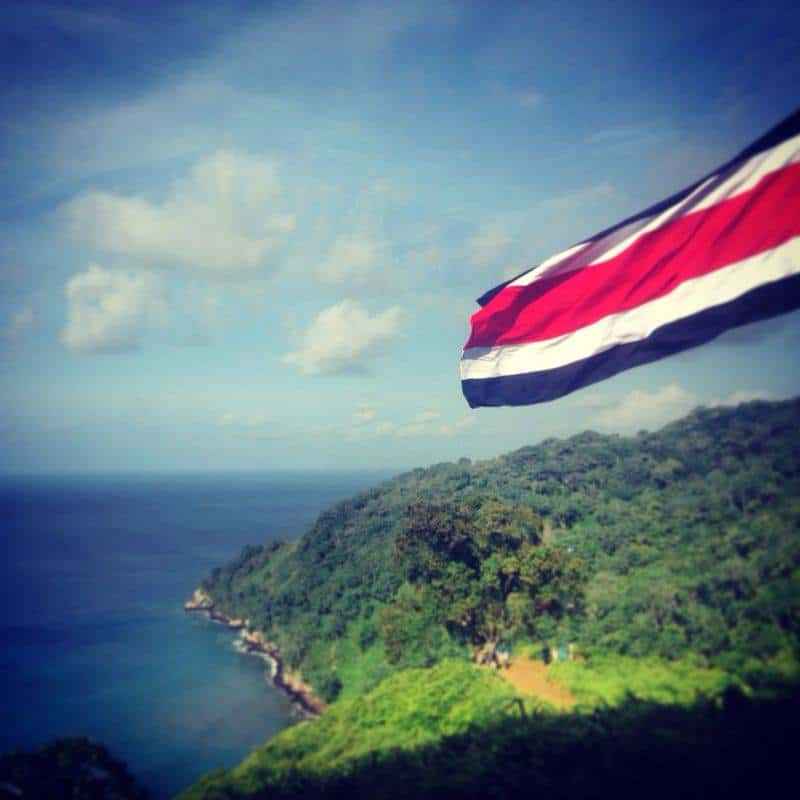
Cocos Island sits alone in the Pacific Ocean, roughly 550 kilometers southwest of Costa Rica’s mainland, a place so remote and so shrouded in legend that it has drawn obsessed treasure hunters, adventurers, and dreamers for nearly two centuries. Today it is a UNESCO World Heritage Site and one of the world’s premier shark diving destinations, but for much of its recorded history it was known above all else as a place where unimaginable wealth was said to lie buried beneath its jungle floor, waiting for someone clever or lucky enough to find it.
The island was first documented by European explorers in the early 16th century, and its location made it a natural stopping point for ships crossing the Pacific. It had fresh water, abundant wildlife, and shelter, everything a vessel needed after a long open-ocean crossing. Pirates, buccaneers, and privateers operating in the Pacific during the 17th and 18th centuries knew it well, and it appeared on enough nautical charts of the era that its existence was no secret among seafarers. What made it legendary, however, was not its geography but the stories that accumulated around it over time.
The most famous of all the treasure legends associated with Cocos Island is the so-called Lima Treasure. The story originates around 1820, during the chaos of the South American wars of independence. As revolutionary forces advanced on Lima, the seat of Spanish colonial power in South America, the Spanish viceroy allegedly arranged for the city’s vast accumulation of wealth to be smuggled out by sea. This fortune was said to include golden candlesticks, jeweled swords, chests of coins, and, most famously, a life-sized solid gold statue of the Virgin Mary.
The treasure was loaded onto a merchant vessel, the Mary Dear, captained by a man named William Thompson, who was trusted to transport the cargo to safety. According to legend, Thompson and his crew instead murdered the Spanish guards aboard, sailed to Cocos Island, buried the treasure, and fled. Thompson was eventually captured, and under threat of execution he agreed to lead the Spanish to the burial site, but once ashore on the island he escaped into the jungle and was never seen again. The treasure, if it ever existed, was never recovered.
Whether the Lima Treasure story is true, embellished, or entirely invented is impossible to say. Historical records from the period are incomplete, and the tale has been retold so many times across so many generations that separating fact from folklore is a nearly hopeless task. What is clear is that the story captured imaginations powerfully enough to inspire a remarkable series of expeditions that continued well into the 20th century.
Among the most colorful figures drawn to Cocos Island was August Gissler, a German colonist who actually attempted to settle the island in the 1890s with a small group of European immigrants. His colony failed, the island’s fierce rainfall, dense jungle, and isolation proved too much, but Gissler stayed on alone for years, serving as a kind of unofficial governor. He searched for treasure intermittently and found almost nothing, though he never entirely abandoned hope. His story illustrates how powerfully the island’s legend could grip a person willing to give years of their life to it.
Franklin Roosevelt visited Cocos Island three times, in 1935, 1938, and 1940, ostensibly on fishing trips but reportedly also with an interest in the treasure legends. That a sitting American president found the island compelling enough to visit multiple times says something about the hold the place had on the popular imagination of the era.
Malcolm Campbell, the British land-speed record holder, financed an expedition in the 1920s. The French actor Gérard de Villiers mounted searches. A Scottish sailor named John Keating claimed in the 19th century to have visited the island with William Thompson himself and to have seen the treasure with his own eyes, though he said he was unable to recover it alone. Keating’s account, published after his death, became one of the foundational texts of Cocos Island mythology and sent subsequent generations of seekers to the island armed with his vague directions and enormous optimism.
The expeditions share a common rhythm: high hopes, brutal conditions, and failure. The island receives more than seven meters of rain annually, making it one of the wettest places on Earth. The jungle is thick and difficult to penetrate. The terrain is steep and riddled with streams and waterfalls. Digging is enormously hard work, and the island’s geology means that tunnels and excavations collapse easily. Expedition after expedition returned empty-handed, usually blaming bad luck, mistranslated maps, or the interference of rival treasure hunters who had supposedly found the site first and moved the cache.
By the mid-20th century, the Costa Rican government had grown weary of treasure hunters tearing up the island’s landscape and began imposing strict regulations. Today, any kind of digging or excavation on Cocos Island is entirely prohibited. The island is managed as a national park and protected marine reserve, and visitors, mostly divers who come to see the hammerhead sharks, whale sharks, and manta rays that congregate in its waters, are not permitted to stay overnight or disturb the environment in any way.
The treasure legends did not die with the regulations. They simply moved into a different register, becoming the stuff of books, documentaries, and speculation rather than active excavation. Some historians argue that the Lima Treasure story is almost certainly fictional, or at least wildly exaggerated, pointing out that no contemporary Spanish colonial records corroborate the account of a massive secret shipment of wealth from Lima. Others argue that the absence of records is exactly what you would expect from a covert operation carried out in desperate wartime circumstances.
Cocos Island is also said to have inspired Robert Louis Stevenson’s Treasure Island, though this connection is debated. It is more confidently cited as one of the inspirations for Michael Crichton’s Jurassic Park franchise, given its remoteness and extraordinary biodiversity.
The island’s real treasures are its wildlife, its marine life, and its untouched rainforest, which are in some ways more remarkable than anything the legends promise, though they have proven considerably less magnetic to the kind of person who spends their life savings on a ship and a set of old maps.
What endures about Cocos Island is not really the plausibility of the treasure stories but the particular quality of longing they inspire. The island is real, the ocean around it is vast, the jungle is genuinely impenetrable in places, and the historical record is genuinely murky enough to leave room for doubt. In that uncertainty, the imagination finds exactly the foothold it needs.





